



















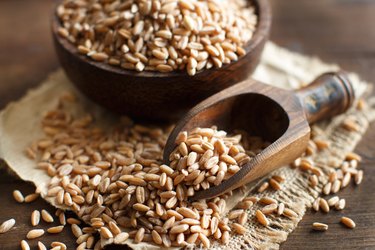













Celiac disease is a disorder in which the small intestine is damaged when it encounters gluten, a component in wheat. Those with celiac disease have to avoid all gluten-containing foods, which can be difficult as gluten is often extracted and used in foods that otherwise have nothing to do with wheat. As of mid 2010, no regulation exists for terms such as gluten-free, so ensuring a food is safe to eat involves carefully checking over the ingredients. Gluten can hide in additives as well, so discuss your gluten-free diet with a registered dietitian, and have the dietitian give you a list of terms to look out for.
Step 1
Look for obvious items such as "wheat" and, of course, "gluten." Check for other main sources of gluten such as rye flour or barley.
Step 2
Read the ingredients list for alternate names such as semolina and farina, and for products that normally contain wheat such as soy sauce or malted milk.
Step 3
Inspect each ingredient to find oats and oat products such as bran, flour and groats. If you do see them, look over the entire box to find claims the oats are free from cross-contamination. Oats themselves do not contain gluten, but may pick up traces of gluten during processing and handling. For this reason, oats are usually included in lists of foods for gluten-intolerant people to avoid. A few companies market oats that they claim have not been cross-contaminated; check with a registered dietitian for reputable brands.
Step 4
Go back over the entire ingredients list to look for additives and non-obvious sources. Colorado State University Extension lists such terms as "flavoring" and "seasoning" as clues that gluten is hidden in the food, and notes that items like ice cream and rice mixes can contain gluten as well, even though rice and dairy don't have gluten.
Step 5
Investigate any ingredients you don't recognize or are not sure about. Don't try to guess what might be in the ingredient from word roots or similarities to other ingredient names.
Tips and Warnings
- Look up the name of the product, if this is the first time you've used it, to see if there is a history of problems with the company. It is possible for a normally gluten-free food to become cross-contaminated by accident, or for a company to mislabel the food. Christine Boyd reported in the April/May 2010 issue of "Living Without" that a company had mislabeled foods as gluten-free, resulting in severe reactions and at least two hospitalizations.
- The University of Wisconsin recommends rereading ingredient labels often in case the manufacturer changes the recipe for the item.


Member Comments