





















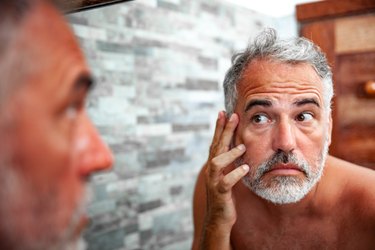










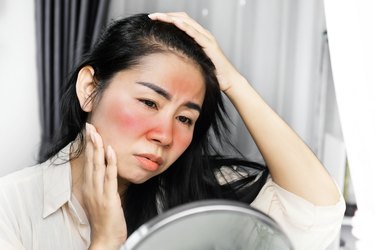










Hyperpigmentation refers to an excess of pigment in an area of your skin. This darkening or discoloration can be caused by several factors, including injury, trauma, sunlight or a skin disease, according to Susan C. Taylor, founding director of the Skin of Color Center and in New York. While the natural darker pigmentation can have a protective effect, it's vulnerability to discoloration can be frustrating. However, Taylor points out that hyperpigmentation can be successfully treated.
Hydroquinone
This chemical is commonly found in products marketed for lightening discolored skin. In 1982, the U.S. Food and Drug Administration ruled that skin-bleaching products containing 1.5 to 2 percent hydroquinone should be recognized as GRASE --- generally recognized as safe and effective. In 2006, they called for additional studies on the chemical after hydroquinone was linked to cancer in rats and its ability to cause even worse skin darkening and disfiguration.
For now, it remains an ingredient in skin-bleaching products in America. Hydroquinone works by blocking melanin production and should be used as directed on the product label or under a dermatologist's supervision. Dermatologists can also prescribe creams with higher concentrations of hydroquinone. Taylor recommends not using it for longer than six months.
Retinoids
Derivatives of vitamin A, retinoid topical skin products are especially useful for treating discoloration caused by acne, as vitamin A is also an effective acne treatment, states Taylor. Products in the retinoids group include tretinoin, sold under the brand name Retin-A, adapalene, or Differin, and tazaratene, or Tazorac Retinoids improves skin cell shedding, explains Paula Begoun, author of "The Original Beauty Bible." As a result, discoloration fades more quickly.
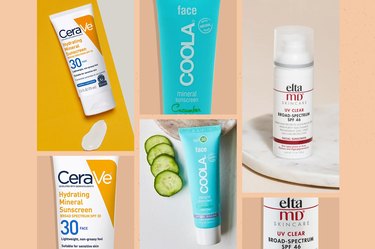
However, Begoun warns that retinoids also cause skin irritation and increase your skin's sensitivity to the sun. Always wear a sunscreen when using these products --- or any skin lightening product --- to reduce sun damage and prevent further darkening of your skin.
Chemical Peels
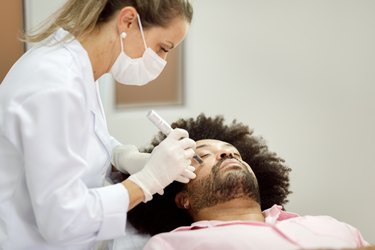
For more challenging cases of hyperpigmentation, a dermatologist may recommend a chemical peel. According to Taylor, the most common peels recommended for skin of color contain alpha hydroxy or beta hydroxy acids. Applied to cleansed skin for about 15 minutes, they fade discoloration by removing or peeling away the top layers of the skin --- the stratum corneum or uppermost epidermis, explains Taylor.
While at-home chemical peels are available, you'll get better results from a professional treatment. Also, Taylor warns that stronger peels --- containing more than 20 percent concentration of AHAs or BHAs --- should not be used on darker complexions.
References
- "Rx for Brown Skin"; Susan C. Taylor, M.D.; 2008
- U.S. Food and Drug Administration: Hydroquinone Studies under the National Toxicology Program (NTP)
- "The Original Beauty Bible"; Paula Begoun; 2009


Member Comments