






























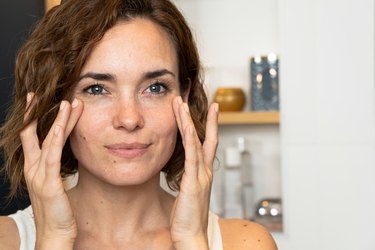




























Puffy bags under the eyes, which sometimes can look dark, appear when the delicate tissue and blood vessels under the eyes swell with fluid. Because the skin around the eyes, known as the periorbital skin, is thinner and more delicate than other areas of the body, the effects of aging, sleeping habits, allergies and other factors are more apparent in the under-eye skin area.
Aging
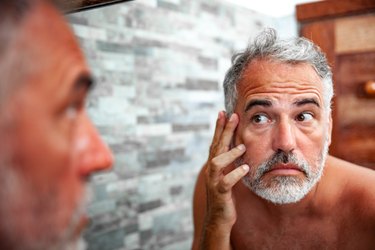
The muscles and tissues supporting your eyelids weaken as you age, according to MayoClinic.com. Gravity has an increased effect, which may cause the skin around your eyes to sag. The delicate skin around the eyes becomes thinner with the aging process and the fat that is normally dispersed around your eye begins to migrate downward, resulting in a puffy-eye look. Some senior adults choose the cosmetic surgery blepharoplasty to reduce the look of puffy bags under the eyes.
Sleeping Habits
Your sleep habits can result in bags under the eyes, reports the Health Services at Columbia website. When you are fatigued due to not getting enough sleep, your facial muscles are tired too, making them appear droopier and less toned. MayoClinic.com further reports that lying flat on your back can increase the appearance of puffy eyes. Sleeping with an extra pillow or with your head raised may help fluid from accumulating under your eyes.
Genetics
Your puffy, under-eye bags may be a result of your genetic disposition, notes Dennis Auckley, M.D., Director of MetroHealth's Center for Sleep Medicine. You may have inherited the tendency to retain fluid in your under-eye blood vessels, which may become more pronounced as you age or experience any of the other conditions leading to the development of bags under your eyes.
Fluid Retention
Accumulating fluid under your eyes can contribute to the swollen under-eye look. Fluid retention is a common condition for some people in hot, humid weather. Foods and drinks that contain high levels of salt or caffeine, such as potato chips and coffee, increase the likelihood of retaining fluid and the appearance of puffy bags under the eyes.
Allergies and More
Allergens, such as dust, pet dander and pollen, can be the culprits of puffy bags under the eyes, as can smoking, indicates skin-care adviser Paula Begoun. Skin-care products, eye-make up removal techniques, contact lenses and rubbing the eyes may also contribute to puffy eyes. Additionally, hormonal imbalances, pregnancy, certain medications and sinus congestion can result in the temporary appearance of bags under the eyes.


Member Comments