



























































Tretinoin is a topical cream that's more usually associated with the treatment of acne. In recent years, it has become one of a range of treatments available for stretch marks. Stretch marks are a common skin condition that can be unsightly and embarrassing. Tretinoin is only available by prescription, so speak to your doctor about treatment options.
Stretch Marks
Stretch marks are formed in response to rapid expansion of the skin, or in some cases because of an underlying condition, such as Cushing's syndrome or disease, or diabetes. The skin stretches, and bands or lines of red or purple streaks form. Stretch marks, known medically as striae, often occur during pregnancy, through growth spurts in adolescence or when weight is gained quickly. Their color fades over time to a white, gray or silver color.
What is Tretinoin?
Tretinoin is derived from an acidic form of vitamin A known as retinol, which is found in animal products. The topical cream form of tretinoin, the type that's usually prescribed for striae, comes in three different strengths, with the tretinoin forming a small percentage of the finished cream.
Functions
The exact function of tretinoin in treating stretch marks is not quite known. It's thought that the cream stimulates the skin to promote healing. Through study, doctors have found that tretinoin is not useful in the treatment of old, white marks but is useful in the treatment of recently formed, still red or purple lesions.
Usage
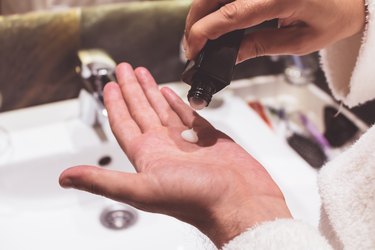
Typical dosage and frequency depend on the severity and "freshness" of your stretch marks.The cream is rubbed into the affected area. One study, conducted by Dr. Sewon Kang of the Department of Dermatology in the University of Michigan Medical Center, found that used daily for six months, tretinoin cream reduced the severity, length and width of 80 percent of the 10 women who used the cream, compared to one of 12 women who used an alternative cream.
Warning
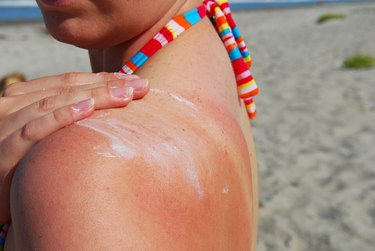
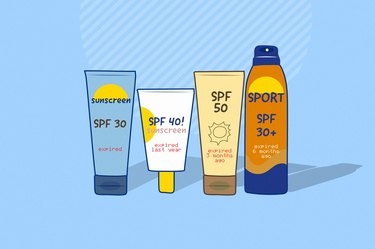
According to MedlinePlus, tretinoin cream should never be used during pregnancy or breastfeeding. Allergy is rare but possible. If your skin becomes uncomfortably sore or itchy, or if blistering or crusting occurs, you may have an allergy. Tretinoin warms or tingles on the skin when first applied, but if this doesn't subside, contact your doctor. Your skin may have increased sensitivity to sunlight as a result of tretinoin use, so avoid bright or prolonged sunlight and sun beds and use a high-factor sunscreen.
References
- Medline Plus: Striae
- Drugs.com: Tretinoin
- "Dermatologic Surgery"; Striae Distensae (Stretch Marks) and Different Modalities of Therapy -- An Update; Doctors Mohamed L. Elsaie, Leslie S. Baumann and Lofty T. Elsaaiee; April 2009
- Archives of Dermatology: Topical Tretinoin (Retinole Acid) Improves Early Stretch Marks
- Medline Plus: Tretinoin Topical


