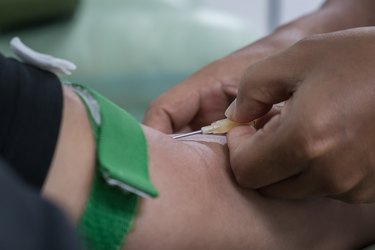
Blood tests are an important tool for healthcare providers, as they help diagnose, monitor and screen for health conditions. But these test results need to be accurate to be useful, and to ensure this, some advance preparation may be required. Most notably, certain cholesterol and glucose tests require fasting. Be sure to understand how you need to prepare for your blood tests, so you can do your part to ensure your results are accurate.
Food and Liquids
Video of the Day
Fasting means no food or beverages -- other than water -- during the period requested. Also, since caffeine can influence fatty acid and glucose levels, along with some other values, you can't drink tea or coffee before fasting blood tests. Alcohol is also to be avoided during the fasting period, as this substance can impact triglyceride, glucose, liver tests and other blood components. Even chewing gum and tobacco are not allowed. Despite these restrictions, it does help to drink water -- as dehydration may alter some test results and make it harder for the lab technician to draw your blood.
Video of the Day
Fasting Time Frame
Typically a 12-hour fast is required for a lipid or cholesterol panel, because one of the tests -- the triglyceride, a type of blood fat -- is higher when not fasting. An 8-hour fast is usually recommended when a fasting glucose, or fasting blood sugar, is tested. While fasting might seem hard at first glance, try to schedule your blood test early in the morning, so you simply need to avoid food and liquids, other than water, after dinner. You can even take your breakfast with you and eat this meal right after having your blood drawn.
Medications and Exercise
When fasting for a blood test, it's usually acceptable to take your morning dose of medications, provided you drink water only. However, some drugs and supplements affect test results, so be sure to ask your doctor for clarification on your morning medication dosing. If you have diabetes and usually take a morning dose of pills or insulin, you may be asked have your blood test first, then take your usual dose along with your delayed breakfast. Since exercise can influence many blood components, including glucose levels, avoid any exercise or strenuous physical activity until after you have completed your fast.
Precautions
When your healthcare provider orders blood tests, be sure to understand and follow the test preparation procedure. Not properly fasting can lead to inaccurate test results -- and potentially an incorrect diagnosis or treatment plan. If it's difficult for you to fast for a blood test, talk to your doctor. In most cases, different tests can be ordered that do not require fasting.
Reviewed by Kay Peck, MPH RD
- Medical Laboratory Observer: Proper Patient Preparation, Specimen Collection, and Sample Handling Are Critical to Quality Care
- National Institute of Health: National Heart, Lung and Blood Institute: Blood Tests
- Lab Tests Online: Test Preparation: Your Role
- Kaiser Permanente: Preparing for Diabetes Labs and Other Tests
Is this an emergency? If you are experiencing serious medical symptoms, please see the National Library of Medicine’s list of signs you need emergency medical attention or call 911.