


















































Low-Cholesterol Meat & Fish

Low-Cholesterol Meat & Fish
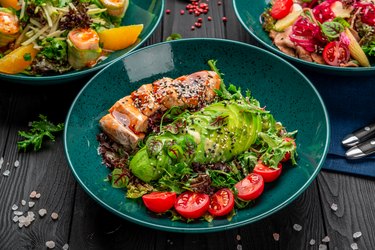
Photo Credit salmon image by Trevor Allen from Fotolia.com

The cholesterol in your blood comes from two sources. Your body manufactures cholesterol, and the foods that you eat contribute to your cholesterol levels. According to Colorado State University, most Americans consume more fats and cholesterol than needed. To strike a balance, reduce your overall cholesterol intake by putting low-cholesterol meat and fish selections on your daily menu.

Significance

High levels of cholesterol clog your arteries with fat and increase your risk for heart disease. To protect your heart, your physician might recommend that you reduce the fat in your diet, increase your level of physical activity and/or take prescription medications. Since cholesterol in food comes from animal products, you can reduce your risks by eliminating them altogether or consuming meat and fish in moderation.

Nutrient Values

The U.S. Food and Drug Administration recommends a daily cholesterol intake of no more than 300 mg daily for an adult 2,000-calorie diet. Foods that contain 20 percent or more of the daily value are high-content or nutrient-dense sources. Foods that contain 10 percent are good sources of a specific nutrient. To reduce dietary cholesterol, aim to consume meats and fish that provide less than 20 percent of the RDI: 60 mg or lower.

Selecting Meats

Meats with the lowest cholesterol have less visible fat and no added broth or fats. According to the American Heart Association, higher grades of meat, such as choice and select, are leaner than prime. Leaner cuts of meat come from younger animals, grass-fed animals and in some cases, free-range animals, including game meats.

Choosing Fish

Wild-caught fish and farm-raised fish often have different diets. Two healthy aspects of wild fish are low fat content and significant essential fatty acids that contribute to your health. Commercial fish farms often use food with a high corn content, according to Edmonds Community College. These fish might have a higher omega-6 fatty acid content and less omega-3 than wild-caught fish.

Best Choices

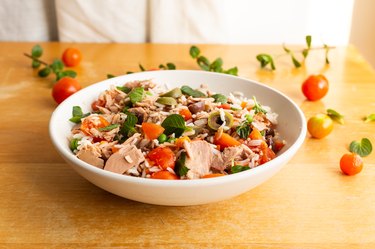
According to New Mexico State University, a 3-ounce serving of canned tuna has only 35 mg of cholesterol, far below the 20 percent threshold. Cod, Coho salmon and snapper offer additional low-cholesterol options at 47, 42 and 40 mg respectively. Fish choices near or below 10 percent include a 3-ounce serving of raw clams, at 29 mg; one ocean perch fillet, at 27 mg; 3-ounce portions of smoked Chinook salmon, at 20 mg; and pickled Atlantic herring, at 11 mg, according to the U.S. Department of Agriculture, or USDA.

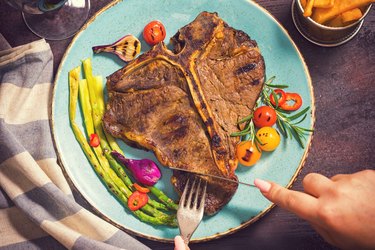
Beef, pork and lamb cuts often contain more fat than fish. Extra lean ham, at 45 mg per serving, is the lowest choice for pork in the New Mexico list. Broiled beef flank is the closest beef choice, at 60 mg or 20 percent of the RDI.

References

Article reviewed by Alison Gaynor Last updated on: Jun 14, 2011

Must see: Photo Galleries