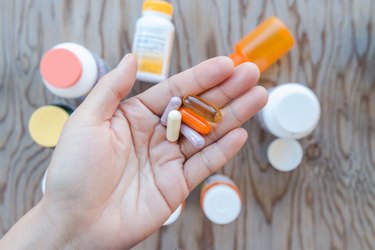
Iron toxicity from intentional or accidental ingestion of iron-containing products is a common cause of poisoning, especially in children. Overuse of supplements can develop into an accumulation of iron in your body and result in toxic effects to your digestive tract, liver, heart and brain. Iron overdose symptoms vary depending on the amount ingested, but iron overload is a medical emergency and can be fatal.
Why Your Body Needs Iron
Video of the Day
Iron is an essential mineral required for the production of hemoglobin, the protein in red blood cells. Hemoglobin plays a crucial role in metabolism by transporting oxygen to your lungs, muscles and all parts of your body. In addition, iron is needed for normal growth and development, cellular function and synthesis of hormones and connective tissues.
Video of the Day
Daily Requirement for Iron
To maintain adequate levels of iron for your body to function effectively, the Institutes of Medicine has established a recommended daily intake, depending on age and gender. These are:
- Children 1 to 3 years, 7 milligrams; 4 to 8 years, 10 milligrams; 9 to 13 years, 8 milligrams
- Teens 14 to 18 years: boys, 11 milligrams; girls, 5 milligrams
- Adults 19 to 50 years: women, 18 milligrams; men, 8 milligrams
- Adults 51 years and older: 8 milligrams
- Pregnant and lactating women: 9 to 27 milligrams
Read more: How Much Is Too Much Iron Supplement?
Food Sources of Iron
Your body absorbs only a small amount of iron from the food you eat. The iron is stored in your muscles, liver, spleen and bone marrow and released as needed to make new red blood cells. Dietary iron is found in two forms:
- Heme iron is the kind found in animal foods, such as meat, seafood and poultry. It is absorbed more easily than non-heme iron.
- Non-heme iron is the most common type of iron and is found in both plants and animals. It is also the type used in fortified foods. Your body absorbs iron from plant sources better when combined with animal-based iron and foods that contain vitamin C, such as fruits and some vegetables.
Foods that are good sources of iron include:
- Lean meat, fish and poultry
- Foods fortified with iron such as breakfast cereals and breads
- Pulses such as white beans, lentils and kidney beans
- Some vegetables including spinach and peas
- Nuts and some dried fruits, such as raisins
Forms of Iron Supplements
If you are deficient in iron, over-the-counter supplements and prescription preparations are available in various forms of iron salts. The most common forms are ferrous sulfate with 20 percent elemental iron, ferrous gluconate with 12 percent elemental iron and ferrous fumarate with 33 percent elemental iron.
As well as iron-only types, most multivitamin and mineral supplements, as well as prenatal supplements, often contain iron.
Read more: What Are the Best Iron Supplements for Women?
Do You Need a Supplement?
Certain conditions may put you at risk for developing a deficiency in iron and may require you to take an iron supplement. Some of these include:
- Those on a restricted diet, including vegetarians or vegans
- Teens and women who have heavy periods
- Frequent blood donors
- Pregnant women
- People with certain intestinal disorders that inhibit nutrient absorption, such as celiac disease
Generally, you won't overdose on iron from your diet, but taking supplements if you are not iron-deficient can be dangerous. To establish a guideline for the safe use of iron supplements, upper limits have been set and are:
- Children: 1 to 13 years, 40 milligrams
- Teens: 14 to18 years, 45 milligrams
- Adults: 19 years and older, 45 milligrams
Causes of Iron Overload
An intake of too much iron can be accidental, caused from excessive use of iron supplements or can develop from a chronic disorder that prevents the efficient formation of red blood cells.
An inherited condition called hemochromatosis can result in the buildup of toxic levels of iron. This disease often develops into serious problems of the liver and heart. The National Institutes of Health advises that people with this disorder should avoid taking iron supplements.
Iron overload may develop in people requiring multiple blood transfusions, due to chronic conditions such as sickle cell disease, inherited blood diseases, anemia and some forms of cancer.
Iron Toxicity and Dosages
If you take in more iron than you need, the excess amount is stored in tissues throughout your body. With a gradual accumulation in the organs, including your pancreas, pituitary gland, heart and liver, complications can occur. The liver is often most affected by iron toxicity, but iron overload may damage your heart, even causing death due to myocardial siderosis.
The severity of toxicity depends on the form of iron salts, with ferrous sulfate tablets being the most common. Amounts of 20 to 60 milligrams per kilogram of elemental iron results in moderate symptoms; more than 60 milligrams per kilogram can result in severe toxicity and lead to disease and death, according to a study published in StatPearls in 2019.
Iron Toxicity Symptoms
Serious iron toxicity typically occurs within six hours after taking the overdose. Symptoms of iron poisoning vary in progression, depending on the individual and amount of iron ingested. Overall, the symptoms most often occur in five stages. The late-stage symptoms develop only when Stage 1 symptoms are moderate or severe.
Stage 1 Symptoms. If no iron overdose symptoms develop in the first six hours after ingestion, risk of toxicity is likely to be minimal. Initial side effects reflect the severity of poisoning and may include:
- Vomiting, often with blood
- Explosive diarrhea
- Abdominal pain
- Irritability
- Drowsiness
If poisoning is very serious, symptoms may include:
- Rapid breathing and heart rate
- Seizures
- Low blood pressure
If shock and coma develop within the first six hours, the rate of mortality is about 10 percent, warns Merck Manual.
Stage 2 Symptoms. This is the latent period. Within 6 to 48 hours after an overdose, symptoms can appear to improve.
Stage 3 Symptoms. In 12 to 48 hours after initial overdose, iron toxicity symptoms that might develop are:
- Very low blood pressure
- Fever
- Bleeding
- Jaundice
- Liver failure
- Metabolic acidosis
- Seizures
Stage 4 Symptoms. Two to five days after the overdose, symptoms can become very severe and include:
- Liver failure
- Possible death from shock or bleeding
- Blood-clotting abnormalities
- Decrease in sugar levels in the blood
- Confusion and lethargy
- Coma
Stage 5 Symptoms. Two to five weeks after intake, lasting iron overdose symptoms from scarring could include:
- Blockage of the stomach or intestines from scars
- Scarring causing cramping, abdominal pain and vomiting
- Cirrhosis of the liver
Ingested iron can also have an extremely corrosive effect on your stomach and digestive tract. This often causes bleeding and scarring that can remain long after recovery.
Treatment of Toxicity
If you have severe iron toxicity, you will need to be hospitalized. Vomiting won't necessarily empty the iron from your stomach. A polyethylene glycol solution may be given orally or through a stomach tube for whole-bowel irrigation, although its effectiveness is uncertain.
Another option for treatment is chelation therapy, using the drug Deferoxamine by intravenous, which binds with the iron in the blood allowing it to pass into the urine.
All cases of iron toxicity should be reported to your local poison control center.
- National Institutes of Health: "Iron"
- Merck Manual: "Iron Poisoning"
- Mayo Clinic: "Iron Deficiency Anemia"
- Merck Manual: "Secondary Iron Overload"
- Merck Manual: "Overview of Iron Overload"
- Society of Cardiovascular Magnetic Resonance: "Myocardial Iron Overload (Siderosis)"
- StatPearls: "Iron Toxicity"
- National Institutes of Diabetes and Digestive and Kidney Diseases: "Hemochromatosis"
Is this an emergency? If you are experiencing serious medical symptoms, please see the National Library of Medicine’s list of signs you need emergency medical attention or call 911.