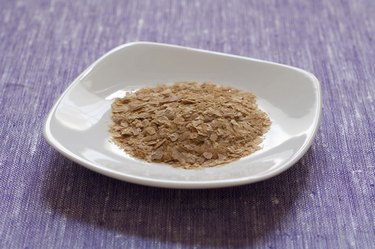
Despite its unappetizing name and unappealing appearance, nutritional yeast flakes may be one of the best additions to your diet in terms of nutrition and taste. It provides a wealth of vitamins, minerals and protein that almost anyone—from Paleo enthusiasts to vegans—can enjoy. Don't confuse nutritional yeast with baker's yeast, which is still active and could grow inside your stomach and deprive you of nutrients, or with brewer's yeast, which is inactive but distinctly bitter.
What Are Nutritional Yeast Flakes?
Video of the Day
[Nutritional yeast](http://www.hchs.edu/literature/Nutritional Yeast & Liver.pdf) is sourced from whey, blackstrap molasses or wood pulp. "Nutritional yeast is yeast that is grown on molasses or a similar habitat, much like brewer's yeast, a byproduct from producing beer," says Brandice Lardner, an NASM-certified personal trainer and nutrition coach with One by One Nutrition. "When the yeast is harvested, it is washed and then dried with heat so that it stops growing." After this heat treatment, it's crumbled or flaked and packaged for the consumer.
Video of the Day
How to Add Nutritional Yeast to Your Diet
According to Lardner, the best place to start using nutritional yeast flakes is as a replacement for Parmesan cheese. "Nutritional yeast is known for its tangy, cheesy flavor," she explains. "It comes in flakes or power, both which blend nicely into hot foods."
Nutritional yeast can be found at any health-food store, often in the bulk section. There are multiple brands of nutritional yeast, so Lardner suggests trying a few first to find the one that you like best. Most brands have the same ingredients—yeast and B vitamins—but some do taste better than others.
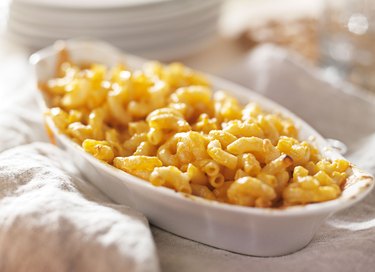
You can also add nutritional yeast raw to smoothies or salads, or sprinkle it over popcorn, stir into soup or toss into pasta. Because of its described flavor, nutritional yeast is often used as a replacement for cheese to create vegan dishes such as nacho dip and mac 'n' cheese.
Health Benefits of Nutritional Yeast
Nutritional yeast is a complete protein, meaning that among the 18 amino acids it contains, nine are essential ones that your body cannot produce. Nutritional yeast also provides the compounds beta-1,3 glucan, trehalose, mannan and glutathione, which are associated with enhanced immunity, reduced cholesterol levels and cancer prevention. You get a significant dose of the minerals iron, selenium and zinc when you consume nutritional yeast as well and one serving of nutritional yeast provides about four grams of fiber.
Nutritional yeast is a source of B vitamins, including thiamine, folate, B-6 and niacin. Just a half tablespoon of some brands will provide you with a day's worth of B vitamins, while other brands offer between 30 and 100 percent of B vitamins. These vitamins help you extract the energy from food and produce red blood cells. Many types of nutritional yeast are also fortified with vitamin B-12, which is usually found exclusively in animal products.
"Nutritional yeast is a plant-based source of protein, making it a staple in many vegan kitchens," Lardner points out. "The protein and fiber content promote satiety at meals and the B vitamins help in energy production."
Read More: 7 Signs Your Gut Is Out of Whack
The things you won't find in nutritional yeast also make it a boon for your diet. It contains little sodium and fat. It's also gluten-free, so people who must avoid this protein found in wheat products can enjoy it. Additionally, nutritional yeast lacks Candida albicans, the type of yeast that aggravates the fungal infection known as candidiasis. It's free of dairy and soy as well.
Try It Yourself
Lardner shares that the vegetarian and vegan community often refers to nutritional yeast as 'nooch.' She provides the following recipe, perfect for those who want to slowly introduce it into their diet or try different brands and find the preferred taste.
"Cheesy" Cauli-Rice
Serves 1-2
Ingredients
1 small head of cauliflower
1 tablespoon olive oil
1/2 cup diced onion
1/4 cup chicken or vegetable broth
1/2 teaspoon garlic powder
1/4 teaspoon salt
1/4 cup nutritional yeast flakes
Directions:
Rinse cauliflower and "rice" it by by grating it with a large cheese shredder or pulsing it in a food processor. In a large skillet, heat olive oil over medium heat. Add diced onion and sauté for five minutes. Add riced cauliflower to the pan and stir to coat with olive oil. Sauté for another five minutes. Add broth, garlic powder, salt and cook an additional five minutes. Add nutritional yeast flakes, stir, serve and enjoy!
Ashley Lauretta is a freelance writer and fitness enthusiast based in Austin, Texas. Her writing appears in Women's Running, Women's Adventure, Competitor and more. Ashley is a proud alumna of the University of California, San Diego. Connect with Ashley on her website and Twitter.