





















































Brown Blemishes on the Face

Brown Blemishes on the Face
Photo Credit George Doyle/Stockbyte/Getty Images

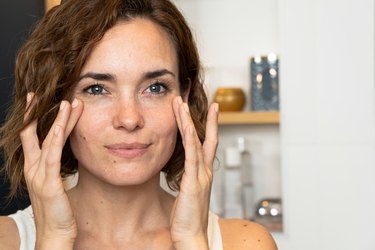
There are many possible causes for brown blemishes, or hyperpigmentation, but most are associated with an increased production and deposition of melanin, according to Merck. Melanin is the pigment that gives skin its color. Melasma and age spots are the most common type of hyperpigmentation to develop on the face.

Identification

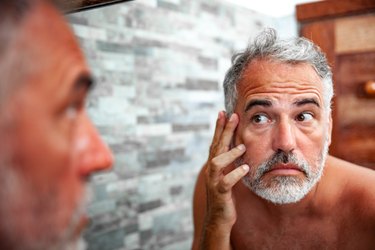
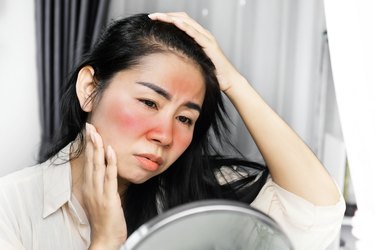
Melasma occurs primarily in pregnant women and in those taking birth control pills, but it can also affect nonpregnant women and men. It appears as dark brown, fairly symmetrical patches of discoloration on the temples, cheeks, forehead or other areas of the face. The patches are distinct and vary in size. Age spots, or liver spots, are flat blemishes that range in color from tan to dark brown. Age spots affect people of both genders and are more common in the elderly.

Causes

Age spots and hyperpigmention due to sun exposure occur when the sun's UV light triggers melanocytes in the skin to produce excess pigment. The reason some people are more prone to hyperpigmentation disorders is not understood. According to the American Academy of Dermatology, the exact cause of melasma is not known. However, genetics, hormones and sun exposure all appear to play a role in the development of the condition.

Prevention

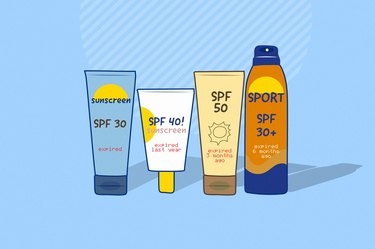
Because most cases of brown blemishes on the face are associated with sun exposure, wearing sunscreen with an SPF of 30 or greater every day can help to prevent hyperpigmentation from developing, according to the American Academy of Dermatology. Regular exfoliation to remove damaged and dead skin may slow the progression of age spots, but it cannot completely prevent them from occurring.

Treatment

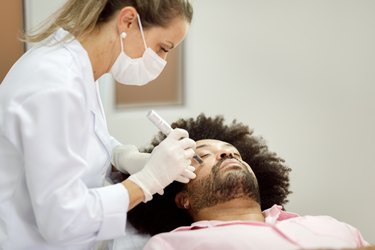
The first line of treatment for brown blemishes on the face is generally with skin-lightening agents or retinoids, such as hydroquinone and tretinoin. Chemical peels are useful for removing the top layer of skin so that lighter skin is able to grow in its place. Microdermabrasion and laser therapy may be beneficial when other treatment options have failed. Brown blemishes associated with the use of medications or birth control pills may fade once the medication is discontinued. Cryotherapy may be useful at removing small areas of discoloration.

Considerations

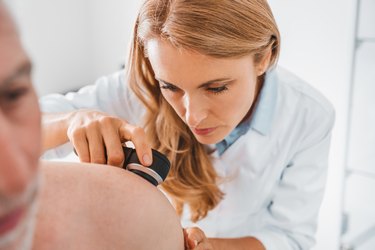
Sometimes, brown blemishes on the face are caused by an underlying medical condition, such as Addison's disease, hemochromatosis, biliary cirrhosis and Peutz-Jeghers syndrome. Any new area of discoloration requires professional evaluation to rule out underlying medical problems and possible malignancy. A sample of the skin may be taken for biopsy before treatment to fade or remove the blemish can begin. Merck states that age spots are a risk factor for melanoma.

References

Article reviewed by GlennK Last updated on: Jun 14, 2011

Must see: Photo Galleries

Member Comments