If you've just been told you have high levels of bad cholesterol, there's a good chance the news came with the suggestion to eat fewer fatty animal foods, especially meat. It's a tough sell for meat lovers, but fear not — cutting back on meat doesn't have to mean eliminating it altogether.
When it comes to high levels of the bad type of cholesterol, which is low-density lipoprotein (LDL) cholesterol, some meats are worse offenders than others.
Video of the Day
Video of the Day
"Not all fats are created equal," says Adriana Quinones-Camacho, MD, a cardiologist and assistant professor of medicine at NYU Langone Health in New York City. "Bad fats are usually saturated fatty acids and, when found in fatty meats, can cause high levels of cholesterol and are associated with increased risk of heart disease."
Read more: What You Need to Know About Cholesterol
Fats: The Good and Bad
In general, the American Heart Association (AHA) cautions that fatty red meats, including lamb, pork and beef, have higher levels of saturated fat than alternatives such as fish and lean poultry. It's the saturated fat in a food, not its cholesterol content, that translates to high blood cholesterol. Organ meats (think liver and sweetbreads) as well as full-fat meats and full-fat dairy products are best to avoid, says Dr. Quinones-Camacho.
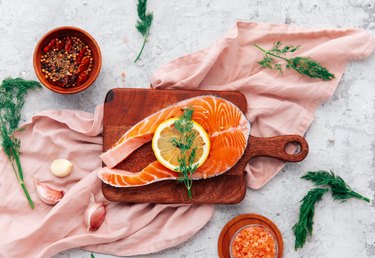
If you really want to keep your bad cholesterol levels down, fish is probably your best bet. "Fatty fishes such as salmon are high in good fats, such as omega-3 fatty acids, which can help people with high cholesterol," she says.
Indeed, the good fats, like those found in fish, can raise what's known as the good type of cholesterol — high-density lipoprotein (HDL) cholesterol. When it circulates through your bloodstream, HDL works like a vacuum cleaner, carrying away the waxy buildup of LDL from inside your arteries, according to the Cleveland Clinic.
Red Meat Choices
When it comes to managing high cholesterol, lamb, beef and pork should all be eaten in moderation, says Qi Sun, MD, ScD, an associate professor of nutrition at the Harvard T.H. Chan School of Public Health in Boston.
These red meats all have high levels of saturated fats, so if you're choosing between these meats, he says it's more important to select the least fatty cut and to read the nutrition labels closely than to get hung up on the animal type. "Sometimes even the ground meat that says 'lean' on the package can still have a significant amount of saturated fat that should be avoided," Dr. Sun adds.
If you choose to eat red meat, the AHA recommends ensuring it is truly lean by shopping for cuts that include the words "round," "loin" or "sirloin" on the package and by trimming off as much visible fat from the meat as possible. Processed meats — including salami, bacon, ham, sausages and deli slices — should be avoided whenever possible.
What About Poultry?
Poultry, including chicken and turkey, generally has lower saturated fat levels than red meats, according to the AHA, which makes it a good alternative for you're looking to lower a bad cholesterol level.
When you choose to eat poultry, though, the AHA emphasizes that the preparation method is key. Steer clear of anything fried and, when possible, cut off the skin and the fat beneath it.
Pay Attention to Portions
Nutrition labels can be helpful when it comes to avoiding high cholesterol, but it's important to note that the saturated fat content is usually listed per serving, which is typically 3 ounces, according to the AHA.
Three ounces of meat is about the size of a deck of cards, so if your cut of meat is a lot bigger than that, you're probably eating more saturated fat than you should be. To keep your bad cholesterol down and your heart as healthy as possible, the AHA recommends eating no more than 5 1/2 ounces of meat a day.
- Adriana Quinones-Camacho, MD, cardiologist, assistant professor of medicine, NYU Langone Health, New York City
- American Heart Association: “Meat, Poultry, and Fish: Picking Healthy Proteins”
- Cleveland Clinic: “HDL: Is It Possible to Raise Your ‘Good’ Cholesterol?”
- Qi Sun, MD, ScD, associate professor of nutrition, Harvard T.H. Chan School of Public Health, Boston
Is this an emergency? If you are experiencing serious medical symptoms, please see the National Library of Medicine’s list of signs you need emergency medical attention or call 911.