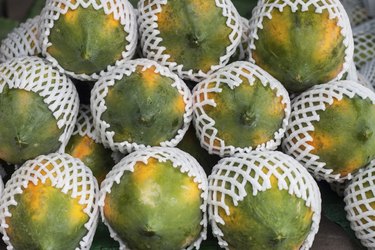
Can You Eat Papaya Skin?

Can You Eat Papaya Skin?
Photo Credit Daniel Stein/Photodisc/Getty Images

Papaya has long been known for its health benefits. In 1875, British physician, T. P. Lucas, started a hospital in Brisbane, Australia, that treated patients solely with papaya for its medicinal properties. The flesh of the papaya is not the only vital part of the fruit; the seeds, the bark, the leaves and the skin all contain elements that are not only nutritious but have therapeutic applications.

History

Papaya, native to eastern Central America, was found growing in the West Indies in the 1500s. Via the Philippines, the tree spread to the East Indies and then papaya cultivation proliferated in other countries, including Africa and the Pacific islands. By 1800, papaya was grown in all tropical regions. Today, Hawaii and South Africa are the main exporters of papaya.

Nutritional Content

Papayas contain papain that aids in digestion by breaking down protein. Papaya is a good source of fiber, folate and vitamin A and contains carotenoids, lutein and lycopene, essential amino acids that influence proper cell function. In addition, papayas have four times more vitamin E, 33 percent more vitamin C, 50 percent more potassium and fewer calories than oranges.

Papaya Skin

The skin, as well as the flesh of the papaya, is edible. The skin of the papaya has many nutritional benefits but only the skin of organically grown papaya should be eaten to avoid chemicals and pesticide residues. Natives of Papua New Guinea not only eat the skin of papaya but use its potent healing properties to treat rashes and sunburn and to remove brown age spots. People of the Pacific Islands utilize papaya leaves, skin, seeds, bark, roots, flowers and the fruit for medicinal purposes.

Papaya Leaves

The leaves may be the most beneficial part of the papaya for therapeutic use. There is evidence that papaya has an anti-cancer effect against many tumors, including cancers of the cervix, breast, liver, lung and pancreas. Researchers at University of Florida used an extract from dried papaya leaves to discover papaya's dramatic effect against 10 types of tumors. Anticancer effects on cells proved stronger with larger doses of the tea, as documented in the "Journal of Ethnopharmacology." Results of the study suggest the possible use of papaya for therapeutic strategies on the immune system to fight cancer. Indigenous populations in Australia have been successfully using papaya leaf extract to control cancer without toxicity, according to Medicine News Today.

Papaya Seeds

For centuries, roots and seeds were used to make a tea to expel parasites, alleviate bleeding, kidney colic and jaundice. About 20 seeds, which contain highly digestible protein, can be chewed, ground-up or swallowed with juice to eliminate most parasites, according to the Innvista Web page. A study from Nigeria and published in the "Journal of Medicinal Food" found that dried papaya seeds were a cheap, natural and readily available effective treatment against human intestinal parasites without significant side effects.

Topical Application

Papaya is widely used by hospitals in Jamaica as a form of dressing for chronic ulcers. A questionnaire was distributed to 285 registered nurses at the University of West Indies, Kingston, Jamaica. Results of the survey suggested that the use of unripe fruit as a topical application promoted healing of chronic skin ulcers. Papaya was considered to be more cost efficient and effective than other topical applications for the skin condition.

References

Article reviewed by David Penick Last updated on: Jun 14, 2011

Must see: Photo Galleries

Member Comments