






































A basilar migraine is a variation of a migraine, with or without aura. It is the aura phase of the migraine that separates a basilar migraine from other types of migraines. The "aura" consists of the sensations or symptoms a person experiences before the headache. These can be physical, auditory or visual in nature. According to a 2005 research article by Dr. Lewis and Dr. Pearlman in the journal "Pediatric Annals," basilar migraines are the most common migraine variant, representing between 3 and 19 percent of all migraines.
Speech Problems
Speech problems, referred to as dysarthria, are one symptom of a basilar migraine. If a person experiences this symptom, she will have slurred and garbled speech. The pitch may be off, she may speak too fast or slow. Someone experiencing dysarthria may also have chewing problems or drool.
Tinnitus
Tinnitus is often described as ringing in the ears. However, according to the American Tinnitus Association, people may also hear clicking, chirping, whistling, hissing or roaring. These noises occur when there is no external noise.
Sound Sensitivity
What normally passes for normal sound levels will be much louder to a person suffering from a basilar migraine. This is why people enduring a migraine attack want to be in a quiet location. Noise causes more pain.
Double Vision
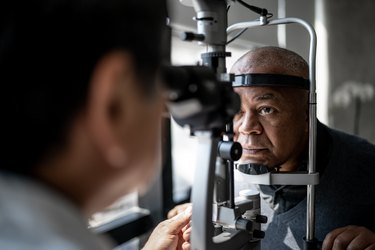
Double vision is another symptom. The medical term for double vision is diplopia. The nerves that control the eyes are directly connected to the brain. When the brain is experiencing a migraine, signals to the eyes can be disrupted. In turn this can cause double vision, as well as pain in and around the eyes.
Visual Symptoms
Someone experiencing a basilar migraine can experience other visual symptoms as well. Blurriness, sensitivity to light, streaking lines and dots (often referred to as floaters) can occur. Often, people suffering a migraine want to be in a dark room. The darkness helps with any light sensitivity, which can add to the headache.
Lack of Coordination
Ataxia refers to a lack of coordination. If ataxia occurs during the aura stage, a person will have trouble with balance and coordination. This means that walking, talking, writing and holding objects will be difficult. The National Ataxia Foundation says that the parts of the nervous system that are responsible for movement and balance are affected.
Sleepiness
A person experiencing a migraine may become sleepy during the aura phase. Dr. Kirchmann and colleagues state in a 2006 article in "Neurology," that decreased consciousness can include syncope (temporary loss of consciousness), somnolence (drowsiness), confusion and coma. It should be noted that none of the patients in their study fell into a coma. Most experienced temporary loss of consciousness and confusion.
Numbness or Tingling
The migraine sufferer may experience numbness, prickling or tingling of the skin (paresthesias). If you have experienced your arm, leg, hands, or feet falling asleep, then you know how paresthesias feel. Bilateral paresthesias occur when this happens on both sides of the body.
References
- "Pediatric Annals;"The Migraine Variants; D.W. Lewis, MD and E. Pearlman, MD.; June, 2005
- "Neurology;" Basilar-Type Migraine; M. Kirchmann, MD, L. Lykke Thomsen, MD, J. Olesen, MD; March, 2006
- "Current Pain & Headache Reports;" Basilar-type Migraine; R.G. Kaniecki, MD; Issue 13, 2009


