

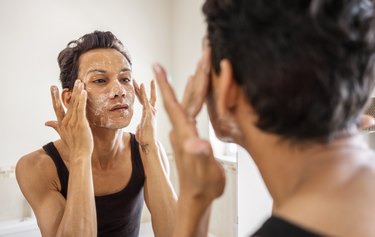














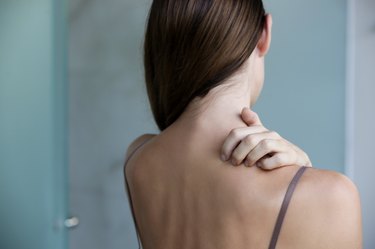





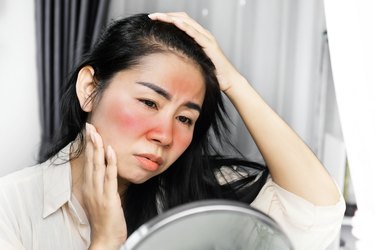







According to the National Institute of Arthritis and Musculoskeletal and Skin Diseases, acne, is the most common of the skin diseases, affecting 80 percent of all people at some point between the ages of 11 and 35. Though the exact cause of acne remains unknown, the effect is a bacterial buildup in the hair follicle. The neem leaf is a cornerstone of Ayurvedic medicine, the medical system native to India that is one of the oldest in the world, and its properties make it an efficacious natural remedy for a multitude of ailments, including acne. As with most herbal remedies, there are no clinical studies supporting the safety or efficacy of neem and so it should be used with caution.
Identification
The neem tree, a member of the mahogany family, is native to Southeast Asia. Its asymmetrical leaves are feather-like, growing outward from a central stem. The leaves are crushed or ground to use externally or ground into powder to use internally in supplements. To treat acne, dried neem leaves are ground into powder and mixed with water, then applied to the skin.
Efficacy
Neem serves as an antibacterial, an antifungal and an astringent agent, giving it multiple points of efficacy in treating acne. Neem also contains concentrations of antioxidants 100 times more potent than that of blueberries or broccoli -- two antioxidant-rich foods -- to help protect areas inflamed with acne breakouts from environmental damage, according to the Food and Agriculture Organization of the United Nations, or FAO.
Benefits
Neem leaves contain quercetin, a compound that aids the body in its response to inflammation which helps sooth painfully irritated blemishes and cool the skin. Acne eruptions that become infected at the surface can itch, and quercetin effectively combats this irritation.
Alternatives
Neem oil, made from ground neem seeds, also has antibacterial, antifungal and antioxidant properties, making it comparable alternative to pastes or ointments made from neem leaves. In addition, neem oil is rich in fatty acids which hydrates and nourishes the skin, according to the FAO.
Warnings
Women who are pregnant or trying to get pregnant should not use neem products, according to the World Health Organization. It's also best to keep neem applications away from mucous membranes, so you should not treat acne outbreaks close to the nostrils or eyes with a topical neem treatment. While neem has not demonstrated toxicity in adults, neem toxicity in infants has produced symptoms similar to Reye's Syndrome, an affliction that strikes every organ of the body. As with most herbal remedies, there are no clinical studies supporting the safety or efficacy of neem and so it should be used with caution.


Member Comments