


















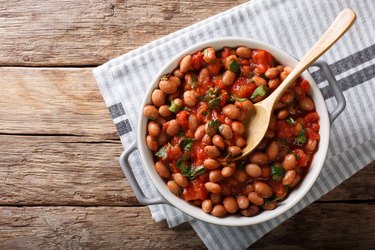




























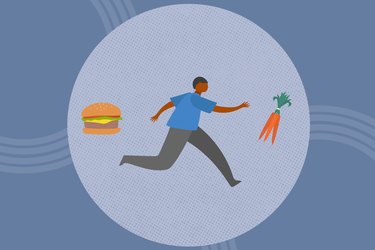
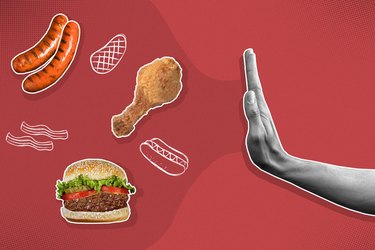

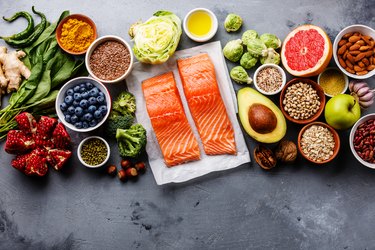
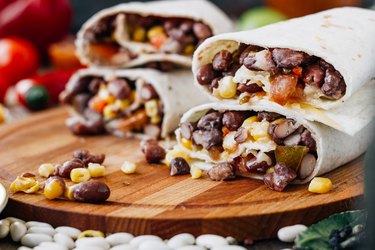














Controlling the types of carbohydrates you eat and focusing on eating more protein may help you lose weight. Plans such as Zone Diet, Protein Power and PaNu all suggest eating high levels of protein and what are known in the Zone Diet as "favorable carbs" while avoiding "unfavorable carbs." Atkins also severely limits carbohydrates, eliminating most carbohydrate foods and focusing primarily on leafy green vegetables during the early stages of the diet.
History
High-protein, low-carbohydrate diets for weight loss are nothing new. In the past four decades, these diets have grown in popularity as other dieters have shared their weight-loss success on such diets. The Atkins Diet was the first high-protein, low-carbohydrate diet in recent times, although such diets date back at least to the 19th century. Dr. Robert Atkins published "Dr. Atkins Diet Revolution" in 1972. Before Atkins, conventional wisdom suggested that the only way to lose weight was by limiting fat and counting calories. Atkins suggested that by limiting the types of carbohydrates you eat, minimizing the amount of carbohydrates you eat and eating more fat and protein, you could achieve weight loss. Dieters' success on Atkins' program seemed to prove that low-carbohydrate, high-protein diets could be effective.
Carbohydrates
Carbohydrates are made up of sugars. Simple carbohydrates contain one or two sugars, and eating them causes a nearly instantaneous rise in blood glucose. Complex carbohydrates contain three or more sugars. Eating complex carbohydrates results in a more gradual and sustained rise in blood glucose. The simplest way to identify "good" versus "bad" carbohydrates would be to say that sugar and simple carbohydrates are "bad" while complex carbohydrates are "good," but it's actually more complicated than that. Some simple carbohydrates such those in as certain fruits, may have a minimal effect on blood sugar, while some complex carbohydrates, such as those in white bread, may have an extreme effect on blood glucose. Diets such as Atkins take the simplistic view of carbohydrates. Leafy greens are recommended on Atkins at first because of their low complex carbohydrate count. As you progress through the stages of the Atkins diet, you can begin to add a few higher-carbohydrate foods -- for example, low-sugar fruits such as berries -- but sugar, white bread and similar sugary or starchy foods are never allowed at any stage.
Glycemic Index
The glycemic index was created to quantify the effect that foods have on blood sugar. Foods were assigned a number on a scale that represents the effect that the food has on blood sugar levels: the glycemic index of the food. For instance, white bread, sugar and dried dates are all high-glycemic-index foods that have a marked impact on raising blood glucose, while peanuts, legumes, pears and bran cereal all have a minimal impact on blood glucose and are low-glycemic index foods. Most high-carbohydrate foods also rank high on the glycemic index.
Theories and Speculation
Carbohydrates' effect on blood glucose is important for weight loss because of insulin, explains science write Gary Taubes in his book "Good Calories, Bad Calories." When your blood glucose levels rise, your pancreas releases insulin. One of insulin's roles in your body is to serve as its fat storage hormone. When it is present, the foods that you eat go straight to fat storage. When it is absent, your body begins to use fuel efficiently, burning stored body fat as its primary source of fuel. The result is weight loss.
Michael Eades, co-author of "Protein Power Lifeplan" agrees with Taubes' insulin hypothesis. Eades also believes that protein in such diets is essential. Eades is a medical doctor who takes an evolutionary view of how humans should eat. Archeological evidence indicates that our ancestors lived on mostly hunted and foraged meat, with some seasonal fruits and vegetables included when they were available. Humans ate this way for the history of the species before the relatively recent onset of grain agriculture several thousand years ago, and Eades believes that the human body hasn't evolved to eat grains. Instead, he says, we need to eat as our ancestors did -- avoiding grains and eating animal protein and seasonally available produce.
Recommendation
Recommendations vary depending on which diet you choose. Dr. Eades recommends eating fewer than 7 g to 10 g of carbohydrates per meal in the diet's early stages, with an increase to 15 g per meal as you progress. Although he doesn't limit the types of carbohydrates you can choose, Dr. Eades does suggest that eating foods as close to what early humans ate as possible may lead to better health.
The Zone recommends eating 40 percent of your calories from protein and 30 percent each of your calories from fat and carbohydrates at every meal. The diet suggests eating favorable proteins, fats and carbohydrates, such as whole grains, vegetables, fruits, and lean cuts of meat, fish, or skinless chicken.
Other programs, such as South Beach, recommend selecting mostly vegetables in early stages, and then adding in carbohydrates that have a glycemic index of less than 50, as the diet progresses.
Research
Research suggests that high-protein, low-carbohydrate diets do lead to weight loss. A 2010 Temple University study conducted by Gary Foster, Ph.D. and several colleagues and published in "Annals of Medicine" compared low-carbohydrate/high-protein diets similar to Atkins with more conventional low-fat, calorie-controlled diets by following dieters on each diet for two years. The study concluded that both diets were equally effective at producing weight loss.
Considerations
Each diet has a specific formula for weight loss. Atkins cautions that because insulin control is a chemical reaction in the body, you should choose one diet and follow it closely. All of the diet designers also agree that eating a controlled-carbohydrate diet is a lifestyle choice, not a temporary weight-loss fix. If you return to your former way of eating, it is likely that you will regain the weight. Most low-carbohydrate diets do not follow the guidelines set out by the USDA's food pyramid for proper nutrition. If you plan to go on a high-protein, low-carbohydrate diet, you should talk with your doctor.
References
- "Enter the Zone"; Barry Sears, Ph.D. and Bill Lawren; 1995
- "Dr. Atkins New Diet Revolution"; Robert C. Atkins, M.D.; 1992
- Medline Plus: Carbohydrates
- Oregon State University Linus Pauling Institute: Glycemic Index and Glycemic Load
- "Good Calories, Bad Calories"; Gary Taubes; 2007
- "Protein Power Lifeplan"; Michael R. Eades, M.D. and Mary Dan Eades, M.D.; 2000


Member Comments