

























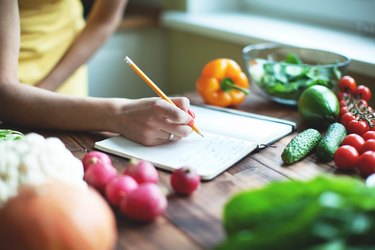
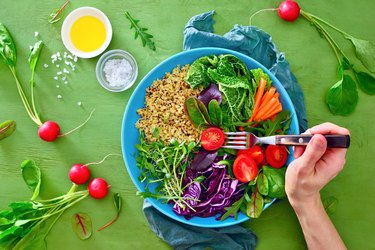
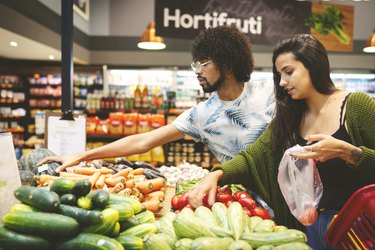
Cutting back on calories in order to lose weight or cutting back on fattening foods to prevent or manage heart disease, does not mean that it is necessary to go hungry. Deprivation does not lead to long term results and when starving it is hard to make good food choices. When making changes to diet, it is helpful to consume low fat foods that cause feelings of fullness. However, it is still important to watch calorie intake.
Vegetables
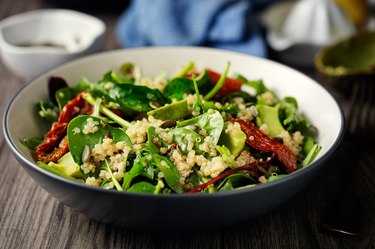
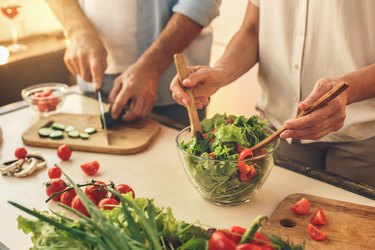
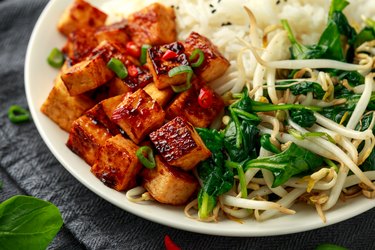
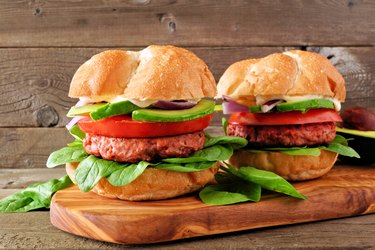
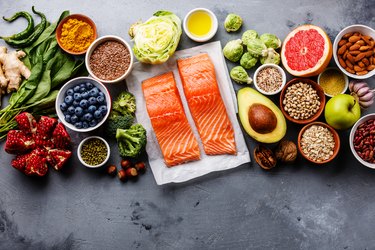
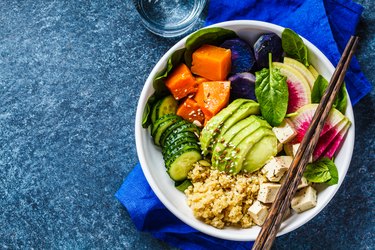
All foods have a certain amount of calories and fat per serving; the trick to weight loss is to eat foods low in calories and fat that have a high water content. Water adds volume to food without the fat and calories, which means that more can be eaten, states MayoClinic.com. The water in vegetables also helps the body stay full longer. Try making meals mostly vegetable-based and cut back on meats and other foods higher in fat and calories. Having a salad or vegetable soup before a meal can also help curb hunger. Keep items, such as carrot or celery sticks, cut up and handy; snack on them instead of chips or baked goods. Avocados, on the other hand, are higher in fat and should be eaten in moderation.
Fruits
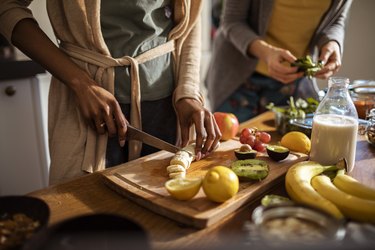
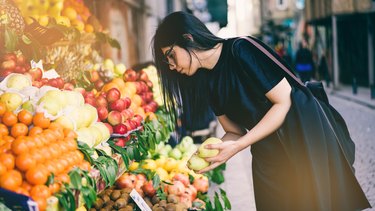
Fruits are low in fat and calories, as well, and also make the stomach feel full, claims the Cleveland Clinic. The goal is to get at least seven servings of fruits and vegetables every day. Fruits are naturally sweet and may also help to satisfy a sweet tooth, substituting for candy and desserts. Pack fruit in containers to take to work or on errands to avoid binging. Another trick is to eat small snacks, such as cut-up fruits and vegetables, throughout the day to help keep hunger at bay. Stick to fresh fruits whenever possible and if using canned goods or juices, read the labels and look for products low in calories, fat and sugar.
High Fiber Foods
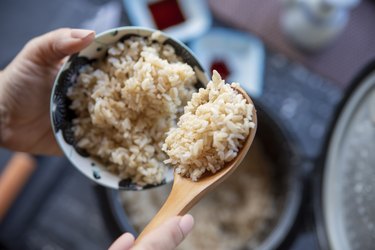
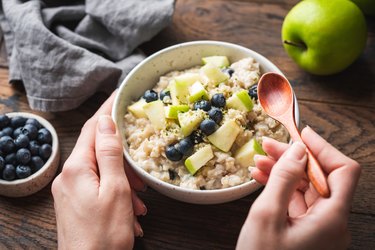
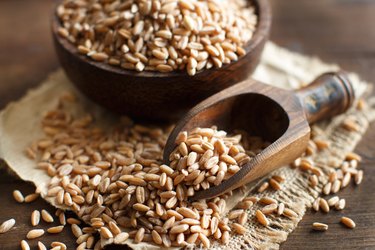
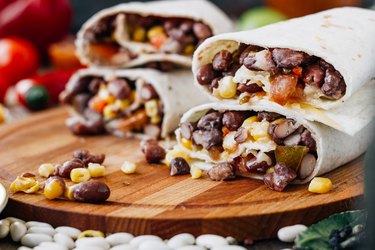
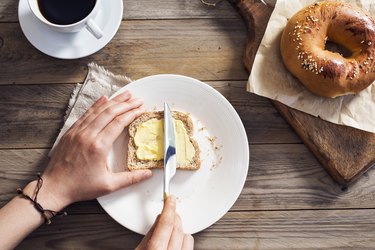
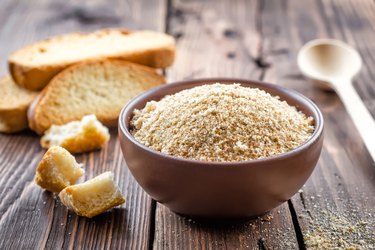
Fiber is a substance found in foods that is hard for the body to digest. For health benefits, the Harvard School of Public Health, recommends getting at least 20 grams of dietary fiber per day from food and possibly more, depending on the number of calories consumed. Getting enough fiber protects against various chronic health conditions and because it is hard to digest, it keeps the body feeling full longer. While many fruits and vegetables contain fiber, other good sources include whole grain products. Read food labels and choose products with 4 to 5 g of fiber per serving and a low percentage of fat per serving. Whole grain foods, while healthy, can be high in calories and can lead to weight gain if not portioned correctly.
Low Fat Dairy Products
Slowly start replacing high calorie and high fat products with those that are lower in both. Dairy products can help create fullness, but they can be high in fat. Instead of whole dairy products, the Centers for Disease Control and Prevention suggests looking for non fat, low-fat or soy-based products. Milk, cheese, yogurt and their non dairy substitutes can provide protein and calcium; they are part of a healthy eating plan.


Member Comments