













































Healthful Diets for Cancer Patients

Treatment for cancer has many adverse side effects that can affect eating habits and nutrition, including fatigue, nausea and vomiting, diarrhea, constipation, pain and mouth, throat and gum irritation. Additionally, cancer treatment makes you especially susceptible to food-borne infections. Even though the side effects of treatment make it very hard to eat and keep food down, you need to maintain optimal nutrient and caloric intake in order to optimize your immune system and increase your chances of beating the disease.

General Nutrition and Diet Guidelines

According to the American Dietetic Association, when undergoing treatment, eating small meals rather than two or three bigger ones can help make it easier to digest and absorb food. However, if you are feeling nauseous or uneasy, the ADA recommends avoiding your favorite foods as you may develop an aversion to them and not be able to enjoy them at a later time. Additionally, if you feel nauseous, refrain from eating foods with a strong odor or flavor; bland foods are easier to keep down than spicy or flavorful foods. If you are vomiting, keep hydrated. One way of doing this is to chew or suck on ice chips.

Another recommendation by the ADA is that you avoid cross-contamination between foods by always washing any utensils or cutting boards you use for cutting and chopping with hot water and soap. While undergoing cancer treatment, your immune system might be impaired, making you especially prone to infections, including food-borne illnesses. Avoid eating foods that have been left lying around at room temperature or not refrigerated properly, since they might have developed bacteria.

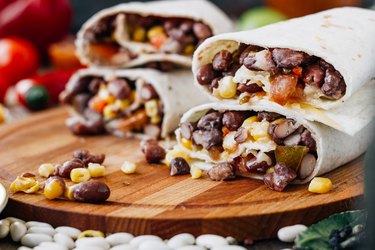
One of the possible side effects of cancer treatment is constipation. According to the ADA, if you are feeling constipated, eating foods that are high in fiber and increasing your fluid intake might help increase bowel motility. If you have diarrhea, another common side effect of cancer treatment, limit your fiber, fat and sugar intake, as these three things tend to worsen diarrhea.

Recommended Foods

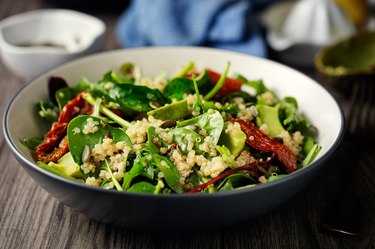
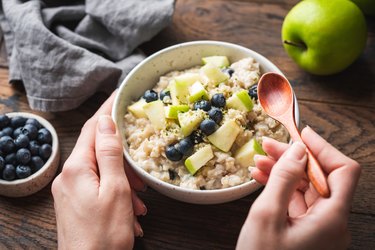
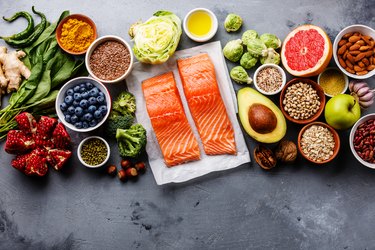
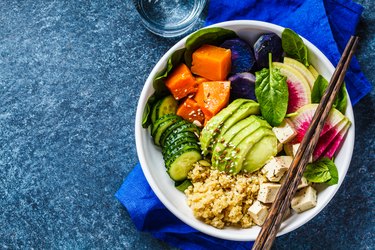
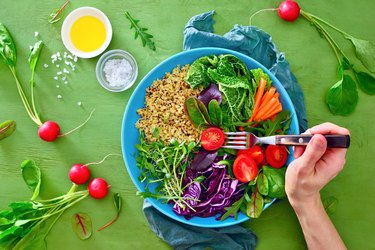
Both the ADA and the American Cancer Society recommend that you eat foods tpacked with nutrients. Fruits and vegetables are good examples of nutrient-dense foods. However, because your immune system might be compromised from chemotherapy or radiation, wash produce thoroughly, even if you are going to remove the skin or peel, to prevent food-borne infections.

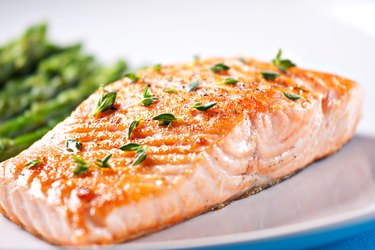
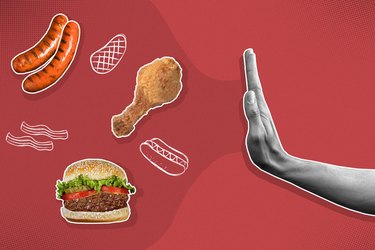
The ADA and ACS also recommend limiting your fat intake, as fatty foods are low in the minerals and vitamins you need to boost your immune system. To reduce fat intake, select lean cuts of meat and fish, eat poultry without the skid and choose low-fat dairy products.

Foods Not Recommended

Certain foods can cause discomfort for some, but not all, cancer patients. Monitor which foods you tolerate well and which ones you don't. In general, the ADA says that foods high in fat or sugar tend to upset the stomach and worsen nausea and diarrhea. When a person has diarrhea, fat absorption is compromised, and consuming more fat will cause the malabsorption to worsen. In terms of nausea, foods that are high in fat and sugar are often too heavy on the stomach, resulting in acid reflux, cramping and overall discomfort, which might make symptoms of nausea worse. Also, avoid caffeine, which may make irritation around the mouth, throat and esophagus worse. Keep a journal of foods that have a negative effect so that you can avoid them.

References

Article reviewed by Paula Martinac Last updated on: Nov 9, 2010

Must see: Photo Galleries

Member Comments