










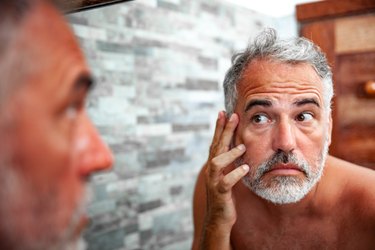















Aging is a natural process that affects all the major systems of your body as you get older. Some body systems affected by normal age-related changes are your heart, urinary system, sensory system, brain and nervous system, bones, joints, muscles and skin. According to "Lippincott Manual of Nursing Practice", age related changes occur at different times for different people. Certain signs are associated with aging of the skin and muscles.
Age Spots
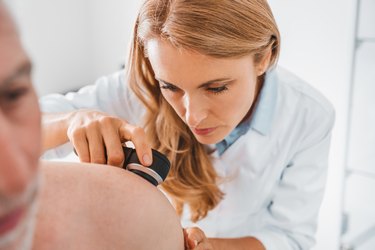
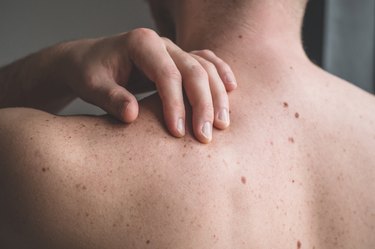
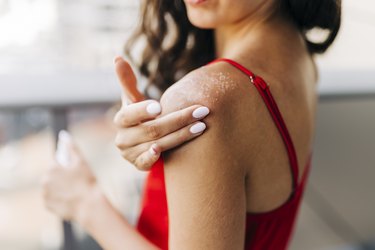
Age spots are brown, gray or black spots that develop on your skin. They are also called liver spots and solar lentigines. Prolonged exposure to sunlight over a period of years can cause age spots. They are also caused by aging. According to the Mayo Clinic, getting older or aging increases the amount of melanin-- the color producing pigment in your skin-- in your body, which leads to the development of age spots.
Bruising
As you age, your skin bruises more easily. This happens because all three layers of your skin---your epidermis, dermis and subcutaneous tissue-- get thinner as you age, and this causes fragile skin. According to The Cleveland Clinic, your blood vessels are more prone to injury because they lose protection the different layers of your skin provides.
Wrinkles
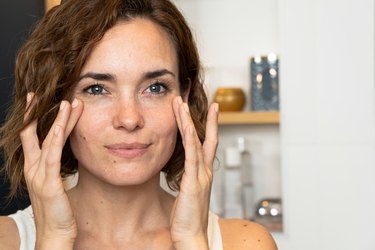
According to the American Academy of Dermatology, aging reduces the production of collagen-- a protein that gives your skin its strength-- in your skin. It also reduces the effectiveness of another skin protein called elastin that helps the skin to stretch and snap back to its former position. A reduction in these two proteins due to aging leads to the development of wrinkles in your skin.
Dry Skin
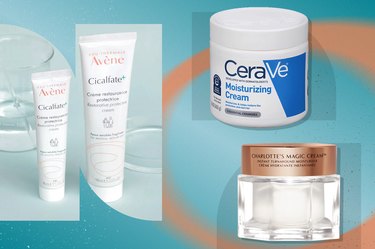
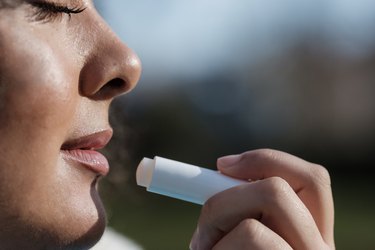
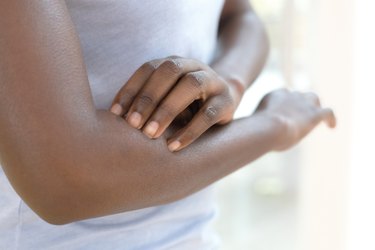
Your skin gets drier as you age and can lead to itchy, flaky skin. This is because there is a reduction in the number of oil producing glands in your skin. Avoid using soaps excessively and direct application of hot or cold temperatures to your skin as they promote skin dryness. Drink adequate amounts of water daily to help combat this problem.
Aging and Your Muscles
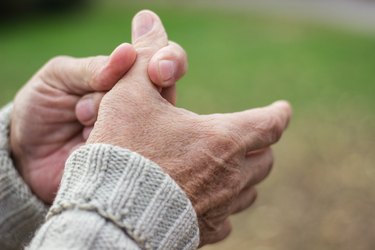
The American Academy of Orthopaedic Surgeons suggests that as you age, your muscles begin to shrink. Though loss of muscle mass is a natural part of aging, it is accelerated by a lack of physical activity. Some effects of decreased muscle mass are the inability to grip things as tightly as you used to and fatigue as a result of your heart muscles being unable to pump adequate blood through out your body.
References
- "Lippincott Manual of Nursing Practice"; Sandra M. Nettina ANP-BC.; 2009.
- American Academy of Dermatology: Mature Skin
- The American Academy of Orthopaedic: The Effects of Aging
- American Academy of Dermatology:Causes of Aging Skin
- The Cleveland Clinic: Aging Skin/ Painful Skin


Member Comments