Do Deadlifts Stress the Rotator?

Do Deadlifts Stress the Rotator?
Photo Credit Thomas Northcut/Photodisc/Getty Images

Weightlifting workouts increase muscular strength and endurance levels by adding resistance to exercise movements. Adding resistance to movements places an overload on your muscles and connective tissues. While improved health and fitness is attributed to weight training, so are injuries. Contributing factors include improper form and technique, improper resistance and overtraining.

Function

Your shoulder is the most mobile joint providing the largest range of motion. In addition, it is the least stable joint, making for many potential shoulder injuries. Rotator cuff muscles consist of your supraspinatus, infraspinatus, teres minor and subscapularis, connecting your shoulder blade to your upper arm. They function to stabilize, elevate and rotate your shoulder joint.

Features

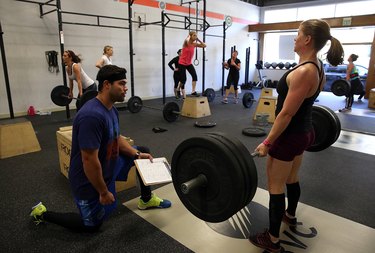
The deadlift is a compound exercise utilizing many muscle groups, including your legs, back and trapezius muscles. The lift is performed by lifting a barbell from the floor by bending your legs and lifting the bar with your legs and lower back muscles. Your rotator cuff muscles squeeze your shoulder blades together to stabilize your body while holding the barbell at thigh level. An optional deadlift exercise is performed while keeping your legs straight. Deadlift exercises strengthen your core muscles, your abdomen and lower back muscles, and legs. Additional benefits include improved posture and spinal stability.

Effects

Your rotator cuff muscles are subject to wear and tear and are susceptible to injury. Contributing factors include age, poor posture, muscle imbalance and repetitive movements. Performing a deadlift with poor technique such as leaning too far forward, rounding your back and not using your legs to lift can strain your back and shoulder joint. Using too much weight and performing excessive sets and repetitions can weaken the rotator cuff muscles.

Types

Shoulder injuries to the rotator cuff range from minor strains to ruptures and tears. Repetitive stresses to the muscles can lead to tendonitis, an inflammation of the tendons connecting your muscles to your bones. Improper form can lead to bursitis, an inflammation of the joint sac in your shoulder. Training with weight that is too heavy to lift properly can cause tears or dislocations to the shoulder joint and rupture your bicep muscles.

Treatment

Symptoms signaling rotator cuff strain include a range of pain from dull to sharp, limited shoulder mobility and pain with movement. Left untreated, rotator cuff strain can lead to partial to total shoulder dislocation and tearing of the muscle or connective tissue. Treatment includes physical therapy, immobilization, ultrasound or surgery, depending on the severity of the injury.

References

Article reviewed by Brandon Nolta Last updated on: Apr 29, 2012

Must see: Photo Galleries