













According to Bess Dawson-Hughes, of Tufts University School of Medicine, having too much acid in the bloodstream may occur if you consume a high acid-load diet and have reduced kidney function -- leading to bone and muscle breakdown. The potential renal acid load or PRAL model, developed by German scientists in the 1990s, measures the effect of common foods on urine acidity or pH value. According to a June 2008 article in the "British Journal of Nutrition," the higher the PRAL score of a food, the more likely it is to promote an acidic environment in your body.
Fruits
The PRAL score is directly associated with urine acidity or urine pH value. The higher the value, the more acid-producing the food. The scale has evolved to include more foods, but at the time of development, ranged from an average maximum of 23.6 mEq/100g to an average minimum of approximately -3 mEq/100g. There are many more foods included in this scale now.
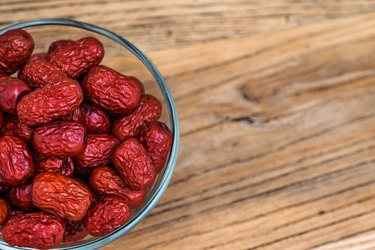
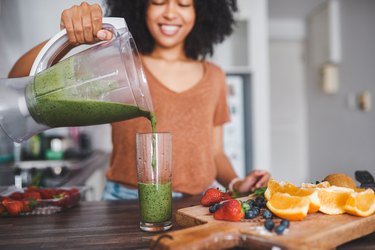
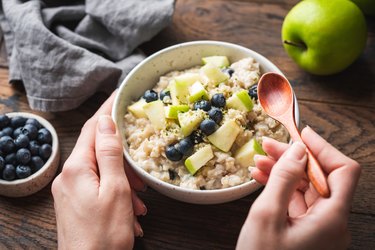
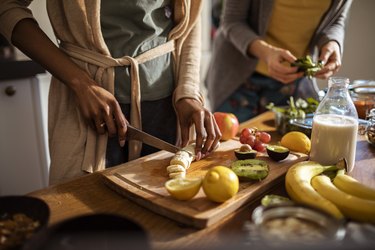
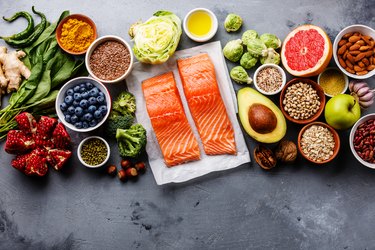
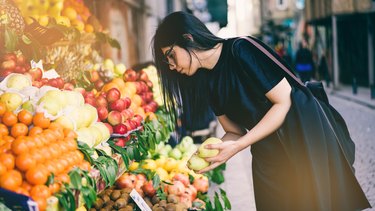
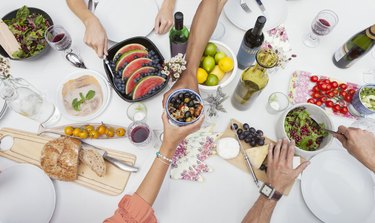
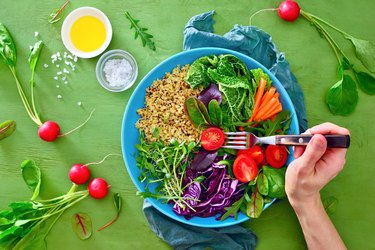
Fruits help fight acidity. Examples of negative acid fruits include raisins, apricots, kiwi fruits, watermelon, pears, oranges, apples, pineapples, strawberries and peaches. A 1/4-cup serving of raisins has the lowest PRAL score, at -8.4, followed by apricots. Four apricots have a PRAL score of -6.7. Other fruits mentioned have a score ranging from -5.3 for 2 cups of watermelon to -2.4, for one medium-sized peach, according to an article published in November 2010 in the the Center for Science in the Public Interest or CSPI publication, the Nutrition Action Healthletter.
Vegetables
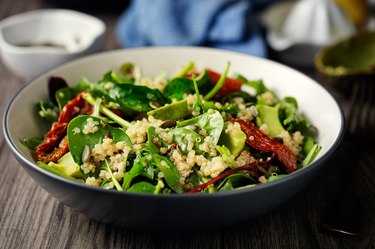
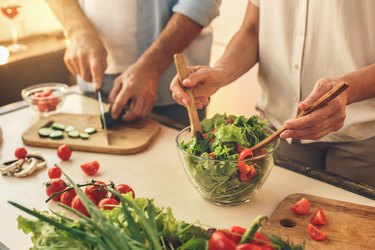
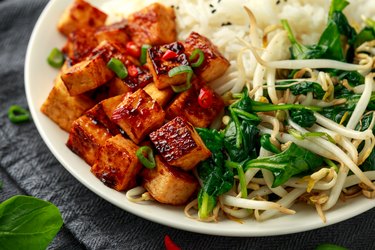
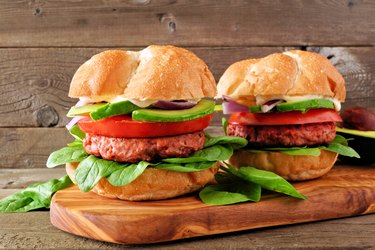
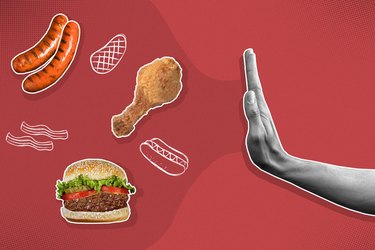
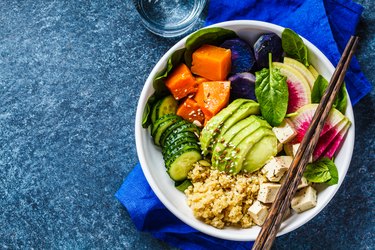
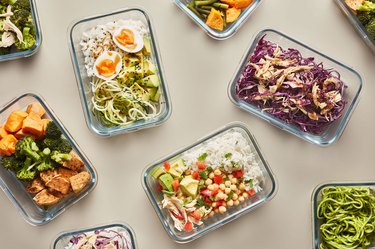
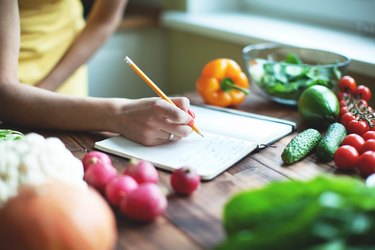
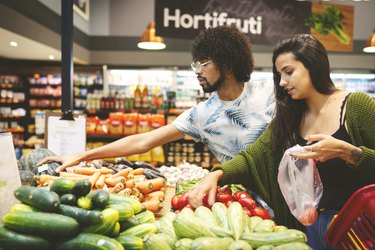
Vegetables, like fruits, promote an alkalinic environment in the body. Balancing these foods with those which promote acidity, or have a high renal acid load, such as meats, hard cheeses and eggs, promotes pH balance in the body and is important, particularly if you suffer from impaired kidney function. Examples of vegetables with a low PRAL score include spinach, zucchini, carrots, cauliflower, lettuce, green beans, broccoli and asparagus. Spinach has the lowest PRAL score, a score of -12.6 per 1/2-cup serving. Zucchini has a PRAL score of -4.1 per 1/2-cup serving and carrots; -3.8. All of these vegetables have a negative score, including asparagus, that has a score of -0.4.
Other Foods and Beverages
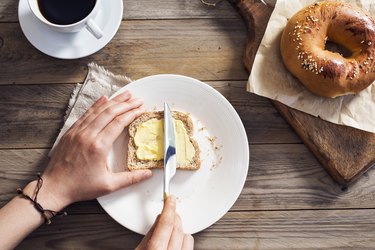
Liquid oils, fats, such as butter and plain sugar, according to one of the first research studies on this topic published in the "Journal of the American Dietetic Association," are neutral in terms of acid promotion when eaten in small quantities. For example, 1 tbsp. of olive oil has a PRAL score of zero as does 1 tsp. of sugar. Butter is fairly neutral. One tbsp. has a PRAL score of 0.1. Perhaps surprisingly, alcoholic beverages have an alkalinic effect on the body. However, they should be consumed in moderation for optimal health. A 5 fluid oz. glass of red wine has a PRAL score of -3.5 and the same amount of white wine is scored at -1.8. Draft beer, per 12 fluid oz. serving, has a PRAL score of -1.0. Sodas, such as cola, is more acidic, with a score of 1.5 per 12 fluid oz.
References
- "Nutrition Action Healthletter"; Bad for Bones? The Latest on Food and Fractures; B Liebman; Nov 2010
- Pubmed: Urine pH is an Indicator of Dietary Acid-Base Load, Fruit and Vegetables and Meat Intakes: Results From the European Prospective Investigation into Cancer and Nutrition (EPIC)-Norfolk Population Study
- Pubmed: Potential Renal Acid Load of Foods and Its Influence on Urine pH
- "Journal of the American College of Nutrition"; Dietary Acid-Base Balance, Bone Resorption, and Calcium Excretion; R. Jajoo et al.; Jun 2006


Member Comments