




























Parkinson's disease is a neurodegenerative disease characterized by loss of dopamine in the brain, which results in motor, mood and cognitive changes. Parkinson's disease is usually treated with medication. Adding strength training to the treatment plan can enhance improvements in functioning.
Loss of Motor Control in Parkinson's
Patients with Parkinson's disease experience disruptions in movement, balance and motor control. Rigidity, tremors and bradykinesia, defined as slowness in starting movements, are common symptoms. Patients may have trouble walking and have a slow, shuffling gait and unsteady posture.
Improving Bradykinesia and Movement
Lack of strength is one of the reasons people with Parkinson's are slower to initiate movements. A 2006 study by Dibble and colleagues showed that patients with Parkinson's disease who performed high-force quadriceps contractions three times a week for 12 weeks had larger muscle volume and force, and were better able to climb stairs and move around than a group that followed the standard exercise routine for Parkinson's.
Improving Balance
Adding strength training to Parkinson's disease care improves patients' balance more than just balance training alone, reports Hirsch and colleagues in a 2003 study. Patients who did resistance training targeting knee extensors and flexors and ankle flexion, as well as routine balance training, were able to keep their balance longer without falling than patients who only did the balance training. Strength was also increased in the group that did resistance training.
Improving Gait
Bradykinesia often results in a characteristic, shuffling gait associated with Parkinson's disease. Patients who strength trained twice a week for eight weeks took longer strides, walked faster and stood straighter than they did before undergoing the training. The exercises in this study by Scandalis and colleagues focused on improving strength in the lower limbs.
Exercise Recommendations
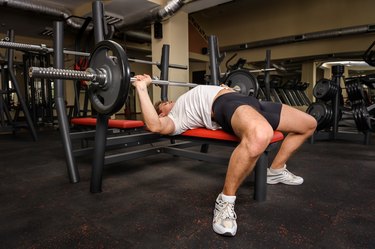
Patients with Parkinson's disease who want to begin an exercise regimen should first consult with their doctors. The American College of Sports Medicine recommends strength training two to three times a week per muscle group. Each session should consist of eight to 10 repetitions, and Parkinson's patients may find it easier to perform these using strength-training machines. Strength training can be combined with moderate aerobic activity, such as swimming or walking, and stretching to improve flexibility.
References
- Clinical Trials.gov: Strength Training and Medication Effects in Parkinson Disease Effects on Hypokinesia in Parkinson Disease
- "Movement Disorders": High-intensity resistance training amplifies muscle hypertrophy and functional gains in persons with Parkinson's disease; LE Dibble,et al.; Sept. 2006
- "Archives of Physical Medicine and Rehabilitation": The effects of balance training and high-intensity resistance training on persons with idiopathic Parkinson's disease;MA Hirsch, et al.; Aug. 2003
- "Archives of Physical Medicine and Rehabilitation": Resistance training and gait function in patients with Parkinson's disease; TA Scandalis, et al.; Jan. 2001
- National Center on Physical Activity and Disability: Disability/Condition: Parkinson's Disease and Exercise
- Nantional Institute of Neurologic Disorders and Stroke: Parkinson's Disease Information Page


Member Comments