

































Bumps on the eyelids can cause irritation and pain. The condition can develop for several reasons, ranging from an insect bite to something more serious. If you have bumps on your eyelids, see a doctor for an accurate diagnosis.
Types
Blepharitis is a condition that causes the eyelids to become inflamed, and it's caused by an infected eyelash follicle. The disorder is uncomfortable and unsightly. A sty is a red bump on or around the edge of the eyelid, and it is painful and filled with pus. A sty will usually disappear within a week without the use of medication.
A chalazion, also known as meibomian gland lipogranuloma, is a bump on the eyelid. A chalazion is different from a sty because it is usually painless and the lump points toward the direction of the eyeball instead of sitting on the eyelid.
Identification
The symptoms of a blepharitis include a red, inflamed eyelid, difficulty opening the eye when waking up because of a layer of crust over the eyelash area, experiencing pain when eyes are exposed to any type of light, eyelashes that grow downwards or in toward the eyeball, and red eyes, according to MayoClinic.com. See a doctor if these symptoms continue despite continuous care and maintenance of the affected area. A sty resembles a boil, it is red and swollen, and the lump is usually filled with pus that might leak. Typically, a sty will not have an effect on your eyesight. See a doctor if the swelling spreads to other parts of the face, or if it does not disappear within one week, according to MayoClinic.com.
Symptoms of a chalazion include painful swelling and redness of the eyelid, easy tearing of the eyelid when rubbed and sensitive tenderness around the eyelid area.
Causes
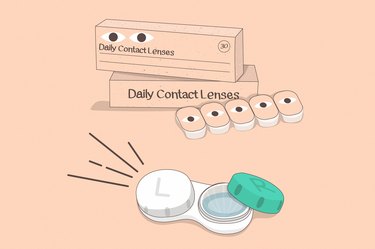
Blepharitis is caused by several conditions, including dandruff in the scalp and eyebrows, typically known as seborrheic dermatitis, mites buried in the eyelashes, an allergic reaction to eye makeup or contact lenses. All of these will cause the oil glands at the base of the eyelashes to function improperly.
A sty is caused by a number of factors such as touching your eyes with unwashed hands that contain bacteria known as staphylococcus.
Chalazion is caused when the meibomian glands located at the base of the eyelids become blocked.
Treatment
Several treatments are available for each condition, and each case will typically disappear on its own without any medication within one week to one month of experiencing symptoms. To relieve pain and to aid in the healing process, apply a warm washcloth to the affected area for 10 to 15 minutes four times each day. If the symptoms persist, your doctor might prescribe antibiotics or a steroid cream. The last resort is surgical removal of the bump, according to MayoClinic.com.
Prevention/Solution
To prevent the recurrence of any of these conditions, keep your hands clean by washing regularly with soap and water or use a hand sanitizer. Also, do not share make-up products that are used on the eyes and keep all contact lenses material sanitized.


