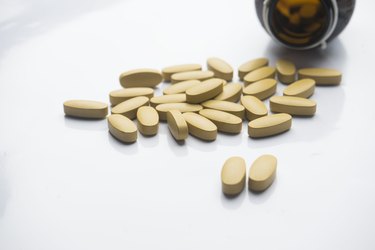
Vitamin C is one of the essential vitamins you need to consume on a daily basis. While most people obtain sufficient vitamin C from the foods they eat, some may require supplements.
Buffered vitamin C supplements and standard vitamin C supplements have the same nutritional benefits, but buffered vitamin C is less acidic, which means it causes less gastrointestinal irritation and may be better tolerated as a supplement.
Video of the Day
Video of the Day
Tip
Buffered vitamin C is easier on your gastrointestinal tract and is less likely to produce kidney stones. It may also contain additional nutrients, like a multivitamin.
Vitamin C and Health
Vitamin C, also known as ascorbic acid, is a nutrient and antioxidant you can find in many foods. Vitamin C consumption plays a variety of different roles in the body, including:
- Improving fertility
- Helping the body make collagen
- Supporting wound healing
- Helping the body absorb iron from plant-based foods
- Supporting the immune system
- Protecting cells from free radicals, which helps prevent disease
- Preventing deficiency-related health problems, like scurvy
Because people cannot produce their own vitamin C, they need to consume some from the foods they eat on a daily basis. According to the National Institutes of Health, most adult women need around 75 milligrams of vitamin C per day and men need 90 milligrams per day.
However, smokers (and people regularly exposed to secondhand smoke) need more vitamin C than average; they should consume an additional 35 milligrams per day.
Pregnant women and breastfeeding mothers should also consume more vitamin C than average: Pregnant women need 85 milligrams per day, while lactating women need 120 milligrams per day.
Most people get enough vitamin C from the foods they eat. Vitamin C-rich foods are primarily fruits and vegetables, like peppers, citrus fruits, kiwis, broccoli and strawberries. Many cereals and beverages are also fortified with this nutrient.
Five servings of different fruits and vegetables each day should provide you with 200 milligrams or more of this essential nutrient. This means that most people who follow a healthy diet shouldn't need to worry about their vitamin C consumption.
Vitamin C Supplementation
Certain people, like those with chronic diseases or gastrointestinal conditions that prevent them from absorbing nutrients, may not be able to get enough vitamin C from the foods they eat. These people may require supplements and will often be advised to consume a higher recommended daily amount of nutrients.
Vitamin C is also sometimes used to help prevent or manage certain health problems, like urinary tract infections or the common cold. In such cases, vitamin C is recommended at fairly high doses, which typically range between 250 milligrams and 1 gram.
Although vitamin C consumption on the lower end of this scale can be consumed from the foods you eat, consuming about a gram of this nutrient can be much more challenging without supplements.
Vitamin C supplements are available in a variety of forms. You can obtain synthetic ascorbic acid, ascorbic acid mixed with antioxidants, a mineral salt variation of ascorbic acid or a combination product (typically a mixture of all of these types).
All of these supplement types are equivalent if you're trying to obtain vitamin C's nutritional benefits — but some people prefer buffered vitamin C because it is neither alkaline nor acidic and is, consequently, meant to be a gentler on your gastrointestinal tract.
If you're considering taking a vitamin C supplement, you should talk to your doctor to figure out the best type for you. Regardless of the type you choose, make sure that you don't consume more than 2,000 milligrams of vitamin C per day. Too much vitamin C can reduce the levels of other nutrients in your body and have unpleasant gastrointestinal side effects.
Buffered Vitamin C Benefits
Buffered vitamin C has all of the same health benefits as standard ascorbic acid. However, this supplement has the most notable benefits when you need to take the nutrient in large doses. When taken over long periods of time, high doses of vitamin C can increase the risk of kidney stones, particularly in people with a history of oxalate stones.
However, high doses of buffered vitamin C may not influence oxalate levels, which means that buffered vitamin C has less of a chance of producing kidney stones.
Many buffered vitamin C products are made from mineral salts of ascorbic acid, which are known as mineral ascorbates. This means that they aren't just synthetic vitamin C, but contain additional minerals as well, resulting in a product more similar to a multivitamin.
The most popular mineral ascorbates of vitamin C are sodium ascorbate, which contains 111 milligrams of sodium, and calcium ascorbate, which contains between 90 and 110 milligrams of calcium. However, they may also contain:
- Potassium ascorbate, which may have as much as 175 milligrams of potassium
- Magnesium ascorbate
- Zinc ascorbate
- Molybdenum ascorbate
- Chromium ascorbate
- Manganese ascorbate
If you're taking buffered vitamin C, it's important to know which mineral ascorbate is being used in your supplement. Make sure you consult your doctor before you begin taking a buffered vitamin C supplement made with a mineral ascorbate. While these additional nutrients are beneficial, consumption of certain minerals may need to be limited based on your health or diet.
Buffered Vitamin C Products
In addition to the minerals present in mineral ascorbates, you may also find that buffered vitamin C products have other ingredients too. For example, Orthoplex's Ultra Buffered C Powder is a vitamin C powder mixed with antioxidants, but this company doesn't disclose which type of vitamin C or antioxidants are used or where the ingredients have been sourced from.
Other products, like Blackmores Buffered C, are made with a combination of normal ascorbic acid and calcium ascorbate. Blackmores Buffered C also contains added bioflavonoids, a type of antioxidant found in most vitamin C-rich foods.
Bioflavonoids may help improve vitamin C's function within the body. This product also slowly releases the vitamin C over an eight-hour period, rather than all at once, partially due to the way the bioflavonoids work.
- Oregon State University's Linus Pauling Institute: "Vitamin C: Supplemental Forms"
- Blackmores: "Buffered C"
- Bioconcepts: "Orthoplex Green Ultra Buffered C Powder"
- Google Books: "The Supplement Handbook: A Trusted Expert's Guide to What Works & What's Worthless for More Than 100 Conditions"
- Harvard Health Publishing: "Stay a Step Ahead of Urinary Tract Infections"
- Men's Sexual Health and Fertility: "Nutraceuticals for Fertility and Erectile Health: A Brief Overview of What Works and What Is Worthless"
- NIH: "Vitamin C: Fact Sheet for Health Professionals"
- Korean Journal of Physiology and Pharmacology: "Alleviation of Ascorbic Acid-Induced Gastric High Acidity by Calcium Ascorbate in Vitro and in Vivo"