





























































The Atkins diet made its debut in the 1970s as "Dr. Atkins' Diet Revolution" then enjoyed a resurgence in the 1990s as "Dr. Atkins' New Diet Revolution." This extremely low-carb diet, founded by cardiologist Robert Atkins, was touted as a panacea for quick and healthy weight loss, allowing normally forbidden high-fat dishes and red meats and cheeses. Over the years, some people have attributed ill health and even death to following the Atkins diet.
Description
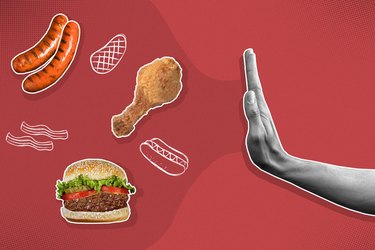
The first two weeks of the Atkins diet are called the "induction" period, allowing only 20 grams of carbohydrates per day. You primarily eat unlimited amounts of meat, poultry, seafood, cheese, eggs, bacon, sausages, oils and butter. The limited carbs come from salads and other low-carb vegetables. After the induction period, you can add back about 5 g of carbohydrates weekly, ending up with 40 to 90 g of carbohydrates on the "maintenance" phase.
Low-Carb Studies
In 2003 the "New England Journal of Medicine" reported a study done with 132 severely obese subjects. Only 79 of them completed the study, but the results showed that subjects on the low-carb diet lost more weight than those assigned to a low-fat diet and had greater decreases in triglyceride levels. A study reported in the "Annals of Internal Medicine" reported similar findings, including increases in good cholesterol and reductions in bad cholesterol. Both groups reported similar weight losses after one year.
Guidelines
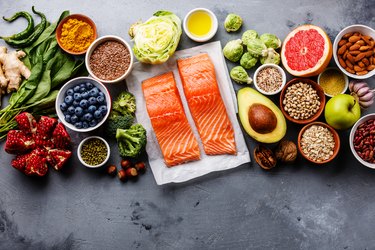
The American Cancer Society guidelines for a cancer prevention diet suggest eating five or more servings of fruits and vegetables daily, which would put you in the upper end of the carbohydrate grams allowed on the Atkins "maintenance" phase. The ACS recommends whole grains, but each serving of healthy whole grains such as oats, whole wheat bread and brown rice contains at least 15 grams of carbohydrate. Even on the Atkins maintenance diet, it would be difficult to get this in. Limited consumption of red meats is recommended by the ACS, while there is no limit on Atkins on proteins, fats or red meat.
Health Risks
AtkinsDietAlert.org reviewed 107 research studies on various low-carb, high-protein diets and concluded that weight loss depended more on how far the dieters' caloric intake fell and how long they continued than on restriction of carbohydrates.
A 15-year study of nearly 30,000 women found coronary heart disease death was associated with intakes of red meat and dairy when substituted for servings of carbohydrates. Diets high in animal protein are associated with reduced kidney function over time. Studies at Duke University and the University of Texas showed urinary calcium losses to rise significantly in individuals on low-carb, high animal-protein diets for six months.
Other Risks
Testimonials on the Atkins Diet Alert website attribute gallbladder disease, kidney stones, severe artery blockage and increased cholesterol to following the Atkins diet.
Other adverse effects reported among followers include constipation, headache, bad breath, muscle cramps, diarrhea and general weakness. Have a face-to-face consultation with your physician before beginning any low-carb diet program.


Member Comments