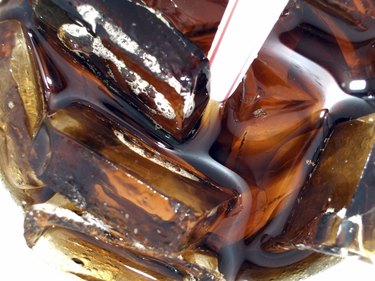
Most people love the chance to enjoy favorite a soft drink minus the calories, and diet soda is a very popular beverage for dieters, diabetics and people who simply want to avoid extra weight. However, recent research has indicated that soda in general may pose various health risks to consumers. In particular, diet soda is reported to be a risk to the liver.
Fatty Liver Disease
Video of the Day
According to a study conducted at Ziv Medical Center in Haifa, Israel, all sodas appear to increase the risk of developing fatty liver disease. Researcher Nimer Assy reported that the aspartame in diet coke may increase insulin resistance and trigger fatty liver disease.
Video of the Day
Accumulation of Formaldehyde
The artificial sweetener aspartame, which is used in diet soda, has been reported to have harmful effects on the liver and on overall health. Holistic Med.com cites an animal study conducted at the Universitat de Barcelona, Spain. This study, conducted by Trocho et al. and published in the journal "Life Sciences" found that even small doses of aspartame caused the chemical formaldehyde to accumulate in the liver and bind to protein molecules. Holistic Med.com notes that formaldehyde may cause permanent genetic damage with long-term exposure.
Cirrhosis of the Liver
According to the Independent, the preservative sodium benzoate, also known as E211, may cause serious cell damage to the liver and other organs. This additive, which is used in many soft drinks to prevent mold, was reported to cause damage to the mitochondria of DNA, and eventually lead to cirrhosis of the liver and various other conditions. Although Coca-Cola reportedly phased sodium benzoate out of Diet Coke, it is still used in other diet drinks.
- Israel 21 C: Israeli Study: Soda Drinks Cause Liver Damage
- Holistic Med: Aspartame Toxicity Summary
- The Independent UK: Caution: Some Soft Drinks May Seriously Harm Your Health
- PubMed: Formaldehyde Derived from Dietary Aspartame Binds to Tissue Components in Vivo
- Organic Consumers.org: The Health Hazards of Drinking Coca-Cola and other Soft Drinks
Is this an emergency? If you are experiencing serious medical symptoms, please see the National Library of Medicine’s list of signs you need emergency medical attention or call 911.