
Take a look at the ingredient list on some of your favorite packaged foods and you're likely to find "potassium sorbate" wedged in there somewhere. This additive crops up in a variety of foods — from pickles to dried meat to ice cream — but is it safe?
What Is Potassium Sorbate?
Video of the Day
Potassium sorbate is a man-made, chemical preservative that has been used for almost 200 years to protect food, drinks and personal care products from being spoiled by fungi (such as mold), bacteria and other microorganisms, according to the U.S. Department of Agriculture.
Video of the Day
Today, most potassium sorbate is made in labs and comes in the form of white crystals or powder, per a paper in Applied and Environmental Microbiology. It also has no odor or taste, which makes it attractive as a food additive.
Is Potassium Sorbate Safe?
Given this lengthy track record, it's probably not surprising that the Food and Drug Administration (FDA) has designated potassium sorbate as "GRAS," or Generally Regarded as Safe, "when used in accordance with good manufacturing practice."
The Center for Science in the Public Interest, a public watchdog group that issues information and advice on nutrition, health and food safety, also classifies potassium sorbate as safe. The Environmental Working Group (EWG) gives it a low-risk score regarding the potential to cause cancer as well as effects on developmental and reproductive toxicity. The EWG gives it a medium-high score as a skin irritant.
"Potassium sorbate is a food additive and, like other food additives, helps us enjoy a food supply that's safe, nutritious, convenient and affordable," Isabel Maples, RDN, a spokesperson for the Academy of Nutrition and Dietetics, tells LIVESTRONG.com.
Potassium Sorbate Side Effects
There have been a few reported incidents of potassium sorbate side effects over the decades, though most are now from decades ago and from personal care products, not food.
For example, a 1988 study in the Journal of the American College of Toxicology reported two possible (though not certain) cases of skin irritation (called erythema) in people who had used a facial scrub containing potassium sorbate.
Meanwhile, a September 2005 study published in the journal Contact Dermatitis described one case of skin irritation (contact dermatitis) in someone who worked in a milk-processing plant. That employee apparently had had long-term contact with potassium sorbate.
Preservatives and Foodborne Illness
According to the Centers for Disease Control and Prevention (CDC), about 48 million people get sick, 128,000 are hospitalized and 3,000 die from foodborne illnesses each year. Without preservatives, this number might be higher.
There have been studies on the specific benefits of potassium sorbate. For example, a November 2016 study in the International Journal of Food Microbiology found that it helped neutralize salmonella bacteria in ground beef jerky. Salmonella alone causes 1.2 million illnesses each year, per the CDC.
Read more: Is Eating Expired Foods Worth the Risk?
Foods That Contain Potassium Sorbate
Potassium sorbate is found in a wide variety of packaged and treated products, including:
- Processed and cured or smoked meats
- Dairy products like cheeses, dips, yogurt and sour cream
- Baked goods, including bread, cakes, pies and fillings, baking mixes, doughs, icings, fudges, toppings
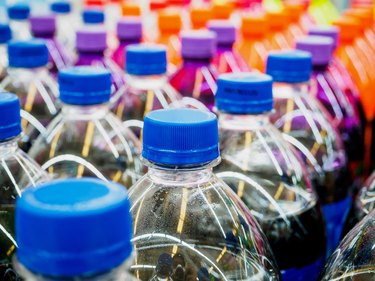
- Beverages including ciders, juices and sodas
- Condiments including margarine, mayonnaise, dressings and oils
- Smoked and salted fish
- Cereals and snack foods
Potassium sorbate is also used to prevent yeast from continuing to ferment in the wine-making process, according to Virginia Tech's Food Science & Technology department. Many dietary supplements and medications also contain potassium sorbate, as do certain personal care products, specifically face and eye makeup as well as skin care and hair products, according to CosmeticsInfo.org, a site sponsored by the Personal Care Products Council.
In food and cosmetic products, especially, potassium sorbate would be clearly labeled as an ingredient, Maples says.
Read more: The Most Common Food Preservatives
- U.S. Department of Agriculture: “Potassium Sorbate”
- Food and Drug Administration: “CFR - Code of Federal Regulations Title 21”
- Center for Science in the Public Interest: “Chemical Cuisine”
- Environmental Working Group: “Potassium Sorbate”
- Applied and Environmental Microbiology: “Modeling Yeast Spoilage in Cold-Filled Ready-To-Drink Beverages With Saccharomyces Cerevisiae, Zygosaccharomyces Bailii and Candida Lipolytica”
- Comprehensive Reviews in Food Science and Food Safety: “Adding Molecules to Food, Pros and Cons: A Review on Synthetic and Natural Food Additives”
- Centers for Disease Control and Prevention: “Estimates of Foodborne Illness in the United States”
- International Journal of Food Microbiology: “Development of a Predictive Model for Salmonella Spp. Reduction in Meat jerky Product With Temperature, Potassium Sorbate, pH and Water Activity as Controlling Factors”
- Centers for Disease Control and Prevention: “Salmonella”
- Virginia Tech Food Science & Technology: “Controlling Microbial Growth in Wine”
- Cosmetics Info: “Potassium sorbate”
- National Library of Medicine Toxicology Data Network: “Potassium Sorbate”
- Contact Dermatitis: “Occupational Contact Dermatitis From Potassium Sorbate in Milk Transformation Plant”
Is this an emergency? If you are experiencing serious medical symptoms, please see the National Library of Medicine’s list of signs you need emergency medical attention or call 911.