











































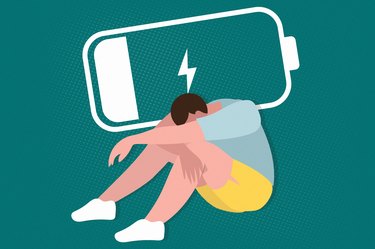



























Lifting Weights & Insomnia

Lifting Weights & Insomnia
Photo Credit Comstock Images/Comstock/Getty Images

Maintaining a healthy lifestyle involves getting proper food, exercise and sleep. Striking a steady balance among these is essential for overall fitness, and when you're deficient in one area, it usually affects the other areas. For example, getting plenty of exercise helps promote sleep. The Mayo Clinic suggests exercising vigorously for 20 to 30 minutes a day to help alleviate insomnia. Athletes such as weightlifters also note the direct connection between strength training and sleep.

Stress Relief

Lifting weights routinely can help to ease stress and insomnia, according to the Training Station website. Strength training provides many health benefits and helps regulate important functions in the body, such as resting glucose metabolism, metabolic rate and blood pressure, which contribute to stress reduction and more restful nights. Strength training creates constructive physical changes in your body that also help you to cope better with daily stress, the Training Station adds, and help you get a better night's sleep. Overall, your coping mechanisms are stronger; therefore, you sleep more peacefully.

Confidence and Control

Strength training not only helps people physically to sleep more soundly, but also emotionally. When you feel more confident and in control of your body, it carries over into your daily life and regular sleep routine. Exercise such as weightlifting helps relieve insomnia caused by necessary personal changes, Dr. Leslie Becker-Phelps writes for the website of "Psychology Today" magazine. People often develop sleeping problems before and during these changes because they experience fear and might feel out of control. Such changes are often difficult, and people need healthy ways to cope with them --- such as exercise. Weightlifting improves strength, muscle tone and posture, which leads to feeling more confident and in control of your environment, as well as your life. This influences your ability to sleep well, because you tend to worry less about problems when you feel you are the master of your own ship.

Schedule

Following a regular workout routine such as a weekly weightlifting regimen helps with maintaining a structured schedule. Healthy sleep habits are easy to develop with a consistent schedule and daily exercise, the HelpGuide website explains. Lift weights a few times per week and participate in aerobic exercise on the days you don't lift. Work out in the afternoon or early evening, at least five to six hours before you go to bed, suggests the Mayo Clinic. Avoid exercising right before bed, because exercise stimulation can cause sleep disturbances, HelpGuide cautions.

Deeper Sleep

Not only does weight training allow you to sleep better, but it also helps you to fall asleep faster and sleep deeper, the Training Station and HelpGuide agree. Deep sleep and muscle growth are interdependent, the Bodybuilding website explains. A good night's sleep promotes the body's hormone balance, which in turn aids in muscle repair and growth. When you sleep deeply, growth hormone-releasing hormones (GHRH) release more growth hormones into your bloodstream. At the same time, GHRH also induces better sleep, and sleep itself encourages more tissue repair and growth and helps preserve energy, which is depleted along with growth hormones during daily activity because of increases in stress hormones, Bodybuilding continues. Sleep is a necessary and continual healing process.

Supplements

Instead of relying on supplements to boost your energy before weight training, try getting more sleep, suggests Bodybuilding. Also, many bodybuilding supplements contain stimulants such as caffeine, which contribute to insomnia problems. Consult your doctor before taking any supplements. Avoid stimulants such as caffeine after lunchtime, the Mayo Clinic and HelpGuide urge.

Warning

Consult your doctor before beginning a weightlifting or other new exercise regimen. You should also consult your doctor if your insomnia persists or worsens.

References

Article reviewed by Will McCahill Last updated on: Jun 14, 2011

Must see: Photo Galleries

Member Comments