














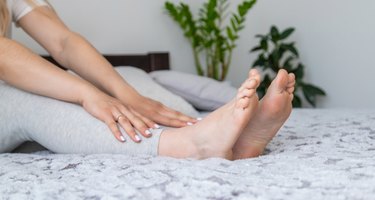



































Smelly foot odor can occur when you confine your feet to shoes and socks all day. Although foot odor likely isn't a serious medical issue, it can be a source of embarrassment. Washing your feet frequently and carefully choosing the types of shoes and socks you wear can help reduce foot odor.
Identification
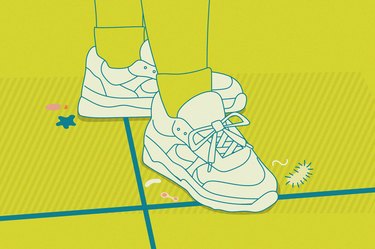
Odor occurs when perspiration produced by the sweat glands in your feet mixes with bacteria on the surface of your feet. The bacteria begin to digest oils and dead skin cells on your feet, producing organic acids that are responsible for that stinky feet smell. About 10 percent to 15 percent of people have extremely smelly feet because of the presence of micrococcus sedentarius bacteria, according to Kids Health from Nemours. This type of bacteria produces sulfur compounds that emit a smell similar to rotten eggs.
Removing Bacteria
Removing bacteria from your feet will help reduce odor. Washing your feet, including the area between your toes, with an antibacterial soap at least once each day will help keep bacteria at bay. You might need to wash your feet more often if they are particularly sweaty and smelly. If you can't wash your feet during the day, carry a supply of disposable wipes with you for quick cleaning.
Choosing Shoes and Socks
If you have a foot odor problem, look for socks or shoes that allow the feet to breathe. Shoes and socks made of synthetic material don't allow sweat to evaporate, creating the ideal environment for smelly feet. Leather shoes or shoes or sandals that allow plenty of air to circulate around your feet are best choices if you have foot odor. Natural fiber socks, including those made from cotton or wool, allow the feet to breathe, reducing sweat.
Prevention/Solution
While antiperspirants are traditionally used to stop sweating in the armpits, they can also reduce sweating on the feet. The International Hyperhidrosis Society recommends using a spray antiperspirant and to coat the bottoms of the feet and the area between the toes. Changing your shoes and socks throughout the day and allowing your shoes to dry completely before wearing them again can also help reduce odor.
Iontophoresis
If antiperspirant and self-care measures don't help your problem, your doctor might recommend that you undergo iontophoresis treatment, a therapy that uses water and a harmless electrical current to stop sweating. After you put your feet in the container of water, your doctor or a technician gradually increases the strength of the current, resulting in a faint tingling in your feet. MedlinePlus reports that it isn't known how iontophoresis works, but it's thought that the process plugs the sweat glands and temporarily prevents sweating.


Member Comments