



Herbs to Reverse Fibrosis of the Liver

Herbs to Reverse Fibrosis of the Liver
Photo Credit Jupiterimages/Goodshoot/Getty Images

Certain herbs may be helpful in reversing your liver fibrosis. According to the Merck Manuals website, hepatic, or liver, fibrosis is an accumulation of connective tissue in your liver caused by exuberant wound healing. The most common cause of liver fibrosis is chronic injury, especially if there is accompanying inflammation. Before taking herbs to help reverse your liver fibrosis, talk with your doctor about possible side effects, proper dosage and potential drug interactions.

Artichoke

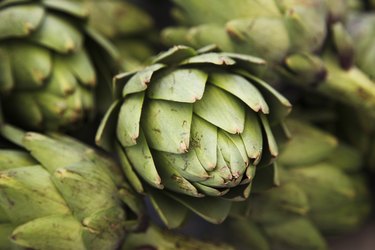
Artichoke, also known as Cynara scolymus, is an herb that may help reverse your liver fibrosis. According to the University of Michigan Health System, artichoke, a member of the Asteraceae family, is one of the world's oldest medicinal plants and is used to help treat numerous health problems, including digestive problems, elevated cholesterol and irritable bowel syndrome. Artichoke is a perennial thistle native to southern Europe and the Mediterranean region that grows to a maximum height of 6 to 7 feet. Although the leaves of the artichoke plant are used medicinally, the roots and immature flower heads may also contain helpful compounds. Ed Smith, an herbalist and author of the book "Therapeutic Herb Manual," states that artichoke is a choleretic, or a substance that stimulates bile production in your liver. Artichoke, notes Smith, helps protect and regenerate your liver tissue and helps prevent fatty degeneration and fibrosis of your liver.

Celandine

Dr. Sharol Tilgner, a naturopathic physician and author of the book "Herbal Medicine From the Heart of the Earth," states that celandine, also known as Chelidonium majus, is a cholagogue, choleretic, anti-inflammatory and hepatoprotective, or a substance that supports normal liver function and protects your liver cells from damage. Tilgner notes that celandine is used to help treat chronic liver disease, and that it causes a more profuse secretion of bile, an important digestive juice. Smith states that celandine helps reduce inflammation and congestion in your liver, which may help prevent or treat liver fibrosis. Celandine is an herbaceous perennial plant native to Europe and certain parts of Asia, although it now grows throughout North America. Celandine has an acrid and bitter taste and possesses cooling tendencies. Practitioners of herbal medicine use the entire fresh plant for medicinal purposes, including liver fibrosis.

Bupleurum

Bupleurum, a member of the Apiaceae family, is a medicinal plant native to certain parts of eastern Asia. Bupleurum, also known as Bupleurum chinense, has long, thin leaves that resemble fennel. The University of Michigan Health System states that bupleurum has been used to help treat viral hepatitis, liver scarring, epilepsy and irritable bowel syndrome. According to Tilgner, bupleurum is an anti-inflammatory, antiviral and immune system modulator that is known for its ability to protect and regenerate your liver cells. Bupleurum, notes Tilgner, may also help reduce your blood lipid levels. Saikosaponins, states the University of Michigan Health System, are believed to be the principle constituent responsible for bupleurum's beneficial effects. If you are pregnant or are a nursing mother, you should avoid taking this herb or supplements containing this herb. Bupleurum may also cause stomach upset in some individuals.

References

Article reviewed by JPC Last updated on: Dec 5, 2010

Must see: Photo Galleries

Member Comments