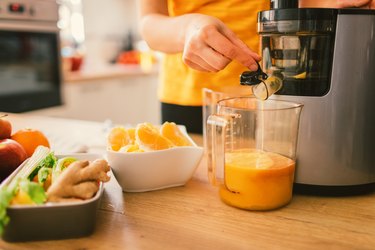
Fruit and veggie juice makes for a refreshing and tasty drink when you're not in the mood for plain water — and all you need is a juicer and some of your favorite produce to make it (just remember to choose fresh or frozen fruits and skip those with added sugar).
When it comes to fresh juicing calories, not all blends are one and the same. For example, freshly squeezed homemade juices aren't zero-calorie beverages, but they don't contain added sugars (unless you stir them in yourself, of course).
Video of the Day
Video of the Day
The only caveat with homemade juice is that it's difficult to know the nutrition info, as it's not clearly written on a bottle or carton. That's why we've put together a list of calories in juiced vegetables and fruits.
Calories in Juice
Juice | Calories per 1 Cup |
|---|---|
Apple juice | 114 calories |
Avocado juice | 184 calories |
Cranberry juice | 118 calories |
Grape juice | 152 calories |
Grapefruit juice | 96 calories |
Green juice | 84 calories |
Lemon juice | 54 calories |
Lime juice | 61 calories |
Mango juice | 113 calories |
Orange juice | 112 calories |
Pomegranate juice | 151 calories |
Vegetable juice | 65 calories |
Apple Juice
Apple juice is popular in the fall, but because the beverage is full of healthy nutrients and benefits — and because there aren't too many calories in a cup of apple juice — there's good reason to drink it year-round.
A 1-cup serving of apple juice contains:
- Calories: 114 calories
- Total fat: 0.3 g, 0% DV
- Cholesterol: 0 mg, 0% DV
- Sodium: 9.9 mg, 0% DV
- Total carbohydrates: 28 g, 9% DV
- Dietary fiber: 0.5 g, 2% DV
- Sugar: 23.9 g, 48% DV
- Protein: 0.2 g, 0% DV
- Potassium: 250.5 mg, 5% DV
- Vitamin C: 2.2 mg, 2% DV
Avocado Juice
Not all juicers may be able to juice an avocado, so an easier solution is to cut 1/2 ripe avocado into sections, then add 1/2 cup of water to a blender and blend until smooth.
A 1-cup serving of avocado juice (made with 1/2 cup of pureed avocado) contains:
- Calories: 184 calories
- Total fat: 16.9 g, 22% DV
- Cholesterol: 0 mg, 0% DV
- Sodium: 8 mg 0% DV
- Total carbohydrates: 9.8 g, 3% DV
- Dietary fiber: 7.7 g, 28% DV
- Sugar: 0.8 g, 2% DV
- Protein: 2.3 g, 5% DV
- Potassium: 557,8 mg, 12% DV
- Magnesium: 33.3 mg, 8% DV
- Vitamin C: 11.5 mg, 13% DV
Avocado is considered a high-calorie food, though the fat in it is heart-healthy monounsaturated fat. Avocados come in several types, with California and Florida avocados being two of the most popular.
Depending on where you buy your avocado juice (or how you make it), the drink may not be 100 percent pure avocado. Sometimes, water, lemon, orange juice and other ingredients are added, which can then change the total calorie count.
Cranberry Juice
Cranberries contain several types of polyphenols (plant antioxidants) such as anthocyanins and catechins, which are linked to lower levels of free radicals and cellular damage, per a May 2018 study in the International Journal of Food Properties.
A 1-cup serving of cranberry juice cocktail contains:
- Calories: 118 calories
- Total fat: 0.8 g, 1% DV
- Cholesterol: 0 mg, 0% DV
- Sodium: 4.5 mg, 0% DV
- Total carbohydrates: 27.8 g, 9% DV
- Dietary fiber: 0 g, 0% DV
- Sugar: 25.9 g, 52% DV
- Protein: 0 g, 0% DV
- Vitamin C: 76 mg, 84% DV
Grape Juice
Red and purple grape juices might offer some of the same heart-healthy benefits of red wine, including lower cholesterol levels and healthy blood pressure linked to the antioxidant resveratrol, per the Mayo Clinic.
A 1-cup serving of grape juice contains:
- Calories: 152 calories
- Total fat: 0.3 g, 0% DV
- Cholesterol: 0 mg, 0% DV
- Sodium: 12.6 mg, 1% DV
- Total carbohydrates: 37.4 g, 12% DV
- Dietary fiber: 0.5 g, 2% DV
- Sugar: 35.9 g, 72% DV
- Protein: 0.9 g, 2% DV
- Potassium: 263.1 mg, 6% DV
- Magnesium: 25.3 mg, 6% DV
Grapefruit Juice
Grapefruits are popular for their purported weight-loss benefits — in fact, the grapefruit diet advocates eating half of the fruit before every meal, among other rules. (Spoiler alert: You shouldn't try it!)
A 1-cup serving of grapefruit juice contains:
- Calories: 94 calories
- Total fat: 1.6 g, 2% DV
- Cholesterol: 0 mg, 0% DV
- Sodium: 2.5 mg, 0% DV
- Total carbohydrates: 18.6 g, 6% DV
- Dietary fiber: 0.7 g, 3% DV
- Sugar: 19.1 g, 38% DV
- Protein: 1.2 g, 2% DV
- Vitamin C: 93.9 mg, 104% DV
- Potassium: 400.1 mg, 9% DV
- Calcium: 22.2 mg, 2% DV
Green Juice
Green juices usually contain dark, leafy vegetables like spinach and kale — greens that are also typically chock-full of vitamins and minerals.
The calories in green juice will vary depending on the recipe you use or brand you buy. But a typical cup of green juice contains:
- Calories: 84 calories
- Total fat: 0 g, 0% DV
- Cholesterol: 0 mg, 0% DV
- Sodium: 40.8 mg, 2% DV
- Total carbohydrates: 18.1 g, 6% DV
- Dietary fiber: 0 g, 0% DV
- Sugar: 15.9 g, 32%
- Protein: 3 g, 6% DV
- Vitamin C: 15.9 mg, 18% DV
Because green juices can taste bitter, many recipes and store-bought varieties include fruit juices or purees to add a little bit of sweetness to the drink.
There's one drawback to that: Fruit adds sugar and is generally more calorie-dense than vegetables. If you're making green juice at home, you can cut back on calories by using less fruit and more vegetables.
The calories in a kale juice blend are about 80 per 8-ounce serving. And the calories in green juice with apple will likely be higher than a veggie-only green juice because apples contain more sugar per serving.
Lemon Juice
Fresh-squeezed lemon juice can add flavor to just about anything — water, salads, side dishes, entrees and even desserts — and provides a refreshing alternative to sugar- and fat-laden beverages, condiments and sauces.
A 1-cup serving of fresh lemon juice contains:
- Calories: 54
- Total fat: 0.6 g, 1% Daily Value (DV)
- Cholesterol: 0 mg, 0% DV
- Sodium: 2.4 mg, 0% DV
- Total
carbohydrates: 16.8 g, 6% DV
- Dietary fiber: 0.7 g, 3% DV
- Sugar: 6.1 g, 12% DV
- Protein: 0.9 g, 2% DV
- Vitamin C: 94.4 mg, 105% DV
- Potassium: 19.5 mg, 5% DV
There are about 7 calories in fresh lemon juice per 1-ounce serving. Given that the number of empty calories in many beverages (like sodas and fruit punch) can add up quickly, try drinking unsweetened sparkling water and adding a splash of lemon for flavor.
Lemon juice can also make a tasty addition to foods. Simply squeeze lemon juice on steamed vegetables, salads and fish in place of butter, salad dressings or tartar sauce to cut back on fat and calories.
Lime Juice
Fresh-squeezed lime juice makes for a delicious base for homemade ice pops or a refreshing addition to homemade cocktails (or mocktails).
A 1-cup serving of lime juice contains:
- Calories: 61 calories
- Total fat: 0.2 g, 0% DV
- Cholesterol: 0 mg, 0% DV
- Sodium: 4.8 mg, 0% DV
- Total
carbohydrates: 20.4 g, 7% DV
- Dietary fiber: 1 g, 3% DV
- Sugar: 4.1 g, 8% DV
- Protein: 1 g, 2% DV
- Potassium: 283.1 mg, 6% DV
- Vitamin C: 72.6 mg, 81% DV
Like lemon juice, lime juice can also add a dash of flavor to drinks and foods, minus all the extra calories. Use it in salads and fish and chicken meals in place of other sugar- and fat-heavy condiments and sauces.
Mango Juice
Mangoes are tropical fruits with fleshy pulp surrounding a large inner seed. The juice or nectar contains a variety of nutrients.
A 1-cup serving of mango juice contains:
- Calories: 113 calories
- Total fat: 0 g, 0% DV
- Cholesterol: 0 mg, 0% DV
- Sodium: 2.3 mg, 0% DV
- Total carbohydrates: 26.6 g, 9% DV
- Dietary fiber: 0.7 g, 2% DV
- Sugar: 25.3 g, 51% DV
- Protein: 0.7 g, 1% DV
- Calcium: 20.4 mg, 2% DV
Keep in mind that eating whole fruit — which contains fiber — is better than just drinking the juice. There are about 99 calories in 1 cup of mango (raw and whole) but it also provides nearly 3 grams of fiber.
The fiber in a whole mango can help you feel full longer — and fiber, in general, can help keep your blood glucose levels stable, per the Academy of Nutrition and Dietetics.
Orange Juice
Orange juice is a popular morning beverage — a good thing, as it's packed with healthy nutrients like calcium, potassium and vitamin C.
A 1-cup serving of freshly squeezed 100 percent orange juice contains:
- Calories: 112 calories
- Total fat: 0.5 g, 1% DV
- Cholesterol: 0 mg, 0% DV
- Sodium: 2.5 mg, 0% DV
- Total
carbohydrates: 25.8 g, 9% DV
- Dietary fiber: 0.5 g, 2% DV
- Sugar: 20.8 g, 42%
- Protein: 1.7 g, 3% DV
- Potassium: 496 g, 11% DV
- Vitamin C: 124 mg, 138% DV
- Folate: 74 mcg, 19% DV
- Calcium: 27 mg, 2% DV
The calories in orange juice can add up, however, if your serving size is larger than a standard 8-ounce cup.
Pomegranate Juice
Pomegranates are tropical fruits that have a thick outer rind and small, juicy seeds inside. The seeds are often squeezed for their juice, which is bright red, sweet and tangy. Like other fruit juices, there are carbohydrates and calories in pomegranate juice.
A 1-cup serving of pomegranate juice contains:
- Calories: 151 calories
- Total fat: 0 g, 0% DV
- Cholesterol: 0 mg, 0% DV
- Sodium: 0 mg, 0% DV
- Total
carbohydrates: 38 g, 13% DV
- Dietary fiber: 0 g, 0% DV
- Sugar: 32 g, 64% DV
- Protein: 1 g, 2% DV
Vegetable Juice
The type of vegetable juice you buy (or make) will largely determine the amount of calories that are in the drink. Although vegetables are naturally low in calories, the total can add up.
Blending up a homemade vegetable juice allows you to control how many calories you take in. Although the number of calories in vegetable juice can vary significantly, a 1-cup serving of mixed vegetable juice generally contains:
- Calories: 65 calories
- Total fat: 0 g, 0% DV
- Cholesterol: 0 mg, 0% DV
- Sodium: 9.6 mg, 0% DV
- Total carbohydrates:
15 g, 5% DV
- Dietary fiber: 1 g, 3% DV
- Sugar: 9 g, 18% DV
- Protein: 1 g, 2% DV
- Calcium: 40.8 mg, 3% DV
- Vitamin C: 9.1 mg, 10% DV
You have unlimited options for combinations when it comes to making fresh vegetable juice. Try using one to two green vegetables like spinach or cucumber; a sweet vegetable, like carrots, for flavor; and an herbal ingredient like parsley.
Or try a homemade tomato juice that's fresher and healthier than the canned or bottled versions.
How Many Calories Are in Fruit Punch?
A 12-ounce serving of fruit punch can pack 11.5 teaspoons of sugar and 195 calories, which is even higher than some sodas, colas and lemonades, per the CDC.
Juicing 101
If you're new to juicing, it can take some time before you find the right blend of flavor and calories. Try combining earthy-tasting vegetables or leafy greens with flavorful fruits such as apples or oranges.
Lemon adds a bright splash of flavor without significantly boosting the calories in fresh juice. Water-rich vegetables such as cucumbers and celery help keep your juice on the lighter-tasting side, although juice with these vegetables often separates if you leave it in the fridge. In this case, stir the drink before enjoying it.
Big bonus: The calories in homemade juice tend to be lower than those in store-bought varieties.
Here are a few lower-calorie fruits (and their calorie counts) to throw into your juicer:
- 1 cantaloupe wedge: 17 calories
- 1 kiwi: 42 calories
- 1 medium tangerine: 47 calories
- 1/2 orange: 31 calories
- 1 medium yellow peach: 59 calories
- 1/2 medium grapefruit: 20 calories
- 1/2 apple: 47 calories
- 1/2 pear: 51 calories
To add an extra burst of flavor, you can also try adding higher-sugar fruits to your juice, such as:
You can also add vegetables to your homemade juice for more nutrients. Here's a list of calories in juiced vegetables:
- U.S. Department of Agriculture: "FoodData Central"
- National Institutes of Health, Office of Dietary Supplements: "Potassium"
- National Institutes of Health, Office of Dietary Supplements: "Vitamin C"
- National Institutes of Health, Office of Dietary Supplements: "Folate"
- Food and Drug Administration: "Daily Value on the New Nutrition and Supplement Facts Labels"
- National Institutes of Health, Office of Dietary Supplements: "Calcium"
- Mayo Clinic: "Does grape juice offer the same heart benefits as red wine?"
Was this article helpful?
150 Characters Max
0/150
Thank you for sharing!
Thank you for your feedback!