


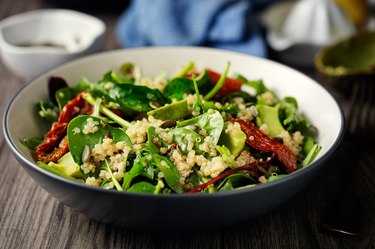


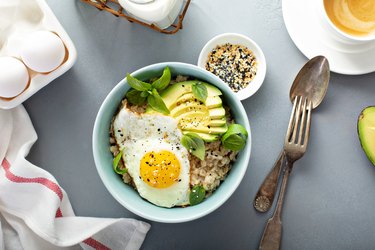

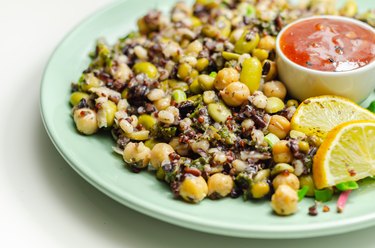
























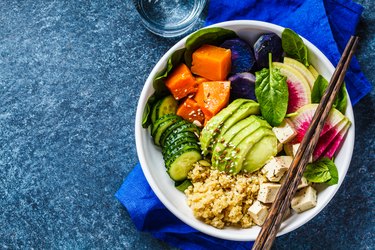





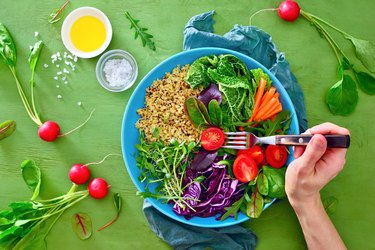

Quinoa is classified as a grain, but is actually a seed from a plant related to Swiss chard and spinach. When cooked, it has a fluffy texture and a mild, nutty flavor. Use quinoa like rice or other grains in recipes, and benefit from its high nutrient content.
Calories and Macronutrients
One cup of cooked quinoa provides 222 calories. The grain offers 4 g of unsaturated fat and no cholesterol. Quinoa is packed with carbohydrates --- the body's main energy source --- with 39 g of per cup. It also provides 8 g of high-quality protein. Most grain and plant sources of protein are incomplete, meaning they do not provide all the essential amino acids needed by the body in the proper ratios. Quinoa is one of the few complete plant-based proteins.
Vitamins
Quinoa contains many of the B vitamins, which are important to the body's ability to convert food into energy. One cup of quinoa offers 13 percent of the recommended dietary allowance for thiamin, 12 percent for riboflavin, 11 percent for B6 and 4 percent for niacin, based on a 2,000-calorie diet. This serving also offers 19 percent of the RDA for folate, which helps you form red blood cells; it's also important during pregnancy to ensure proper fetal brain development. Quinoa also provides 6 percent of the RDA for vitamin E, an antioxidant that helps scavenge disease-causing free radicals in the body.
Minerals
Quinoa is a source of many essential minerals. In one cup, you get 15 percent of the RDA for iron, which is essential to red blood cell development. It also provides 30 percent of the RDA for magnesium, critical for enzyme activation, energy production and mineral regulation. Quinoa offers 28 percent of the RDA for the bone-builder phosphorus and 9 percent for potassium, which helps balance minerals and fluids. It also provides several trace minerals, including 18 percent of the RDA for copper, 58 percent for manganese, 13 percent for zinc and 7 percent for selenium.
Fiber
Fiber is a type of carbohydrate that helps with digestive health and may contribute to lower blood cholesterol levels. One cup of cooked quinoa provides 5 g of fiber. The Institute of Medicine recommends that most adult women consume 25 g daily, and men should get 38 g daily. A half-cup of quinoa also counts as a 1-oz. serving of whole grains; the U.S. Department of Agriculture recommends you consume 3 oz. of whole grains daily.


Member Comments