




































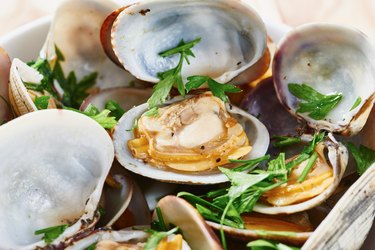















Shellfish have a reputation for being high in cholesterol, but avoiding shrimp, mollusks and crustaceans may not be the best answer for improving health. In fact, the cholesterol in shellfish may be less of an issue than you think, since these foods from the sea contain healthy compounds that mitigate the effects on blood cholesterol levels. Shellfish typically contain low levels of unhealthy fats and high levels of beneficial compounds such as omega-3 fats, iodine, iron and calcium.
Cholesterol in the Body
Cholesterol traverses the bloodstream in two forms, LDL and HDL. LDL cholesterol can be harmful to health if it builds up on the walls of the arteries. HDL cholesterol is the good type, which removes harmful lipids from the bloodstream and lowers the risk of heart disease. According to the American Heart Association, only about 25 percent of cholesterol in the blood comes from food. The majority is created by the liver.
Cholesterol in Food
Only animal cells make cholesterol, so plant products don't contain it at all. Shellfish tend to make low to moderate amounts of cholesterol compared to many animals used for meat, such as cows. The American Heart Association recommends limiting dietary cholesterol to under 300 mg per day for people with normal blood cholesterol levels and to 200 mg per day or less for people with blood cholesterol levels over 100 mg/dL.
Shellfish Cholesterol Levels
A 3-oz. serving of shrimp contains 179 mg of cholesterol. There are 42 mg of cholesterol in the same sized serving of Pacific oysters. Clams contain 57 mg and scallops have 20 mg per serving. A serving of lobster has 124 mg of cholesterol. Blue crab contains 66 mg of cholesterol per serving. Overall, shellfish contain higher levels of cholesterol than the same amount of dark meat chicken and lower levels than eggs. In some cases, the reported cholesterol levels in shellfish include other sterols, including some kinds found in mollusks such as clams and oysters, which actually reduce the amount of cholesterol taken up by the body.
Considerations
In actuality, cholesterol in food doesn't raise blood cholesterol levels as much as saturated fat and trans fats do. Because shellfish contains low levels of saturated fat, no trans fat and high levels of omega-3 fatty acids, they tend to lower overall cholesterol levels and LDL levels. In particular, shrimp were found to raise HDL levels and create a healthy HDL to LDL ratio in a 1996 study in the "American Journal of Clinical Nutrition." Of course, the preparation method matters as well. Battered and fried shellfish contain far more cholesterol, saturated fat and trans fats than grilled or broiled shellfish. Serving shellfish with added butter or heavy sauces can also raise the likelihood that your shellfish meal will negatively affect blood cholesterol levels.


Member Comments