







































Salads With Low Carbs & High Protein

Salads With Low Carbs & High Protein
Photo Credit Chicken Salad Pesto 2 image by Brett Mulcahy from Fotolia.com

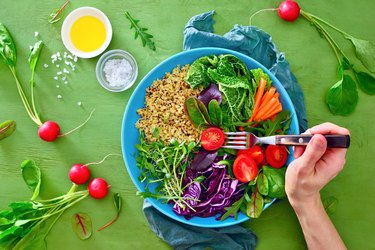
Leafy greens and other vegetables that you may eat in your salads, tossed with a protein source, are naturally low in digestible carbohydrates. Although vegetables and fruits are rich in fiber, your body doesn't digest this complex carb. When you calculate the carbohydrate content of leafy dark greens, cucumbers, carrots, tomatoes and broccoli using the American Dietetic Association's food exchange list, you may realize that generous portions of these nutritious foods won't break your daily carbohydrate budget.

Basic Ingredients

Most leafy greens and nonstarchy salad vegetables are low in calories and carbohydrates. According to the ADA food exchange list, 1 cup of romaine lettuce has 8 calories and 2 g of carbs and 1 cup of raw spinach has 7 calories and 1 g of carbs. As another example, 1 cup of raw tomato has 32 calories and 7 g of carbs.

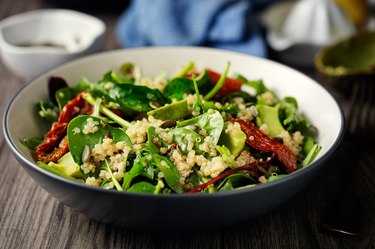
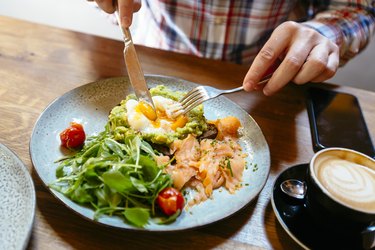
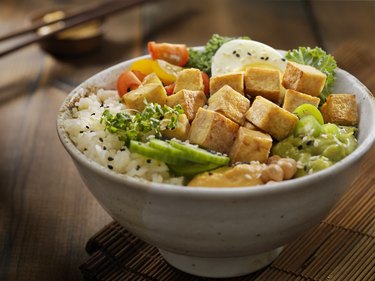
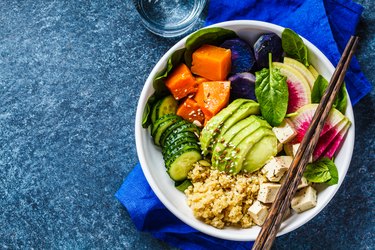
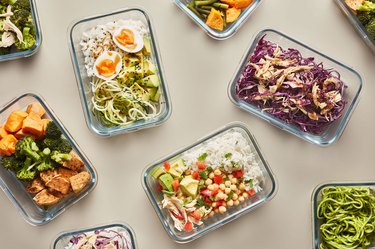
You can make low-carb, high-protein salads using these vegetables and mushrooms, bell peppers, cucumbers or zucchini. Add chicken or turkey, hard-boiled eggs, grilled salmon, nuts, pumpkin or sunflower seeds or low-fat cheese to make nutritious salads that are low in carbs and high in protein. A 3-oz. serving of cooked poultry has 24 g of protein, one large egg has 6 g of protein and 1/2 cup of tofu has 10 g of protein, according to Drugs.com. To keep your salads low in carbs when you're dining out, omit croutons and crackers, potato or macaroni salads and the big basket of dinner rolls in the middle of the table.

High-Protein Greek Salad

A Greek salad includes tomato wedges, cucumber slices, slices of sweet red onion, Kalamata olives and crumbled feta cheese; in the United States it is often served on a bed of lettuce or other leafy greens. This blend of low-carb foods is seasoned with lemon juice, olive oil, oregano and coarse black pepper. For extra protein, add slices of grilled or broiled chicken breast, a sliced hard-boiled egg or crumbled tofu.

Light Summer Lunch

Although fruits have more carbohydrates than nonstarchy vegetables, you can include one serving of fresh melon or berries in your salads without going overboard on carbs. According to the ADA, 1/2 cup of cantaloupe has 28 calories and 6.5 g of carbs and 1/2 cup of raspberries has 30 calories and 7 g of carbs. Blend 1/2 cup of cubed cantaloupe, honeydew melon or papaya with sliced chicken, chopped celery, a sprinkling of chopped walnuts and 1 cup of romaine lettuce in a creamy, low-fat cucumber dressing for a refreshing summer salad.

Salad on the Go

Some fast-food restaurants offer healthy alternatives to hamburgers and french fries, including nutritious, convenient salads that are low in carbohydrates and high in protein. A 10.9-oz. chicken Caesar salad from McDonald's has 221 calories, about 11 g of carbohydrates and about 31 g of protein, according to the U.S. Department of Agriculture.

Bunless Burger

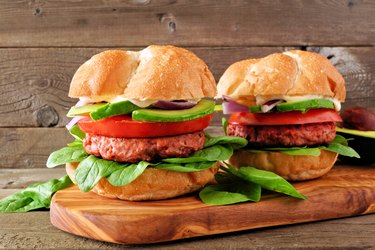
With the increasing popularity of low-carb diets, some restaurants are offering creative alternatives to dishes that traditionally include bread, potatoes, or other high-carb foods. A bowl of salad greens, tomatoes, cucumbers, mushrooms, cucumbers, red onions and crumbled blue cheese replaces the bun and fixings in a low-carb hamburger at a New York City restaurant reviewed by The Nibble. You can make your own version of this "bunless burger" at home by topping a large portion of your favorite green salad with a lean ground beef or turkey patty. A 3-oz. portion of cooked beef has 21 g of protein; the same serving of cooked turkey has 24 g of protein.

References

Article reviewed by Julie Laing Last updated on: Jan 7, 2011

Must see: Photo Galleries

Member Comments