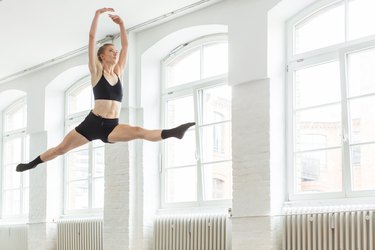
Dancers may look willowy and boneless, but their singular grace takes incredible strength and skill to achieve. Hours of physically grueling training, rehearsals and performances require a diet plan for dancers: serious nutrition, enough calories to sustain energy and the right combination of amino acids to build and repair overtaxed muscles. Thankfully, the days of George Ballanchine's malnourished "Baby Ballerinas" are far behind the world of dance. Strong is the new skinny, so eat with as much joy as you entrechat and jete.
Nutritional Needs of Dancers
Video of the Day
Dancers of all types expend a lot of energy and make extra demands on their bodies, just as any athlete does. As with any healthy diet, the more varied, the better. Eating a lot can feel counterintuitive to people who are aiming to achieve a certain physical aesthetic, but researchers at Florida State University found that dancers who took in more calories and higher amounts of protein actually had less body fat than dancers who relied mostly on carbohydrates and fats in their ballerina diet.
Video of the Day
Dancers can burn between 500 and 600 calories in a single 90-minute dance session, and can sweat out up to 2 percent of their total body weight in water, according to the experts at Northwestern University's Dance Medicine program. This means that your caloric intake needs to be higher than that of your best friend whose main activities are walking between classes and studying. You also need to take in a lot more water to stay hydrated, which helps reduce your risk of injury.
Healthy Food for Dancers
Carbohydrates are your body's main source of energy, so the dance nutrition experts at Just for Kix recommend that at least half of every meal should be carbs. These include whole grains, dairy, fruits, vegetables and small amounts of potatoes and rice. Next up on your ballet dancer diet is protein, which comes from beans, beef, dairy, eggs, nuts, pork and poultry. Protein is needed to build and repair muscles, and the complete amino acids it contains are necessary for healthy red blood cells.
Next on the list are healthy fats. These offer benefits such as reducing the unhealthy cholesterol in your blood, encouraging the good cholesterol and providing energy when you've burned through all your carbs. Add avocados, nuts, olive oil, salmon, seeds, tuna and walnuts to your diet to also keep your skin supple and hair shiny.
Read More: What Does a Ballerina Eat?
Things to Consider
The most common deficiency among dancers, according to Dance Magazine, is vitamin D, which is necessary to build strong bones and to support your immune system. Make sure you get enough dairy every day, take a vitamin D supplement or spend 10 minutes in the sunshine with no sunblock. If you prefer to take a long walk or enjoy other outdoor activities that take longer than 10 minutes, however, you'll need to put your sunblock on.
The nutritional needs of a professional ballerina may differ somewhat from those of a beginner, a hobbyist or a very young dancer whose goals are serious but whose body has not finished developing. So make sure that your ballet dancer meal plan is appropriate for your age and level of activity.
Read More: Ideal Meal Plan