






































Can 13-Year-Olds Do Pushups & Sit-ups?

Can 13-Year-Olds Do Pushups & Sit-ups?
Photo Credit Jupiterimages/Brand X Pictures/Getty Images

Strength-training exercises like pushups and sit-ups are important for a 13-year-old's physical health and engaging in physical activity itself may help ward off anxiety and depression. To avoid an injury, a 13-year-old should learn the correct technique for doing sit-ups and pushups from a gym teacher or a fitness expert.

Physical Activity Guidelines

Physically active adolescents have higher levels of cardiovascular fitness and stronger muscles, compared with kids who are inactive. Teens who exercise often typically have less body fat, stronger bones and fewer symptoms of anxiety and depression, according to the U.S. Department of Health and Human Services. Kids should engage in about an hour of moderate and vigorous physical activity each day. This includes aerobic activity such as running and biking as well as muscle-strengthening exercises like pushups and sit-ups. Teens generally should concentrate on the total amount of physical activity they get, however, rather than focusing on doing specific exercises.

Strength Training

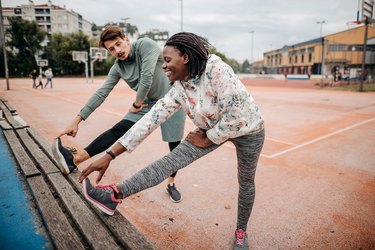
Pushups and sit-ups are strength training and resistance exercises. A 13-year-old who has not yet gone through puberty isn't producing significant testosterone and won't develop muscles by strength training, though he will get stronger. Before starting a pushup and sit-up routine, have your teen checked out by a pediatrician or family doctor. When doing an exercise for the first time, the teen should start out slowly so that his body gets used to the activity. Doing too many exercises too quickly can stress muscles and can cause them to strain and become sore. This is significant for 13-year-olds because their bones, joints and tendons are still developing. At first, do a pushup and sit-up regimen three times a week with at least one day off between sessions. You should also alternate muscle groups. You can do this by doing sit-ups one day and pushups the next. Before doing strength-training exercises, warm up for five to 10 minutes on a stationary bike or by taking a brisk walk. Cool down after a workout by stretching the muscles you worked out.

Sit-up Technique

To do a sit-up correctly, lie on your back with both feet flat on the ground and knees bent. Cross your arms over your chest. Raise your head and shoulders about 1 foot off the ground, and return to the starting position. Do eight to 10 sit-ups, rest for a few minutes and do one or two more sets. Never pull your neck with your hands. Dr. Gabe Mirkin, a sports medicine specialist, says that you don't need to do more than 30 sit-ups at a time; rather, when the exercise begins feeling easy, you can add 2 to 5 lb. hand weights. Sit-ups primarily work the abdominal muscles.

Pushup Technique

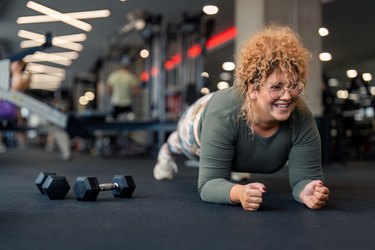
Unlike sit-ups, pushups work several muscle groups at once including the chest, shoulders and triceps. The move forces the core muscles to stabilize while engaging muscles in the arms and back, according to Stuart McGill, a spine expert from the University of Waterloo. To do a proper pushup, get down on your hands and knees with your wrists directly below your shoulders and knees under your hips. Lower your body toward the floor while bending your elbows and push back up to the starting position. A 13-year-old can perform three sets of eight to 10 push-ups three times a week.

Warnings

While sit-ups do work your core muscles, it's not necessarily the best exercise. In an article published by Newsweek, Dr. Richard Guyer of the Texas Back Institute explains that sit-ups can damage the back because it puts strain on an area with the most nerves and is the weakest part of the back. Over time, sit-ups can lead to a disk bulge or disk herniation, which can cause chronic back pain, leg pain, weakness and tingling. Sit-ups, it turns out, won't necessarily bring a 13-year-old closer to getting a "six-pack" physique either. Crunches work muscles known as the rectus abdominus, which, from the side, look extended when overworked. The muscles that need to be worked to get achieve a flat, toned appearance are minimally engaged when doing sit-ups, notes trainer Steve Maresca.

References

Article reviewed by Victoria Dugger Last updated on: May 26, 2011

Must see: Photo Galleries

Member Comments