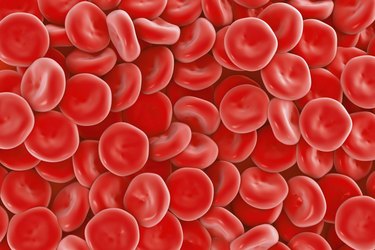
Red blood cells carry oxygen to all cells in your body. Hemoglobin -- a protein found in red blood cells -- binds to oxygen molecules and delivers oxygen to tissues and cells via your circulatory system. When hemoglobin levels fall below normal levels, your body won't function optimally. Normal hemoglobin levels vary, depending on your age, sex, you health and where you live.
Hemoglobin Levels for Children
Video of the Day
Children need optimal oxygenation for normal growth and development. According to the World Health Organization, a normal hemoglobin level for children age 6 months to 4 years is at or above 11 g/dL. A normal levels for children ages 5 to 12 years is at or above 11.5 g/dL. A normal level for adolescents ages 12 to 15 is at or above 12.0 g/dL. Any hemoglobin values below these cut-points can indicate anemia, a disorder characterized by a low red blood cell count, as well as low hemoglobin and hemocrit.
Video of the Day
Hemoglobin Levels for Adults
According to the World Health Organization, a normal hemoglobin level for an adult male is between 13.8 and 17.2 g/dL. A normal level for a non-pregnant adult woman is between 12.1 and 15.1 g/dL. Men have higher hemoglobin levels than women because women lose red bloods each month during menstruation. A normal level for a pregnant woman is at or above 11.0 g/dL. During pregnancy, blood volume increases by 40 to 50 percent, but the red blood cell count increases by just 15 to 20 percent. The greater increase in blood volume than red blood cells will result in lower hemoglobin levels and a condition known as physiological anemia of pregnancy.
Low Hemoglobin Levels
When the number of helathy red blood cells drop, your hemoglobin level also drops, a condition known as anemia. This reduction results in a drop in oxygen delivery to cells. Anemia is further classified based on the size of the red blood cell. Anemias characterized by small red blood cells are called microcytic anemia, and are commonly caused by iron deficiency due to poor diet or iron malabsorption. Anemias characterized by large red blood cells are known as macrocytic anemias and can be caused by a failure of DNA synthesis due to deficiencies in vitamin B-12 and folate. Anemias characterized by red blood cells of normal size are known as normocytic anemia. The specific type of anemia has important nutritional implications.
Elevated Hemoglobin Levels
High hemoglobin levels, like low hemoglobin levels, can cause or indicate health problems. In some cases, high hemoglobin levels are an adaptive response to a chronic condition that increases your oxygen needs, such as living at high altitude, smoking or having chronic obstructive pulmonary disease. Disorders such as polycythemia vera, which causes overproduction of red blood cells, can also cause high hemoglobin levels. Dehydration can cause temporarily high hemoglobin levels because red blood cells are more concentrated in the decreased fluid volume in the blood.
- World Health Organization; "Worldwide Prevalence of Anaemia 1993-2005: WHO Global Database on Anaemia." Bruno de Benoist, Erin McLean, Ines Egli and Mary Cogswell; 2008
- Medical Management of the Surgical Patient: A Textbook of Perioperative Medicine: Michael F. Lubin, et al
- BMJl: Why should women have lower reference Limits for Haemoglobin and Ferritin Concentrations than Men?: D, Hugh Rushton, et al
- Maternal Physiological Changes During Pregnancy: Chapter 2
Is this an emergency? If you are experiencing serious medical symptoms, please see the National Library of Medicine’s list of signs you need emergency medical attention or call 911.