



















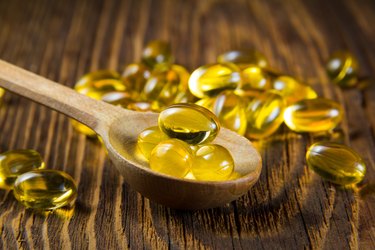
Coenzyme Q10 is a substance naturally produced by the body that is involved in several important biological processes. Deficiencies in coenzyme Q10 have been linked to several health conditions, including gum disease. Researchers are investigating if treatment with coenzyme Q10 supplements can treat these conditions as well as other health conditions. As with any health supplement, you should consult your doctor before taking coenzyme Q10 supplements.
Coenzyme Q10 Deficiency
Gum diseases such as gingivitis and periodontitis result in a painful swelling and bleeding of the gums. Studies have found that tissue from the gums of people with gum disease have decreased levels of coenzyme Q10, reports an article published in the October 1971 issue of the "Proceedings of the National Academy of Sciences."
Treatment with Coenzyme Q10
A few small clinical trials have found preliminary results suggesting that coenzyme Q10 may be effective in treating gum disease. The studies found that people who took coenzyme Q10 experienced faster tissue repair and healing of the gums, explains the University of Maryland Medical Center. Larger studies will be required to established conclusive results. In these studies, coenzyme Q10 was given in conjunction with established treatments for gum disease, not as a replacement for these treatments.
Dosing
For treating gum disease, coenzyme Q10 can either be taken systemically and absorbed into the body, or used as a mouthwash. Initial studies suggest that using a mouthwash containing coenzyme Q10 is likely not effective for treating gum disease, MedlinePlus reports. For treating gum disease, two doses per day of 50 mg is the recommended dose, according to Vitamins-Supplements.org. Because coenzyme Q10 is a fat-soluble chemical, taking it with foods that contain fat or oil can help improve absorption into the body.
Side Effects
Coenzyme Q10 is generally safe and well tolerated, although some side effects may occur. Common side effects include loss of appetite, upset stomach and nausea. In some cases, diarrhea has been reported. Coenzyme Q10 may lower blood pressure, so you should exercise caution when taking coenzyme Q10 if you have very low blood pressure or you are taking blood pressure-lowering medications. Splitting coenzyme Q10 up into smaller, more frequent doses and spreading those throughout the day can decrease the risk of side effects.
References
- MedlinePlus: Coenzyme Q-10
- University of Maryland Medical Center: Coenzyme Q10
- University of Michigan Health System: Coenzyme Q10
- Vitamins-Supplements.org: Coenzyme Q10
- "Procedings of the National Acadamy of Sciences"; Deficiency of Coenzyme Q10 in Gingival Tissue from Patients with Periodontal Disease; Gian Paolo Littarru et al; October 1971


Member Comments