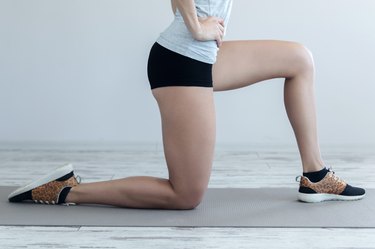
Quadriceps muscle injury is a real pain in the, well, thigh. Whether you had an acute injury while exercising or your quad pain came on gradually, getting rid of it can be a lengthy and frustrating process. Once you've pinpointed the cause, you can begin to rehab it so you can get back in the game. If your quad pain happens only after a workout, you can make some adjustments to prevent it in the future.
Tip
Bruising, muscle injury and delayed-onset muscle soreness can cause quad pain.
Video of the Day
Causes of Acute Quad Pain
A multitude of factors can contribute to quad pain. The most obvious cause is an acute injury sustained during an activity of daily living, such as a fall, or during exercise or sports. Your quadriceps pain might be a bruise or a muscle strain. Without a visit to your doctor or a physical therapist, it's difficult to know what you're dealing with. Here are a few possibilities:
Video of the Day
Bruising: If you bumped into something or you were hit straight on and felt a sharp pain, it may be a bruise, which is caused by blood leaking from blood vessels. A bruise will usually be noticeable the next day, turning blue and purple and then yellowish as it begins to heal.
Bruises are often accompanied by localized swelling; severe bruising may cause a hematoma to develop. A hematoma is a large leakage of blood that can cause blood to pool at the site of impact, resulting in more marked swelling and pain.
Muscle strain: When a muscle is overstretched, it can cause a muscle strain or pull. You may have overstretched any of the four muscles that comprise the quadriceps muscle group: the vastus lateralis, vastus medialis, vastus intermedius, and the rectus femoris. The location of the pain in your thigh may help you determine which muscle or muscles you injured.
Muscle strains can be mild, moderate or severe and are categorized as follows:
Grade I: A mild strain in which only a few muscle fibers have overstretched. There is slight pain and tenderness but no loss of strength.
Grade II: A moderate strain with more fibers affected. The pain is more severe, and there may be swelling, bruising and a noticeable loss of strength.
Grade III: A serious strain in which the muscle fibers have been torn. There may be an audible "pop" at the time of injury. This causes significant pain, swelling, bruising and a loss of muscle function.
Causes of Chronic Quad Pain
If your quad pain has been bothering you for a while, it may be due to an unhealed acute injury, or it may be the result of one of the following:
Muscular imbalance: Tightness in the hips and lower back can pull on the quadriceps muscle causing pain and dysfunction. Muscular imbalances cause improper movement and poor exercise technique that can lead to acute and overuse injuries. A quadriceps injury can also lead to pain and dysfunction in the hips and lower back.
Quadriceps tendinitis: This condition is commonly caused by overuse — placing repetitive stresses on the muscles and on the knee joint, which attaches to one end of the quadriceps. Motions in sports activities such as running, jumping and short stops and starts are common contributors, but even those who don't play sports can be affected.
Chronic myofascial pain (CMP): CMP is a disorder of the muscle that affects both the muscle and the fascia, the sheath of tissue surrounding the muscle. CMP can be identified by the presence of trigger points, which can be active or latent. An active trigger point causes soreness, weakness and decreased range of motion, while a latent trigger point may be a very sensitive spot that is painful to the touch.
Post-Workout Muscle Soreness
If your quadriceps pain is only present after a workout or other vigorous activity and goes away on its own, it's most likely due to post-exercise delayed-onset muscle soreness (DOMS). DOMS is a normal reaction to the stresses placed on the muscles during activity. It's usually noticeable the day after exercise and can last up to five days, depending on the intensity of the activity.
If you exercise frequently, and you have chronic soreness in your quads and other muscles in your body, you may be experiencing overtraining syndrome. This is a condition caused by a high volume of training without enough recovery. Frequent muscle injuries are a common symptom of early-stage overtraining syndrome. This may also be accompanied by fatigue, a regression in exercise performance, moodiness, depression, lack of appetite and sleep problems.
Quad Pain Treatment
With so many causes of quadriceps pain, treatment methods vary. You can't begin treating your pain until you have a diagnosis. Most injuries will involve rest and a reduction in activity. Some may require special exercises, and for serious injuries surgical treatment may be necessary.
Treatment for DOMS
DOMS is the easiest to identify, because it occurs only after a tough workout and goes away on its own. There's no way to make DOMS go away faster, but you can ease the discomfort by:
- Taking over-the-counter pain relievers
- Massaging the muscle
- Stretching
- Doing light cardio exercise
- Applying heat or ice
You can prevent DOMS in the future by gradually building the intensity of your workout. Doing too much, too soon is a major cause of DOMS, so be more conservative with your efforts. Warm up before each exercise session and stretch before and after. Also, make sure to get proper rest and be diligent about pre- and post-workout nutrition.
Treatment for Muscle Strain
The type of muscle strain treatment prescribed is dependent on the grade. Grade I strains can be treated at home with RICE, which stands for rest, ice, compression and elevation. Cease activity and rest the affected leg after injury. Apply an ice pack to the quadriceps for 10 minutes at a time, with at least 10 minutes in between, for 24 to 48 hours.
Compression helps to control swelling. Use an elastic bandage and wrap it snugly, but not too tightly. Elevation of the injured muscle above the heart can also relieve swelling and pain and prevent internal bleeding that can cause bruising. If the pain and swelling are severe, grade II strains may require medical attention.
Grade III strains require medical treatment and often surgery. Recovery from mild to moderate quad strain can take eight to 10 weeks. Grade III strains may take longer to heal.
Chronic Quad Pain Treatment
Pain that has been present for some time, whether it has worsened or not, is unlikely to heal without some type of rehabilitative program provided by a professional. Your doctor or physical therapist will likely recommend rest and avoidance of vigorous activity involving your quadriceps muscle. Physical therapy, medication, massage therapy and anesthetic injections may be used, and physical therapy can be used to treat muscular imbalances and tendinitis.
Read more: Damaging Effects of Tight Quadriceps
- Healthline: Hematoma in the Leg
- Healthline: Quadriceps Femoris
- Harvard Health Publishing: Muscle Strain
- American Council on Exercise: Six Things to Know About Muscle Imbalances
- Peak Performance Physical Therapy: Quadriceps Tendonitis of the Knee
- Cleveland Clinic: Myofascial Pain Syndrome (Chronic Myofascial Pain)
- Painscience.com: Post-Exercise, Delayed-Onset Muscle Soreness
- American Council on Exercise: 9 Signs of Overtraining
- WebMD: Sore Muscles? Don't Stop Exercising
- WebMD: What Is the RICE Method for Injuries?
Is this an emergency? If you are experiencing serious medical symptoms, please see the National Library of Medicine’s list of signs you need emergency medical attention or call 911.