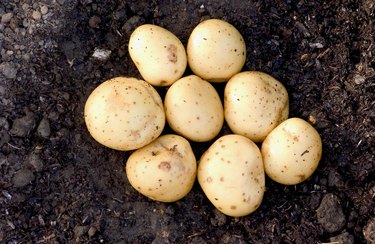
For a carbohydrate to be considered a good carb, it needs to provide vitamins and minerals in addition to the carbohydrate. Most importantly, a good carbohydrate needs to contain fiber. Fiber is helpful in managing blood sugar levels, lowering blood cholesterol levels and creating a feeling of fullness. Potatoes meet this definition under certain parameters, including the way they are prepared and the amount consumed. However, some people who need to avoid certain types of starches or foods with a high glycemic index should limit their consumption of potatoes.
Vitamins and Minerals
Video of the Day
The potato meets the good carbohydrate requirement of containing vitamins and minerals. A medium-size potato contains more potassium than a banana, approximately half the recommended daily value of vitamin C and significant amounts of vitamins B-1, B-6 and folate. These vitamins and minerals are all essential, meaning your body needs to obtain them through dietary sources.
Video of the Day
Fiber
Potatoes also contain the second requirement for the label "good carb." They contain fiber. The USDA Nutrient Database lists a medium-sized potato with skin on as containing 3.8 grams of fiber, which is approximately 10 percent of the recommended daily intake. Interestingly, some of the starch in potatoes is "resistant starch," meaning it resists digestion. This happens when potatoes are cooked but then eaten cold, as in potato salad. While not fiber, this resistant starch acts in similar ways and may have similar health benefits.
Additional Benefits
Potatoes are good food choices if you are attempting to decrease fat, sodium or cholesterol in your diet because they do not contain these substances. They also have a high satiety index. This means that it can help you feel full without overeating.
Warning
The benefits of potatoes, and their designation as a good carbohydrate, can be negated by the way they are prepared. To avoid losing nutrients due to cooking or boiling, keep the skin on when preparing the dish. Though the skin on is your best bet nutritionally, if you want your potato skinless, wait until after cooking to peel it. Also, deep-frying potatoes or preparing them with full-fat butter, cream or cheese changes this healthy, fat-free food to a caloric, high-fat food to be avoided.
When a Good Carb Is Bad for You
Through potatoes may be a good carbohydrate for healthy individuals, Harvard School of Public Health suggests how many you eat due to their high rapidly digested starch content. This starch is similar to sugar and sweets in the way it affects the blood sugar levels. Due to this, people who have diabetes should eat only limited portions of this vegetable.