
















































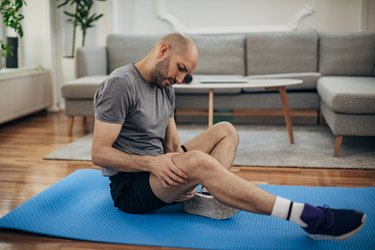












A prolapsed uterus, with its symptoms of pain and pressure in yoru pelvis, can result in your uterus protruding into the opening of your vagina and possibly even moving outside your body. Kegel exercises are not exclusively Pilates, but can be part of your Pilates workout. While surgery is an option, Kegel exercises can tone your pelvic floor muscles and help prevent and treat your prolapsed uterus.
Prolapsed Uterus
A prolapsed uterus is a pelvic floor disorder caused by weakness in the muscles surrounding the floor of the pelvis. This disorder can be caused by many things, such as pregnancy, vaginal delivery, obesity, chronic coughing, straining with lifting or bowel movements. Your pelvic floor is muscles, ligaments and tissues acting like a hammock to support your uterus, bladder, and rectum. When the muscles are stretched or damaged, support to your uterus is lost, causing it to protrude down into your vagina. A prolapsed uterus can be mild or severe, depending on how damaged your pelvic floor muscles are.
Treatment options include exercises to tighten your pelvic floor muscles, but severe cases may need surgery. Consult with your doctor if you are having symptoms of uterine prolapse.
Kegel Exercises
Kegels are a series of exercises used to strengthen the pubococcygeus, or PC, muscle, a main muscle supporting the pelvic floor. You can do Kegels anywhere, and at anytime, such as while driving, making meals or even checking email. This makes them an exercise of choice for those suffering from disorders of the pelvic floor.
Finding the Muscle
To do Kegel exercises, learn how to tighten your PC muscle. One way is to insert a clean finger into your vagina and squeeze your vaginal muscles. When your feel the squeeze, you have tightened your PC muscle. Another way is to stop the flow of urine when you are urinating. The muscle you use to do this is your PC muscle. Do not make a habit of stopping your flow of urine or doing Kegels with a full bladder, however, because this can cause a urinary tract infection.
Perfecting the Exercise
To do Kegel exercises, sit, kneel or lie down after emptying your bladder. Contract and then relax your PC muscle 100 times three times daily, according to the authors of "Natural Childbirth the Bradley Way." As you develop the muscle, you should be able to hold the contraction for a longer period, increasing to holding the contraction for 10 seconds at a time. As you increase the amount of time you can hold the contraction, you can decrease the amount of repetitions. As you are contracting and relaxing your PC muscle, breathe freely; do not hold your breath.
References
- Pilates Digest: The Muscles of the Pelvic Floor
- Merk Manual: Pelvic Floor Disorders
- Pilates Exercise Guide: Pelvic Tilt
- MayoClinic.com: Kegel Exercises: A How to for Women
- Pilates Mommy: Kegels
- "Natural Childbirth the Bradley Way"; Susan McCutcheon-Rosegg, et al.; 1996


Member Comments