











































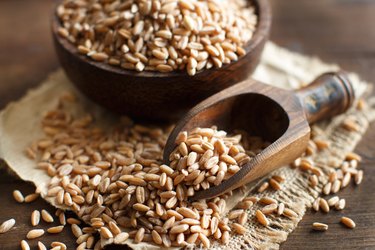








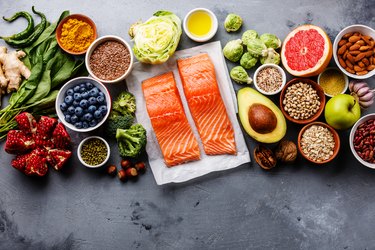




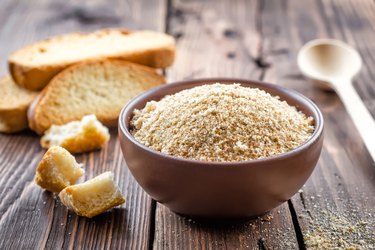










Eating whole grains regularly can help you lose weight. This is because whole grains are higher in fiber and nutrients than refined grains. Food that is high in fiber has fewer calories, takes longer to chew, keeps you full longer and takes longer to digest. The vitamins and mineral content of whole grains can help regulate your metabolism and prevent deficiencies that cause weight gain. There are many whole grain varieties that you can eat to meet the recommended daily intake.
Calories
Food made with whole grains has fewer calories than food made with refined grains. This is because the high fiber content makes it bulkier and leaves less room for fat and other nutrients. A review of dietary fiber studies published in the 2001 issue of "Nutrition Reviews" found that people who eat high-fiber foods take in fewer calories than people who do not. Eating fewer calories helps you lose weight. A 2008 study published in the "American Journal of Clinical Nutrition" found that dieters who ate whole grains regularly lost a higher percentage of body fat than dieters who did not eat whole grains.
Satiation
The high-fiber content of whole grains fills you up faster and keeps you satisfied longer than refined grains. This is because high fiber foods require more chewing, which sends full signals to your brain. Whole grains can contain soluble fiber, such as pectin, or insoluble fiber, such as cellulose. Some soluble fibers absorb water to form a gel matrix. This slows your digestion, makes you feel full for longer and slows the rate at which your body absorbs nutrients. Soluble fiber also slows your insulin response to delay hunger.
Nutrients
Whole grains are higher in nutrients, such as magnesium, calcium, vitamin E and amino acids, than refined grains. This is partly because the bran and germ are still intact. The increased magnesium and vitamin intake that comes with eating whole grains can help you lose weight through proper metabolism of insulin and glucose regulation. A study published in the 2007 issue of "Obesity" found that people with metabolic syndrome have low magnesium levels.
Recommended Intake
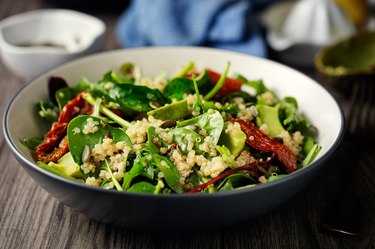
The amount of whole grains that you need to eat depends on your age and gender. The United State Department of Agriculture recommends that women eat at least 3 ounces of whole grains per day and men eat between 3 and 4 ounces, depending on their age. Whole-grain options include oats, quinoa, wild rice and whole grain barley.
References
- "The American Journal of Clinical Nutrition"; The Effects of a Whole Grain-Enriched Hypocaloric Diet on Cardiovascular Disease Risk Factors in Men and Women with Metabolic Syndrom; Heather Katche et al.; January 2008
- "Nutrition Reviews"; Dietary Fiber and Weight Regulation; Nancy Howarth et al.; May 2001
- Mayo Clinic: Whole Grains: Hearty Options for a Healthy Diet
- "Obesity"; Intake of Dietary Magnesium and the Prevalence of the Metabolic Syndrom Among U.S. Adults; Earl Ford et al.; May 2007
- United States Department of Agriculture: Grains


Member Comments