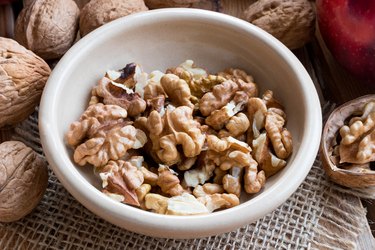
If you live with either type 1 or type 2 diabetes — now you can go nuts. While daily diet is critical, per Mayo Clinic, for keeping your blood sugar levels in check and managing potential complications, the healthy fats found in nuts are an important part of this equation.
Read more: A Healthy Diet Can Help Manage Type 2 Diabetes — These Are the Best and Worst Foods to Eat
Video of the Day
Video of the Day
Diabetes Diet: Go Nuts
Nuts such as walnuts, peanuts, pistachios and more all contain monounsaturated or polyunsaturated fats, which have been shown to lower cholesterol levels and help with the heart risks that are often related to diabetes, Mayo Clinic says. They are also a good replacement for less healthy forms of fat, such as saturated fats or trans fats. These forms of fat can increase the risk of heart problems, particularly if you have diabetes.
One such example is the Dietary Approaches to Stop Hypertension (aka the DASH diet), which is recommended by the Cleveland Clinic as one of the six best diets for diabetes. Low in sodium, sugar and fat, and rich in veggies, fruits and grains, the well-rounded eating plan created to stop high blood pressure can be healthy for everyone — and especially if you have diabetes.
Per the Cleveland Clinic, in addition to consuming plentiful whole grains, fruits, vegetables, and small portions of lean meat and low-fat dairy products daily, you should add four portions of nuts, seeds and legumes weekly to round out the diet.
Walnuts Greenlighted for Diabetes
While several major health organizations note that many different kinds of nuts provide health benefits for diabetes, some nuts in particular may hold an edge in the healthy eating department, says New York City-based dietitian and Sugar Shock coauthor Samantha Cassetty, MS, RD. One in particular that seems to have some specific benefits for diabetes is walnuts. They could very well pop up in your trail mix, charcuterie board or Waldorf chicken salad.
These tasty nuts, known as akhrot in some cultures, also happen to star in some delicious Indian desserts.
"People with type 2 diabetes have a higher risk for heart disease, and walnuts have healthy fats that may offer some protection," Cassetty says. "Inflammation drives atherosclerosis, and walnuts are rich in anti-inflammatory fats, so they may help stall this process in people with diabetes."
In addition, the research surrounding walnut consumption and lowered diabetes risk seems to be substantial. In an October 2018 study in Diabetes/Metabolism Research and Reviews, researchers looked at walnut consumption and diabetes risk using data from thousands of individuals in the National Health and Nutrition Examination Survey (NHANES). The results showed that individuals who consumed walnuts regularly had about half the risk of developing diabetes as those who did not eat nuts.
Other research has also shown promising effects for walnuts on diabetes. The findings of an April 2019 study of 119 adults with metabolic syndrome in Nutrition Research and Practice found that those who ate walnuts daily had higher levels of good HDL cholesterol, lower fasting blood glucose and lower blood A1c levels than those in the placebo group. Several other studies have shown similar benefits.
The Bottom Line on Nuts
Scientific research aside, walnuts are also a versatile solution that are easy to incorporate into many diabetes diets. "I would absolutely encourage a patient to include these heart-healthy nuts as a snack," says Rebecca Yellin, RD, a registered dietitian at Montefiore Health System in New York City. "For a 1-ounce serving, they contain around 4 grams of carbohydrates and 2 grams of fiber. They are also a great choice to pair with blueberries — so long as the individual is not allergic!"
Along with walnuts, several other types of nuts can offer benefits for diabetes as well. "Eating a Mediterranean diet that includes walnuts and other nuts has been found to drastically reduce the risk of developing type 2 diabetes in people who were at high risk for the condition," Cassetty says. "This held true even in the absence of weight loss."
- Mayo Clinic: “Diabetes Diet: Create Your Healthy-Eating Plan”
- Cleveland Clinic: “The 6 Best (and Worst) Diet If You Have Diabetes”
- Samantha Cassetty, MS, RD, registered dietitian, New York City; coauthor, Sugar Shock
- Diabetes/Metabolism Research and Reviews: “Association Between Walnut Consumption and Diabetes Risk in NHANES”
- Nutrition Research and Practice: “Daily Walnut Intake Improves Metabolic Syndrome Status and Increases Circulating Adiponectin Levels: Randomized Controlled Crossover Trial”
- Rebecca Yellin, RD, registered dietitian, Montefiore Health System, New York City