If you have high cholesterol, you're not alone. Ninety-one million people in the United States have high cholesterol, according to the Centers for Disease Control and Prevention, and only 55 percent of the people who would benefit from cholesterol-lowering drugs are taking them.
If you're struggling with how to gain control over your cholesterol, knowing what not to eat is a good place to start. You might be surprised to learn that it isn't cholesterol in the diet that is the main contributor to high blood cholesterol levels — it's fat.
Video of the Day
Video of the Day
Beware High-Fat Meats
When you want to lower your blood cholesterol, you need to limit your intake of total fat and saturated fat, as total fat and saturated fat are known to raise blood-cholesterol levels. For heart health, limit your intake of total fat to 20 to 35 percent of calories and your intake of saturated fat to less than 7 percent of your calories, as advised by the U.S. National Library of Medicine.
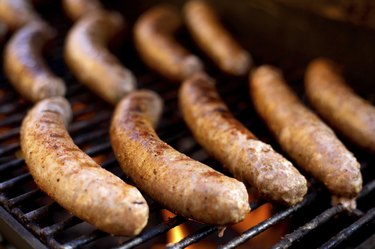
As a source of both fat and saturated fat, avoid high-fat meats when trying to lower your blood-cholesterol levels. High-fat meats to avoid include ribs, sausage, bacon, salami, bologna, hot dogs and organ meats such as liver.
Avoid Whole-Fat Dairy Foods
The number one source of saturated fat in the U.S. diet are pizza and cheese, according to the Harvard School of Public Health. Like meat, whole-fat cheese and milk products are high in total and saturated fat. To help improve your cholesterol numbers, you should not eat full-fat cheese or yogurt, or drink whole milk. Other high-fat dairy foods you should avoid include ice cream, cream cheese, heavy cream, half and half, sour cream and butter.
Watch Fried and Baked Goods
Saturated fat isn't the only fat you need to avoid when you have high cholesterol; you also need to avoid trans fats. These types of fats are created when manufacturers turn liquid oils into solids. Trans fats raise LDL cholesterol — the bad cholesterol — and lower HDL cholesterol — the good cholesterol, according to the American Heart Association.
Trans fats are found in fried foods and baked goods. This means you should not eat commercially made french fries, doughnuts, pastries, pie crust, biscuits, pizza crust and cookies when you have high cholesterol. Anything made with stick margarine or shortening is also a source of trans fat and should be avoided.
Check Your Ingredients
Although it was once thought that consuming foods with cholesterol could increase your blood cholesterol levels, this belief is no longer supported. According to the American Heart Association, there is not enough research to prove that eating cholesterol will increase your levels of bad cholesterol; therefore, the organization does not place restrictions on dietary intake of cholesterol.
However, the AHA also points out the foods with cholesterol are often high in saturated and trans fats, which should be limited or avoided.
- Centers for Disease Control and Prevention: "Cholesterol: Facts"
- American Heart Association: "Trans Fat"
- Harvard School of Public Health: "Saturated Fat"
- U.S. National Library of Medicine: "How to Lower Cholesterol with Diet"
- American Heart Association: "New Federal Guidelines May Lift Dietary Cholesterol Limits"
Was this article helpful?
150 Characters Max
0/150
Thank you for sharing!
Thank you for your feedback!
Is this an emergency? If you are experiencing serious medical symptoms, please see the National Library of Medicine’s list of signs you need emergency medical attention or call 911.