












































Acid reflux -- gastroesophageal reflux, or GERD -- affects nearly 60 million Americans and is especially common among the elderly and pregnant women, according to the American College of Gastroenterology. Treatment options for occasional acid reflux include diet and lifestyle changes and possibly medication.
Definitions
GERD is a condition in which food or fluid from the stomach leaks back into the esophagus, causing heartburn. Symptoms can include a burning sensation that originates behind the breastbone. GERD can be the result of a hiatal hernia, a condition in which the stomach protrudes through the diaphragm muscle. If you have a hiatal hernia, you may have no symptoms, or you may experience heartburn, acid reflux, difficulty swallowing, or vomiting blood.
Foods to Limit
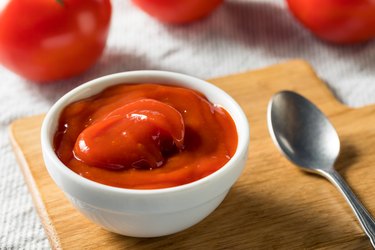
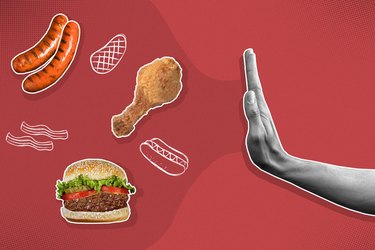
Dietary changes aim to reduce stomach acidity and limit foods that cause acid reflux. Avoiding large meals and limiting caffeine, especially before bedtime, can significantly relieve GERD symptoms. Consume a low-fat diet, limiting fried foods, cream sauces, gravies, pastries, nuts, chips and butter. Avoid foods that typically aggravate GERD, such as citrus juices, tomatoes, spicy foods, chocolate, peppermint, onions, garlic, and spearmint. Limit beverages such as coffee, tea, colas and alcohol, as these can also cause acid reflux. The dietary changes right for you depend on your personal experience. If after a meal you have heartburn, eliminate those foods, then add them back into your diet one at a time to determine which food caused the acid reflux.
Foods to Eat
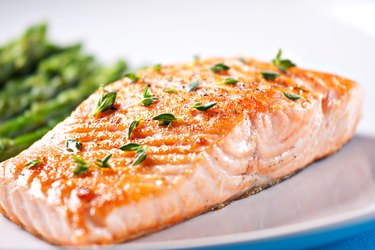
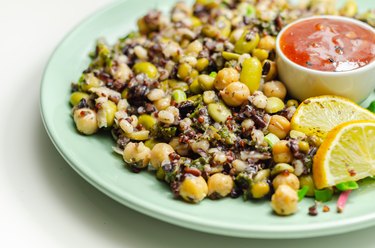
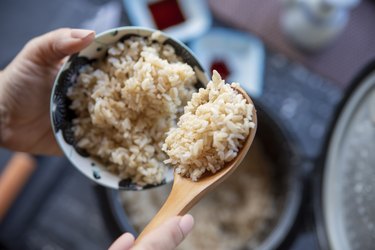
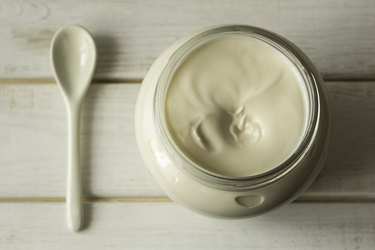
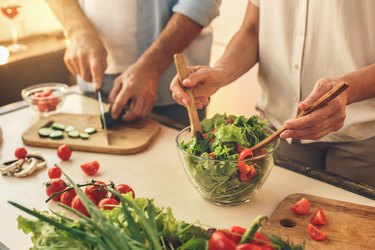
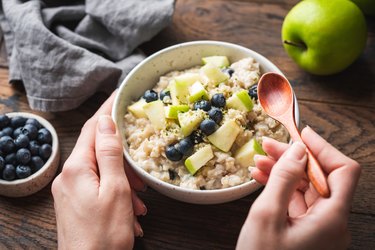
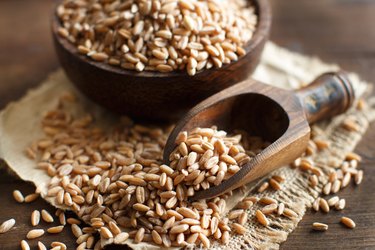
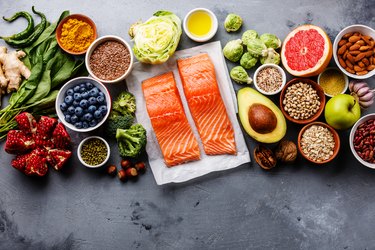
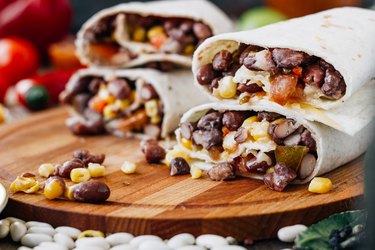
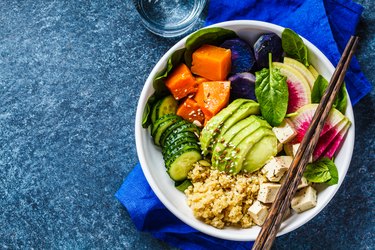
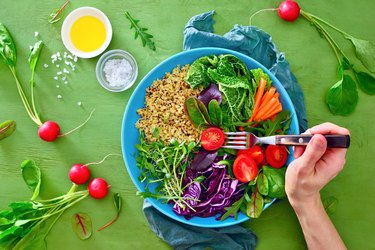
Consume a healthy diet rich in whole grains, fruits, vegetables, low-fat dairy and lean protein. Eat small meals every 2 to 3 hours and try to remain upright for at least 2 hours after mealtimes. If you find that citrus or tomatoes irritate your symptoms, consume other types of fruits and vegetables as tolerated. Try chewing sugar-free gum after meals to increase saliva production, as this can reduce acid reflux.
Lifestyle Changes
Lifestyle changes can also help reduce GERD symptoms, and include maintaining a healthy body weight and increasing your physical activity. Avoid tight-fitting clothing around the stomach and limit or stop smoking, as tobacco can aggravate acid reflux. Talk to your doctor, as medications may be necessary to treat your symptoms.
References
- "Nutrition and Diagnosis Related Care"; Silvia Escott-Stump; 2008
- National Institutes of Health: Hiatal Hernia
- National Institutes of Health: Gastroesophageal Reflux Disease
- The American College of Gastroenterology: The Word on GERD
- The National Institutes of Health; Heartburn, Gastroesophageal Reflux (GER), and Gastroesophageal Reflux Disease (GERD)


Member Comments