


















































Herbal Remedies for Burns & Blisters

Herbal Remedies for Burns & Blisters
Photo Credit crushing herbs image by Brett Mulcahy from Fotolia.com

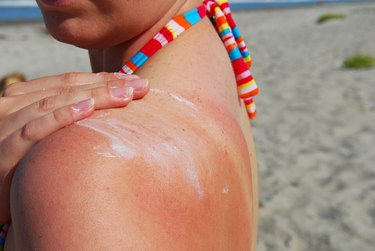
Burns occur when your skin is brought into direct contact with something that is hot or if you experience prolonged exposure to the sun. Blisters are a common response to various types of burns. There are many types of burns, including chemical burns, electrical burns, friction burns and scalds. Before using herbal remedies in treating your burns and blisters, talk with your doctor about the safety and effectiveness of this natural treatment method.

Burns and Blisters

MayoClinic.com notes that minor burns are distinguished from major burns by the degree of tissue damage in your body. Burns are usually classified as one of three types: first, second or third degree. Third-degree burns are the most severe type of burn, as they involve all layers of your skin and cause irreversible tissue damage. Blisters are commonly seen following second-degree burns, in conjunction with reddened, patchy-looking skin. Burns may cause extreme pain and swelling.

Herbal Remedies

Herbal remedies may be a helpful adjunct therapy in the treatment of burns and blisters. According to the University of Maryland Medical Center, herbs that have historically been used in treating burns include aloe vera, bromelain from pineapples, calendula, flaxseed, gotu kola, horsetail, slippery elm and St. John's wort. For surface burns that have begun to heal, the following herbs may be helpful: bayberry, black or green tea, blackberry leaves, sumac leaves, sweet gum and white oak bark.

A Helpful Remedy

Pulp, gel or liquid extracts from the aloe vera plant are commonly used in treating blisters and burns. Aloe vera, notes the National Center for Complementary and Alternative Medicine, is commonly used in treating burns, sunburns, psoriasis and osteoarthritis. Aloe vera may be applied to a burn as needed to help alleviate pain and speed healing. NCCAM notes that some studies show that aloe, when applied topically, may help treat burns and abrasions, although scientific evidence is currently lacking in support of aloe's other purported uses.

Considerations

Burns, and subsequent blistering, are often serious and require medical attention and intervention. If you suffer any type of burn, immediately report to an emergency room for appropriate care and treatment. In most cases, herbal remedies should only be used as adjunct therapies in the care of burns or blisters. A botanically trained health care professional can counsel you on the proper use of herbs in the treatment of burns and blisters and should always be consulted before using herbs for this purpose.

References

Article reviewed by Christine Brncik Last updated on: Mar 13, 2011

Must see: Photo Galleries

Member Comments