






















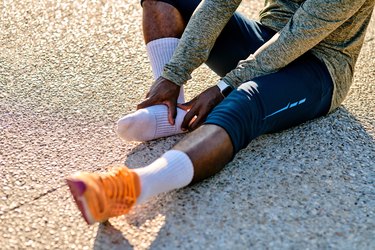


























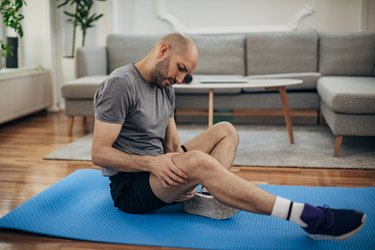












Knee pain can be an unfortunate, yet common, side effect of physical activity. The knees can become injured from overuse, practicing improper form, trauma to the knee or failing to stretch before exercising. If you have bad knees that are not related to a more serious knee condition, such as a ligament tear or knee dislocation, a proper exercise program can help to reduce knee pain.
Stretching Exercises
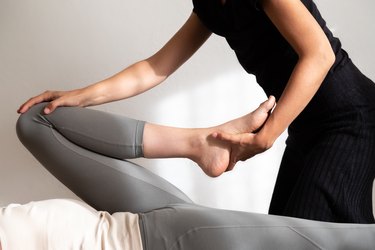
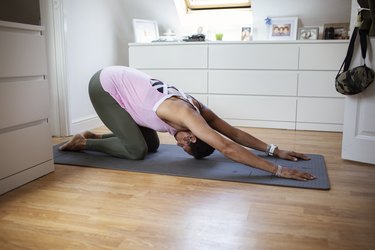
Stretching exercises can help to relieve knee pain and should be performed after a three- to five-minute warmup of walking or light aerobics. Examples include the iliotibial band stretch, in which you cross one foot over the other. Bend forward, stretching your hands toward the leg you crossed over. Hold this position for 30 seconds, then release the stretch. Stand and repeat by crossing the opposite leg. Stretches for the calves, hips and buttocks also can help you relieve knee pain.
Cardiovascular Exercises
Cardiovascular exercises are an important part of your exercise program because they burn fat and help to boost lung and heart health. Cardiovascular exercises that do not strain the knees include swimming, walking and riding a bicycle. Exercising on an elliptical machine also can help. If you do enjoy more vigorous exercises like running, try switching from running outdoors to running on a treadmill, which has a more absorptive surface that places less pressure on your knees. Varying the activities you regularly perform also can help reduce knee pain related to overuse of the knee ligaments and muscles.
Strength-building Exercises
If you have trouble with knee pain, taking steps to strengthen the hip muscles can help to reduce the risk for injury. Because the hip muscles pull on the knee, strong hips can stabilize the knee joint. Exercise examples include resting your back against a wall and squatting down, holding the position for 30 seconds to one minute. Another exercise involves lying on your back with your toes pointed and barely touching the ground. Pull your right knee in toward your chest, then return it to your starting position, alternating by bringing your left knee in as you lower your right. Continue alternating legs for 20 repetitions.
Activities to Avoid
Just as there are ideal activities for knee pain and instability, there are activities that should be avoided. Fully flexing the knee --- pulling the feet in toward the buttocks --- places excess strain on the knee and can cause pain. Examples of exercises include squats and leg presses. Plyometric exercises and sports that involve jumping up and down can be painful because landing awkwardly can increase your potential for knee injury. Sports to avoid include basketball, tennis, soccer, racquetball and football.
References
- NBC New York; Good Exercises for Bad Knees; Eric Sabo; August 2008
- "The New York Times"; Are Bad Knees in Our Genes?; Gretchen Reynolds; September 2010
- FamilyDoctor.org; Patellofemoral Pain Syndrome; December 2010
- MedlinePlus; Knee Pain; February 2011
- ScienceDaily; Exercise Therapy Best for Knee Pain, Study Finds; December 2009


Member Comments