

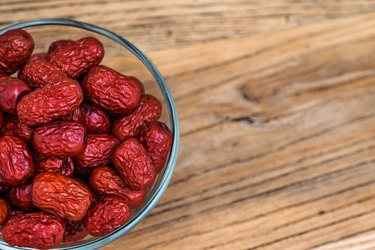




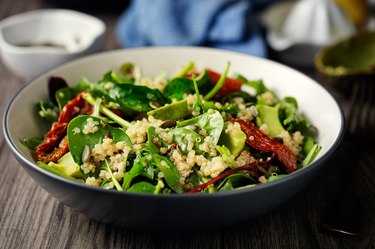




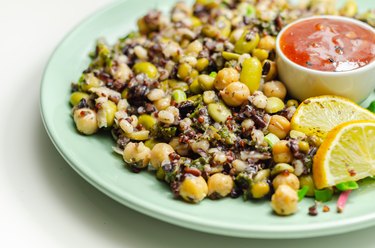



































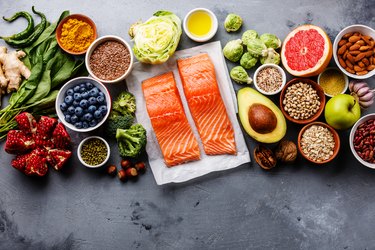


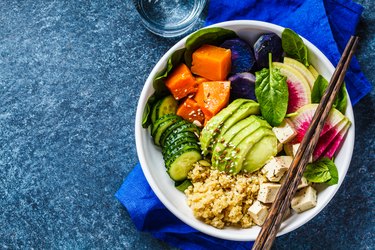









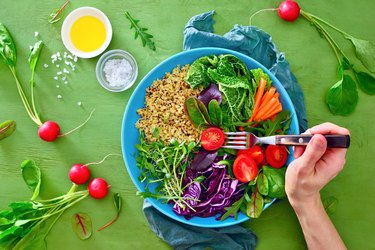

A raw food diet promises overall health through weight loss, greater energy and alleviation of chronic conditions. The diet consists primarily of fresh vegetables and fruits, accented with whole grains and nuts. Raw foodists maintain whole, unprocessed plant foods promote enhanced digestion and nutrient absorption.
Features
Raw foodists believe the more raw food in your diet, the better your health. Some rawists follow a strict 100 percent raw diet, but most attempt to eat raw at least 75 percent of the time. Uncooked, unprocessed plant foods---fruits, vegetables, sprouted grains and nuts---make up a raw foodist's diet. Rawists believe that critical enzymes in food used to enhance digestion are best absorbed when food is raw. Heating food to temperatures above 116 degrees destroys foods' nutrients. Rawists employ a number of techniques to add variety to their raw diet, including juicing, sprouting grains, dehydrating and soaking. Sun-dried fruits, seeds, seaweed, coconut milk and legumes can be treated using these techniques.
Benefits
Rawists maintain that their diet improves their energy and brings about natural weight loss. Brighter, clearer skin and cleaner digestion are other positive side effects of eating a raw food diet. Advocates also claim a raw food diet helps fight heart disease and cancer.
Expert Insight
A study published in the December 2006 issue of the American Journal of Clinical Nutrition reported that participants who ate a low-calorie, low-protein diet over a long period of time had lower levels of certain hormones linked to cancer. Although the study did not focus on an exclusively raw diet, it does support the low-protein, low calorie approach taken by rawists.
Considerations
Rawists are vulnerable to nutritional deficiencies since they discourage certain categories of foods including dairy, meats and potatoes. Iron, vitamin B12 and calcium are difficult to get in adequate amounts when eating raw. Although it is true that certain foods lose nutritional value when heated, some foods actually experience a boost in nutritional value. Lycopene, a compound in tomatoes, and beta carotene, found in carrots and other orange vegetables, release when these foods are heated. Finding raw, plant-based protein sources is also a challenge. Soy and nuts are the only complete plant sources of protein, and preparation of them according to raw guidelines can be tricky. Eating outside of your home may also be difficult, as restaurants and family do not always offer options appropriate for rawists.
Warning
Certain populations, including young children, pregnant and nursing women and the elderly, face particular risks on a raw foods diet. Raw foods may carry parasites or food-borne diseases, and these populations become particularly compromised when deprived of certain nutrients. If you suffer from digestive ailments such as ulcerative colitis or Crohn's disease, the amount of fiber in a raw food diet will most likely exacerbate symptoms. Calcium deficiencies may result, leading to osteoporosis and low bone density. Rawists must be careful as well because certain foods should not be eaten in their raw state. Buckwheat greens, kidney beans, alfalfa sprouts, cassava and parsnips contain are among the foods that can be toxic when eaten raw.


Member Comments