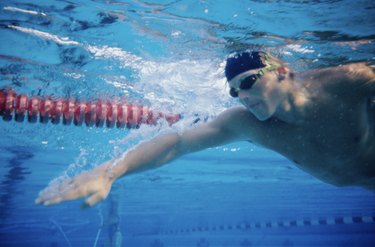
Swimming is a low-impact workout that yields high-end results. Doing laps in the pool gives your heart health a boost and strengthens just about every muscle in your body.
But, is swimming good for a torn rotator cuff or for shoulder pain in general? Below, we dive into (pun intended) the research on whether or not the pool is a good place for rehabbing your rotator cuff and dealing with shoulder injuries in general.
Video of the Day
Video of the Day
First, a Quick Refresher on the Anatomy of Your Shoulder
Your rotator cuff is a group of muscles and tendons that attach to the bones of the shoulder joint, according to the National Library of Medicine (NLM). Your rotator cuff allows your shoulder to move, but also keeps it stable.
Your shoulder movements are largely controlled by the four rotator cuff muscles, according to the University of Wisconsin. These are: subscapularis, supraspinatus, infraspinatus and teres minor.
The shoulder socket's structure is less stable than the hips' ball and socket construction, according to the University of Wisconsin. Because of this instability, repeated shoulder movements, particularly in sports, may cause trauma and stress to your rotator cuff muscles.
Age can also weaken your rotator cuff, and tears can occur because of this degeneration. A damaged rotator cuff often needs surgery.
Types of Rotator Cuff Problems
There are two main types of rotator cuff injuries, according to the NLM: tendinitis and tears.
1. Rotator Cuff Tendinitis
Rotator cuff tendinitis occurs when the cuff's tendons become inflamed. Causes of this condition include:
- Aging
- Prolonged poor posture
- Sleeping on the same arm every night
- Always having your arm in the same position
- Participating in sports where your arm is moved overhead a lot (tennis, baseball, swimming or weightlifting)
- Working jobs or hobbies where your arm is overhead a lot (painting or carpentry)
- Rotator cuff tears (more on these below)
2. Rotator Cuff Tears
Rotator cuff tears can occur for two possible reasons:
- Sudden injury, like falling on your arm while it is stretched out.
- Wear and tear of your rotator cuff over a long period of time.
There are two types of rotator cuff tears:
- A partial tear, which occurs when the tear doesn't completely sever the attachments to the bone.
- A complete tear, which occurs when the tear goes all the way through the tendon and the tendon detaches from the bone. This kind of tear does not heal on its own and requires surgery.
Swimmer's Shoulder
Swimmer's shoulder describes an injury from shoulder overuse among swimmers. It's also known as impingement syndrome. A rotator cuff tear is one of the possible causes of this syndrome. Overtraining and poor swimming technique are two potential causes. Swimmers can experience painful symptoms during almost every type of stroke, such as freestyle and butterfly, according to the Hospital for Special Surgery in New York City.
How to fix swimmer's shoulder: Your doctor may recommend rest, ice, heat or pain medication, according to the Cleveland Clinic. Other treatments include:
- Reducing repetitive movements
- Steroid injections
- Physical therapy
Is Swimming Good for a Torn Rotator Cuff?
In general, you shouldn't feel pain when doing any activity, including swimming. If you're experiencing shoulder pain while swimming, don't swim through the pain — stop and see your doctor, who can help pinpoint the issue, according to OrthoArizona.
If you've been diagnosed with a torn rotator cuff that doesn't need surgery, your doctor may suggest physical therapy. Your physical therapist will prescribe shoulder exercises for your rotator cuff to strengthen it and stabilize your shoulder blades, per OrthoArizona.
Your treatment plan may or may not include pool time, depending on the severity of your injury. But when you return to swimming, work with a swim coach on your technique "to see if there are improvements you can make to avoid stressing your shoulder," according to OrthoArizona.
Is water therapy beneficial for after rotator cuff surgery? If you've been diagnosed with a torn rotator cuff that does require surgery, it's not recommended to swim until about 18 to 22 weeks post-op, according to the University of Wisconsin.
Warning
Because all people — and all swimming shoulder injuries — are different, always listen to your care team's rotator cuff exercise rehab instructions. The above information isn't meant to replace or go against their advice.
The Best Swimming Exercises for a Rotator Cuff Injury
As mentioned above, the severity of your shoulder injury may limit your pool time or prevent you from swimming altogether for a period of time. But there are a few swimming techniques to lessen your risk of shoulder injury, according to OrthoArizona:
- As you're pulling through the water, pull with a flat hand, using your fingertips first.
- Switch sides when breathing so your body's rotation stays symmetrical.
- Vary your strokes to avoid putting the same kind of stress on your rotator cuff with each lap.
As for the best swimming strokes for a shoulder injury, the breaststroke or sidestroke may be more beneficial for those with shoulder issues as opposed to freestyle or back stroke.
As for other pool exercises for shoulder pain, you can try water aerobics to get a low-impact workout if traditional swim strokes bother your shoulder. Just make sure you inform your water aerobics instructor of your injury so they're aware and can offer modifications if necessary, especially when it comes to arm exercises in the pool.
Rotator cuff exercises for older adults may or may not differ from those prescribed for younger individuals. It all depends on the severity of your injury and your shoulder health prior to your injury. Again, listen to your care team's rehab instructions and call them with any questions or concerns.
The Worst Swimming Exercises for a Rotator Cuff Injury
Freestyle, back stroke and butterfly are not the best swimming strokes for a rotator cuff injury. This is because they can put stress on your rotator cuff and can cause injury, according to an older but frequently cited November 2006 article in North American Journal of Sports Physical Therapy. Therefore, it's best to avoid these strokes if you do have a rotator cuff injury until your doctor gives you the go-ahead.
- University of Wisconsin: "Rehabilitation Guidelines for Type I and Type II Rotator Cuff Repair and Isolated Subscapularis Repair"
- National Library of Medicine: "Rotator cuff problems"
- Cleveland Clinic: "Swimmer’s Shoulder"
- OrthoArizona: "Swimming with Shoulder Pain"
- North American Journal of Sports Physical Therapy: "Prevention and Treatment of Swimmer's Shoulder"
- Hospital for Special Surgery: "Swimming Overuse Injuries and How to Prevent Them"
- SPMS: Sports Medicine