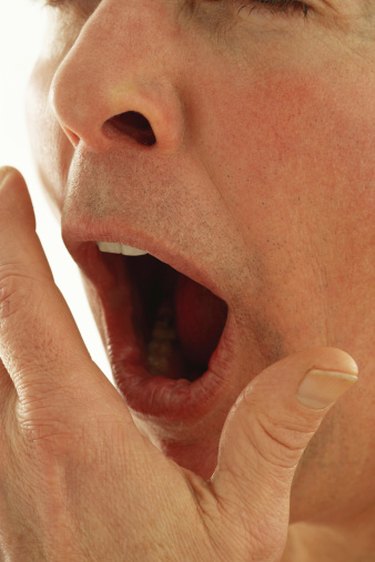
Yawning is involuntary -- just try not doing it -- and is even somewhat contagious. Ever see someone else yawn and then found yourself yawning, as well? But yawning during exercise can occur for a variety of reasons, including fatigue or level of exertion. Although most reasons for yawning are harmless, some may indicate a more serious condition. Contact your physician if you experience excessive yawning during physical activity.
Fatigue
Video of the Day
As your body's natural response to fatigue, yawning during exercise may indicate that you need more sleep. Changes in your normal routine, such as overworking, jet lag or a busy schedule, may cause fatigue and yawning during exercise. Schedule exercise at the same time each day to avoid yawning throughout your workout. This also allows your body to adjust to an exercise schedule and makes it easier to head to the gym. Adjust your sleep schedule, as well, to ensure you get seven or more hours of sleep a night.
Video of the Day
Boredom
If you experience frequent yawning during exercise, you may be bored with your routine. If your workout is repetitive, such as jogging on the treadmill, it may not be challenging you enough mentally, causing you to become bored. Consider switching it up by attending a fitness class, cycling or circuit training, anything where you have to focus and concentrate.
Temperature
Yawning may help cool down your brain. The brain's temperature rises when your body experiences stress from exercise or lack of sleep. Your body reacts by sweating in attempt to balance your brain's temperature. If sweating doesn't work, your brain stimulates a yawn, which increases blood flow and heart rate and enables the intake of cool air, all of which may help regulate your brain's temperature.
Physical Exertion
A more vigorous workout may help eliminate yawning during exercise. The University of Cincinnati reports that Dr. George Bubenik of the University of Guelph in Ontario, Canada, believes that yawning is likely caused by chemical compounds or neurotransmitters in the brain, such as dopamine, nitric oxide or serotonin. On the flip side, endorphins may reduce yawning, and exercising at a more intense level releases endorphins.
Health Concerns
Although most reasons for yawning are no cause for concern, excessive yawning may be an indication that your yawning is vasovagal in nature. The vasovagal reaction can cause your heart to slow down and your blood pressure to drop and can be a serious medical condition. Medical concerns such as depression, diabetes, severe insomnia and adrenal conditions may increase yawning during your workout, as well.