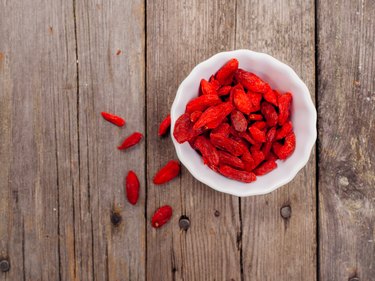
Did you know that 1 ounce of dried goji berries boasts 150 percent of the recommended daily amount of vitamin A? These tiny fruits are chock-full of vitamin C, iron, calcium, fiber and antioxidants. Also known as lycium berries or wolfberries, they're naturally sweet and low in calories. Sprinkle them over homemade desserts, mix them in smoothies, or make your own energy bars, sugar-free jam and trail mixes.
Tip
When shopping for goji berries, choose organic brands over standard varieties. Check the labels for sulfites and added sugars.
Video of the Day
What Is Wolfberry?
Goji berry, or wolfberry, is a small orange-red fruit that comes from the Lycium barbarum plant. It has been used as food and medicine in China for more than 2,000 years. Today, food manufacturers sell a wide range of products containing wolfberry, including whole fruit purees, teas, diet cookies, goji juice and smoothies. This fruit has emerged as a natural immunity booster, weight loss aid and anti-aging agent.
Video of the Day
Read more: 21 Anti-Aging Foods
A 2017 research paper published in Aging and Disease highlights the nutritional value of goji berry. This superfood is rich in phenolic compounds, flavonoids, betaine, B-complex vitamins and carotenoids. Thanks to its high antioxidant levels, it may help slow down aging and protect against oxidative damage. The phytonutrients in lycium berries can strengthen your immune system, scavenge free radicals and improve eye health.
Depending on your preference, you can eat these fruits raw, drink their juice or use them in your favorite recipes. Goji berries are a healthy addition to pancakes, porridge, oatmeal, granola, homemade chocolate, tea and even salads. Ideally, choose a brand with no preservatives or added sugars. Soak them in water before consumption.
Wolfberry Nutritional Value
Goji berries are higher in protein and fiber than most fruits. They're an excellent source of vitamins, minerals, zeaxanthin, lutein, quercetin and beta-carotene. Five tablespoons (1 ounce) provide:
- 98 calories
- 4 grams of protein
- 22 grams of carbs
- 3.6 grams of fiber
- 0.1 gram of fat
- 150 percent of the DV (daily value) of vitamin A
- 23 percent of the DV of vitamin C
- 11 percent of the DV of iron
- 5 percent of the DV of calcium
These tiny fruits also contain small amounts of amino acids such as arginine, alanine, leucine, threonine and valine. Your body needs amino acids to build new tissues, make nitric oxide and produce neurotransmitters, among other biochemical processes.
The vitamin A in goji berries supports good vision and may lower your risk of age-related macular degeneration. According to a 2014 study featured in the Journal of Clinical Medicine, this nutrient plays a key role in metabolic health. Researchers have found that vitamin A regulates protein, carbohydrate and lipid metabolism, so it may help reduce body weight and protect against diabetes when consumed in adequate amounts.
Wolfberry is also a great source of vitamin C, which helps your body produce collagen, supports immune function and improves non-heme iron absorption.
Why Eat Goji Berries?
Goji berry is promoted as a superfood for good reason. Despite its small size, this fruit packs a hefty nutritional punch. Rich in antioxidants, it can take years off your looks and slow down brain aging. In 2019, Oxidative Medicine and Cellular Longevity published a study on the potential health benefits and antioxidant action of wolfberry. This superfood has been shown to improve visual function, thanks to its high levels of carotenoids.
Read more: Secrets of 16 Strange and Popular Superfoods
Researchers have also found that goji berries may help lower LDL (bad) cholesterol and increase good cholesterol levels. Diabetic rats fed with lycium berries experienced a major reduction in blood sugar levels, which indicates that these fruits may protect against diabetes and metabolic disorders. Furthermore, they exhibit anti-cancer, cardioprotective, neuroprotective and anti-aging effects.
Another study, which appeared in the International Journal of Ophthalmology in 2018, confirms the beneficial effects of wolfberry on eyesight. Scientists recommend eating this fruit regularly to prevent age-related macular degeneration and slow its progression. In traditional Chinese medicine, goji berry is used as a natural remedy for liver detox, weight loss, fertility and skin health.
Wolfberry and Weight Loss
Wolfberry is commonly used in weight loss pills and diet foods, and science confirms its slimming properties. A 2017 research article published in Oxidative Medicine and Cellular Longevity indicates that lycium berries improve blood lipids and reduce stomach fat in people with metabolic syndrome. These potential benefits are due to the high antioxidant content found in the berries.
Subjects who consumed 14 grams of goji berries daily as part of a balanced diet experienced a major reduction in waist circumference, body mass index and abdominal fat in just 45 days. Their antioxidant status and cholesterol levels improved too. These findings prove that wolfberry may aid in weight loss and protect against heart disease.
If you're craving sugary foods, eat a handful of goji berries. Their sweet taste will satisfy your cravings. Plus these fruits are rich in fiber, so they'll fill you up and make it easier to stay on track with your diet. Sprinkle them over yogurt or oatmeal for a healthy breakfast; mix them into smoothies to boost your energy; add them to sugar-free muffins, waffles, crackers and other snacks to increase your antioxidant intake.
Are Goji Berries Safe?
These nutrient-dense fruits may not be safe for everyone. Some people are allergic to wolfberry and may experience severe reactions after eating tiny amounts. According to Medical News Today, individuals who are intolerant or allergic to nightshades should avoid goji berries, huckleberries, eggplant, chili peppers and tomatoes. Common allergic reactions include nausea and vomiting, skin rashes, swelling, muscle aches and joint pain.
In addition, goji berries may contain preservatives such as sulfur dioxide. This allergen is also used in processed meats, pickled foods, soft drinks, salad dressings, dried fruit, tofu, wine and coconut milk. Millions of people are either allergic or sensitive to sulfites. To stay safe, purchase organic goji berries and check the labels for calcium sulphite, sodium sulfite, sulfur dioxide, potassium metabisulfite and other similar ingredients.
Read more: Side Effects of Goji Berries
Wolfberry may interact with anti-diabetes drugs, antihypertensive drugs, warfarin, diclofenac, piroxicam and other medications, according to RxList. If you're under treatment, consult a doctor before adding this fruit to your diet. People with high blood pressure or diabetes should consume goji berries with caution because of their hypotensive and hypoglycemic effects.
- NutritionValue.org: Goji Berries, Dried
- NCBI: Aging & Disease: Lycium barbarum: A Traditional Chinese Herb and a Promising Anti-Aging Agent
- LiveScience: Vitamin A: Sources & Benefits
- MDPI: Journal of Clinical Medicine: The Roles of Vitamin A in the Regulation of Carbohydrate, Lipid and Protein Metabolism
- National Institutes of Health: Office of Dietary Supplements: Vitamin C
- Hindawi: Oxidative Medicine and Cellular Longevity: Goji Berries as a Potential Natural Antioxidant Medicine - An Insight Into Their Molecular Mechanisms of Action
- International Journal of Ophthalmology: Macular Pigment and Serum Zeaxanthin Levels With Goji Berry Supplement in Early Age-Related Macular Degeneration
- Hindawi: Oxidative Medicine and Cellular Longevity: Lycium Barbarum Reduces Abdominal Fat and Improves Lipid Profile and Antioxidant Status in Patients With Metabolic Syndrome
- Taylor & Francis Online: Food and Agricultural Immunology: Goji Berries Superfood – Contributions for the Characterisation of Proteome and IgE-Binding Proteins
- Medical News Today: What to Know About Nightshade Allergies
- Anaphylaxis Campaign: Sulphite Sensitivity
- RxList: Lycium: Are There Any Interactions With Medications?