































Your eye pressure is a measurement of the fluid, called aqueous humor, that fills the anterior chamber of your eye. Too much fluid might lead to damage and possible vision loss, a disease called glaucoma. Your doctor will work with you to reduce the pressure and prevent further damage. Some studies indicate the possibility that your body's natural sleeping and waking pattern, called the circadian rhythm, might affect glaucoma, and that melatonin might play a role.
Eye Pressure
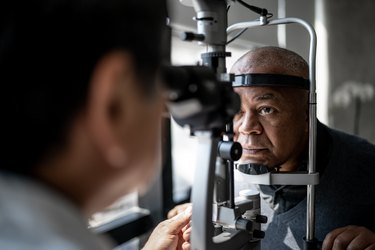
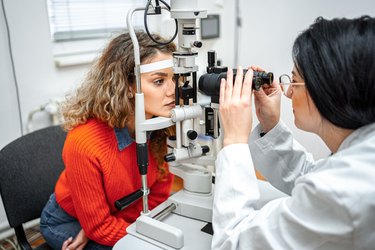
Inside your eye are a front chamber and a back chamber, and when your eye doctor measures your eye pressure, she essentially measures the amount of fluid you have in the front chamber of your eye. This fluid, called aqueous humor, provides nutrients to the surrounding tissues, and to keep the nutrients in adequate supply, your eye continuously produces new aqueous. As the fresh, nutrient-rich fluid enters your eye, the depleted aqueous must drain. If the fluid does not drain at a similar rate to the fluid entering your eye, this can result in an increase in eye pressure that leads to glaucoma.
Your eye pressure does fluctuate throughout the day, resulting from factors such as fluid intake and exercise. In a 2006 study, researchers evaluated the eye pressure of mice and determined that certain genes that control the circadian rhythm might also cause eye pressure to rise and fall throughout the day. However, the mouse eye is much smaller than the human eye, and this might skew any connection between the study and the effects of circadian rhythm on the human eye.
Melatonin
Melatonin is a hormone your body produces to help regulate your circadian rhythm. Even though your brain produces melatonin, some people take supplements to aid in sleep and other functions. In a study published in January 2011, researchers at the Centre for Psychosocial Medicine in Hamburg, Germany, determined that circadian rhythm could have an effect on eye pressure, and that melatonin could have a role in stabilizing your sleeping and waking pattern. This, in turn, might help regulate eye pressure. The research indicates that glaucoma patients might still require other treatment to keep pressures under control. These treatments typically include prescription eye drops or surgical procedures to help the aqueous drain properly.
Safety
Melatonin supplements might result in side effects such as fatigue, headaches and dizziness, and the supplement might increase your risk for seizures. Some people also experience changes in mood, blood sugar levels and hormone levels. Furthermore, some doctors consider the possibility that melatonin could potentially increase your eye pressure, and this will increase your risk for further damage to your eye.
Considerations
Even though melatonin shows some promise for controlling glaucoma, you should not take melatonin supplements without consulting your doctor. If your doctor thinks melatonin could reduce or help maintain control of your eye pressure, she might test your pressure prior to your first dose of melatonin. She will then have you take the supplement, and she will check your pressure periodically. In comparing these results, your doctor can determine if melatonin has any effect.
References
- National Eye Institute: Facts About Glaucoma
- MayoClinic.com: Melatonin
- "Journal of Pineal Research"; "The Role of Melatonin in Glaucoma -- Implications Concerning Pathophysiological Relevance and Therapeutic Potential"; A. Agorastos and C.G. Huber; January 2011
- "Investigative Ophthalmology and Visual Science"; "Circadian Intraocular Pressure Rhythm Is Generated by Clock Genes"; Ari Maeda et al; April 2006
- Glaucoma Research Foundation: Alternative Medicine


